


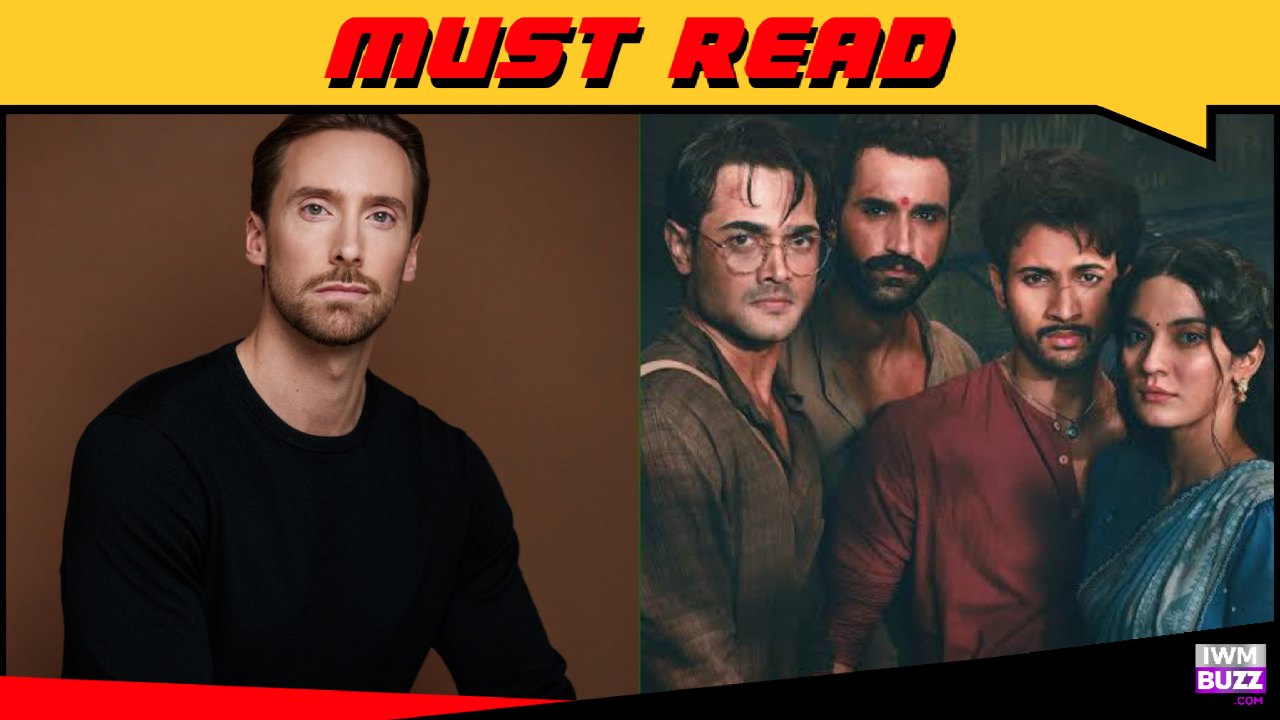
Paris-based actor and multidisciplinary performer Kim Tassel returns to Indian streaming television with Nikkhil Advani’s historical drama, The Revolutionaries, on Prime Video. Following his prior appearance in Zoya Akhtar and Reema Kagti’s Made in Heaven (Season 2), Tassel takes on the role of a French Officer navigating complex geopolitics during India’s freedom struggle in the series.
In an exclusive conversation with IWMBuzz.com, he discusses his physical preparation, moral grey areas, and the creative synergy between European and Indian film sets.
What drew you to the role of the French Officer in The Revolutionaries, and how did you approach the historical preparation?
I have always been fascinated by period pieces. As an actor, bringing to life figures stationed at pivotal turning points in history is immensely rewarding. To prepare, I immersed myself in books and documentaries detailing India’s freedom movement, the revolutionary factions, and the British colonial apparatus. Representing France in an Indian epic—playing a character who acts as a foreign ally against General Dyer’s oppressive regime—allowed me to tie my French heritage to my deep admiration for Indian history.
Your character faces a delicate shift in his moral compass. How did you navigate that transformation without losing his strategic edge?
What made him compelling was that he isn’t written as a simple hero who overnight abandons his post. He remains bound by his duties to protect French interests while witnessing the stark reality of British cruelty. His transformation stems from a growing respect for the courage of the revolutionaries rather than ideological zeal. I avoided playing him as purely good or bad. Letting those internal contradictions coexist made his choices much richer on screen.
Having worked on Made in Heaven and now The Revolutionaries, how would you describe the atmosphere on Indian sets?
There is a distinct, collective energy on Indian productions. Every department—from costume and production design to cinematography—operates with intense dedication to the overall vision. Directors like Zoya Akhtar, Reema Kagti, and Nikkhil Advani foster environments where international actors feel integrated into the storytelling process.
How does your background in contemporary dance influence your approach to screen acting globally?
Disciplines in Europe can sometimes be compartmentalised, but I view them as interconnected. Contemporary dance taught me spatial awareness and dynamic rhythm on camera. I use physical posture to convey internal tension without relying heavily on dialogue. Working internationally reinforces how non-verbal storytelling transcends language barriers.
What are the key differences and similarities between French and Indian filmmaking styles?
Both industries share a devotion to visual detail and world-building. The French style tends to be more cerebral, structured, and dialogue-driven. The Indian style is highly visceral, vibrant, and driven by spontaneous energy and strong visual scale.
Do you see yourself taking on more Indian projects moving forward?
Absolutely. Working in India has offered me roles far different from the traditional casting I receive in France. Building long-term artistic bridges between French and Indian cinema is a priority, and I look forward to future collaborations across both industries.
