


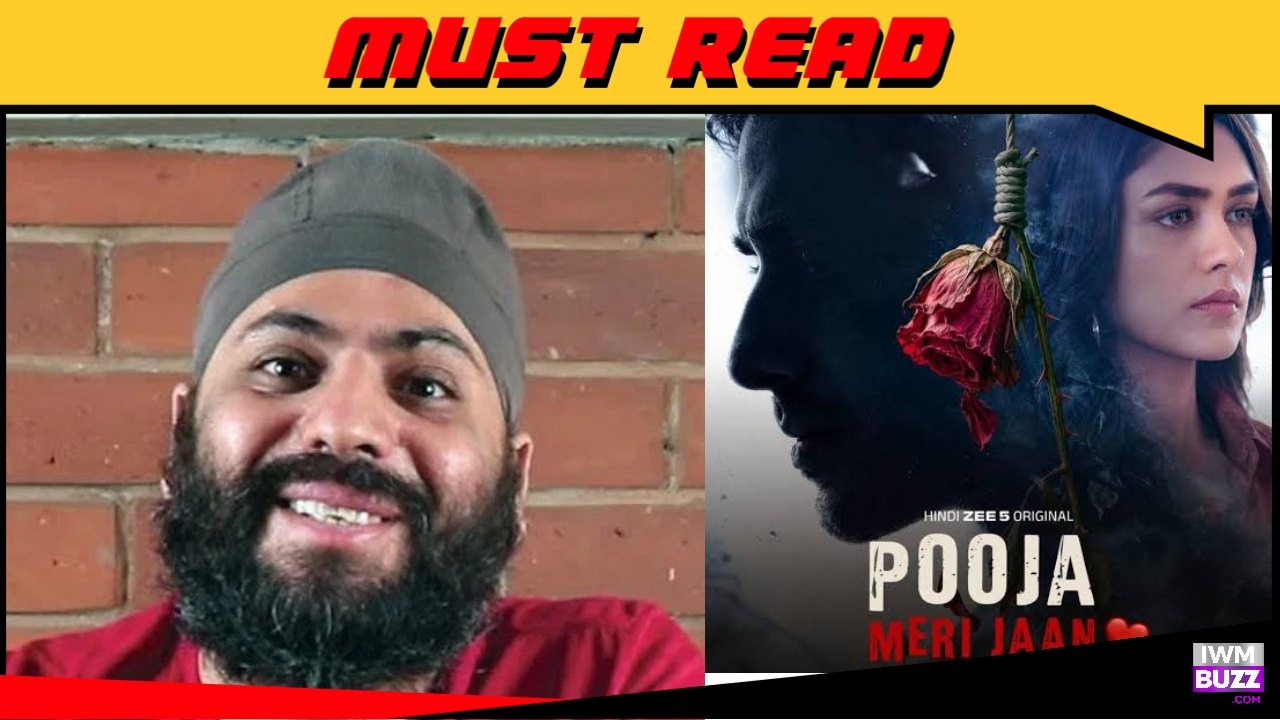
Navjot Gulati has steadily cemented his reputation as a filmmaker who isn’t afraid to hold up an unflinching mirror to contemporary social dynamics. Following the buzz surrounding his recent web series Pooja Meri Jaan—which dropped on ZEE5 to substantial traction and debate—Gulati is opening up about the unsettling cultural norms that inspired the project.
Headlined by a stellar ensemble cast featuring Mrunal Thakur as Pooja, alongside Vikram Singh Chauhan, Huma Qureshi, and Vijay Raaz, the series tackles the dark, unspoken underbelly of obsessive love, toxic entitlement, and the societal pressures surrounding consent.
We have all seen it countless times in mainstream media: the grandiose, public spectacle where a man chases down a woman to win her heart. But Gulati wanted to deconstruct how uncomfortable and predatory that dynamic can actually feel from the other side. Reflecting on the initial imagery that birthed the series, Gulati shares, “The first image that flashed in my mind was a girl trapped in the centre of a public proposal—visibly suffocating and deeply uncomfortable, while a cheering crowd around her blissfully celebrated the man. Everyone was blinded by the romance of the spectacle, completely erasing her agency and ignoring her obvious distress.”
What lends Pooja Meri Jaan its raw emotional weight is its grounding in messy, real-life accountability. Rather than hiding behind a pulpit, Gulati traces the premise back to his own past behaviour, transforming personal introspection into a public service message. Opening up about the emotional catalyst behind the story, he notes, “I spent over seven years deeply in love with someone. Even after facing romantic rejection, I persisted, stubbornly trying to bend her choice. This project is my public apology—not just to her, but to every woman forced to navigate the heavy toll of unwanted persistence.”
Telling a story where boundaries blur, and characters grapple with deep psychological friction is no small feat, particularly when trying to balance empathy with social responsibility. Discussing the narrative tightrope of the show, Gulati explains, “The hardest challenge was ensuring both sides received a fair, balanced perspective without letting a character become a cartoon villain. We firmly chose to side with the female protagonist because cinema must carry a moral responsibility toward society, especially when women continue to disproportionately bear the brunt of such trauma. At the same time, we meticulously mapped out Aniket’s distorted psyche so audiences could dissect his mistakes. Real love requires respecting a definitive ‘no’—Aniket should have accepted that Pooja wasn’t attracted to him, remained a friend, and sought love where it was genuinely reciprocated.”
