


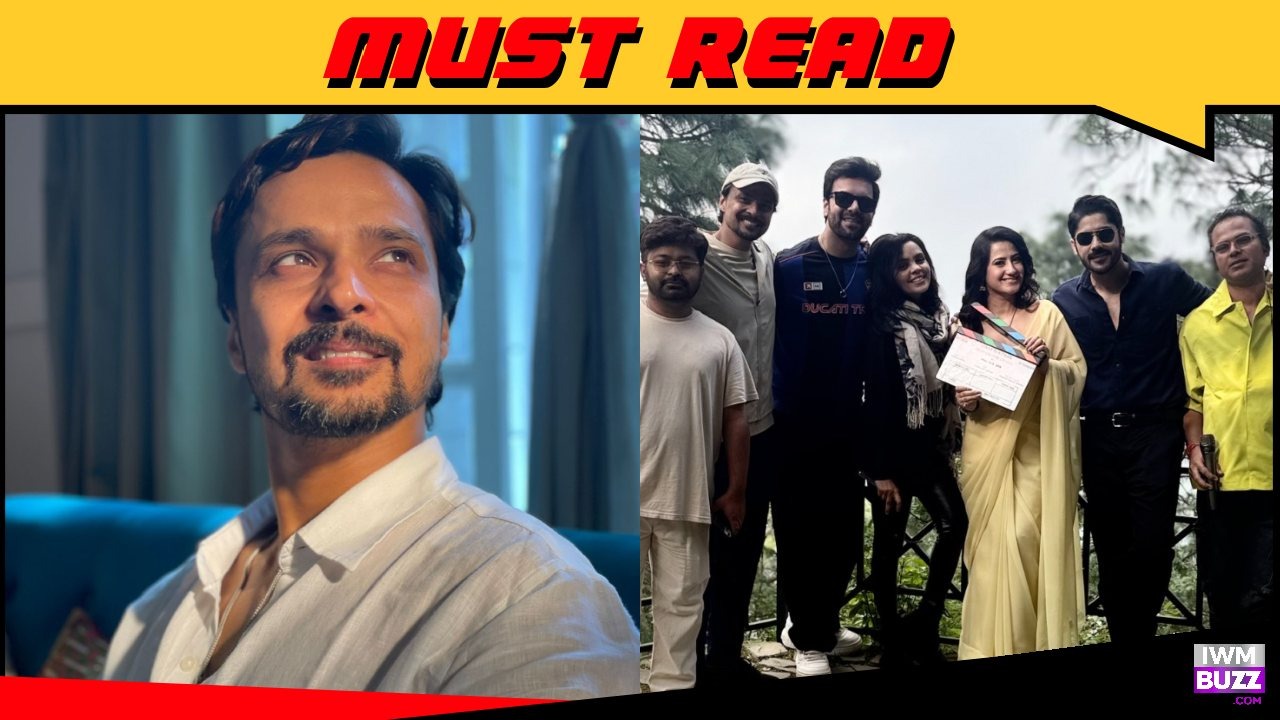
Agastaya Jain, Writer and Producer of the now-streaming web series Vinny Ki Kitaab on Hungama OTT, is happy to bring to the viewers the life of Vinita, the protagonist whose quiet rebellion in the form of her writing is all set to win hearts. The series is produced by Creators Retina Entertainment.
In an exclusive conversation with IWMBuzz.com, Agastaya talks about his characters, the impeccable cast that has made the execution of this project simpler and the resonating concept.
Read here.
Tell us about Vinny Ki Kitaab. How do you see it being received by viewers?
Vinny Ki Kitaab is a bold, quirky, and emotionally charged dramedy about a housewife, Vinita Nautiyal, who finds her voice in the most unexpected way—through her secret erotica writing. At its core, it’s a story of reclaiming agency, self-worth, and desire in a world that constantly tells women to shrink themselves.
We’ve kept the tone entertaining and accessible, but the themes—identity, marriage, patriarchy, and personal awakening—will resonate deeply with audiences everywhere. I believe viewers will embrace it because it mirrors the quiet rebellions happening in every Indian household today. It’s relatable, funny, honest, and at the same time rebellious in a very Indian way. It was shot in the beautiful location of Kasauli. I am sure visually it will hold viewers’ attention too
Talk us through the interesting cast.
Our cast is our biggest strength. Every actor brings a lived-in authenticity to their character.
• The performer playing Vinita, Aalisha Panwar, carries the perfect blend of innocence and suppressed fire—her transformation is the heartbeat of the show.
• Her husband’s character, Abhishek Kapur, required a balance between being flawed yet not a caricature, and the actor delivers that complexity beautifully.
• The Negative cast—Mansi Jain and Sanjay Gagnani, from the nosy neighbours to the friends who become unexpected catalysts—add humour, heart, and chaos in equal measure.
What makes the cast special is that they don’t “perform” the world of Vinny Ki Kitaab—they inhabit it.
The cast is equally well supported by Rajvir Chauhan and Afreen Alvi in their respective roles of a cop and a beautician.
The OTT market has been buzzing with variety in content, formats, and verticals. As a writer and maker, how do you look at this phase?
It’s the most liberating phase for creators. OTT has democratised storytelling by opening doors for unconventional themes, non-formulaic characters, and brave genres. You don’t need to paint inside the lines anymore.
As a maker, this freedom is exciting but also challenging—it pushes you to be more honest, more innovative, and more responsible with what you put out. The audience today can smell inauthenticity from miles away, so every idea has to come from a place of truth. For writers like me, OTT is not just a platform—it’s a playground.
What is the idea with respect to the content ahead for Creators Retina?
At Creators Retina, our focus is clear: stories that cut through noise, speak to the heart, and stand out in the clutter. We are exploring emotionally rich, high-concept ideas across drama, satire, family entertainment, and supernatural genres. The aim is to create IPs that are binge-worthy but also have longevity and cultural recall.
Whether it’s a small-town dramedy like Vinny Ki Kitaab, a character-led thriller, or an innovative mythology-based format—we want to create content that feels fresh, fearless, and rooted in Indian sensibilities.
How about a show for TV?
Television still has a massive emotional reach in India, and as creators we respect that. Yes, we are exploring ideas for TV as well. The key is to bring a modern rhythm to storytelling while respecting the format’s emotional DNA. A limited 150-episode series is in the making for a leading platform. But yes, attention is more on shorter formats and films.
How do you see the competition across the mediums of TV and OTT?
I don’t see it as competition—it’s coexistence. Each medium has its own purpose and its own loyal audience.
Television is comfort food; OTT is experimentation. TV brings families together over shared emotion; OTT allows individuals to explore stories that reflect their inner world. As creators, our job is not to pick sides but to understand the strengths of each platform and craft stories that suit their pulse. Ultimately, great storytelling will always win—regardless of the screen.
