


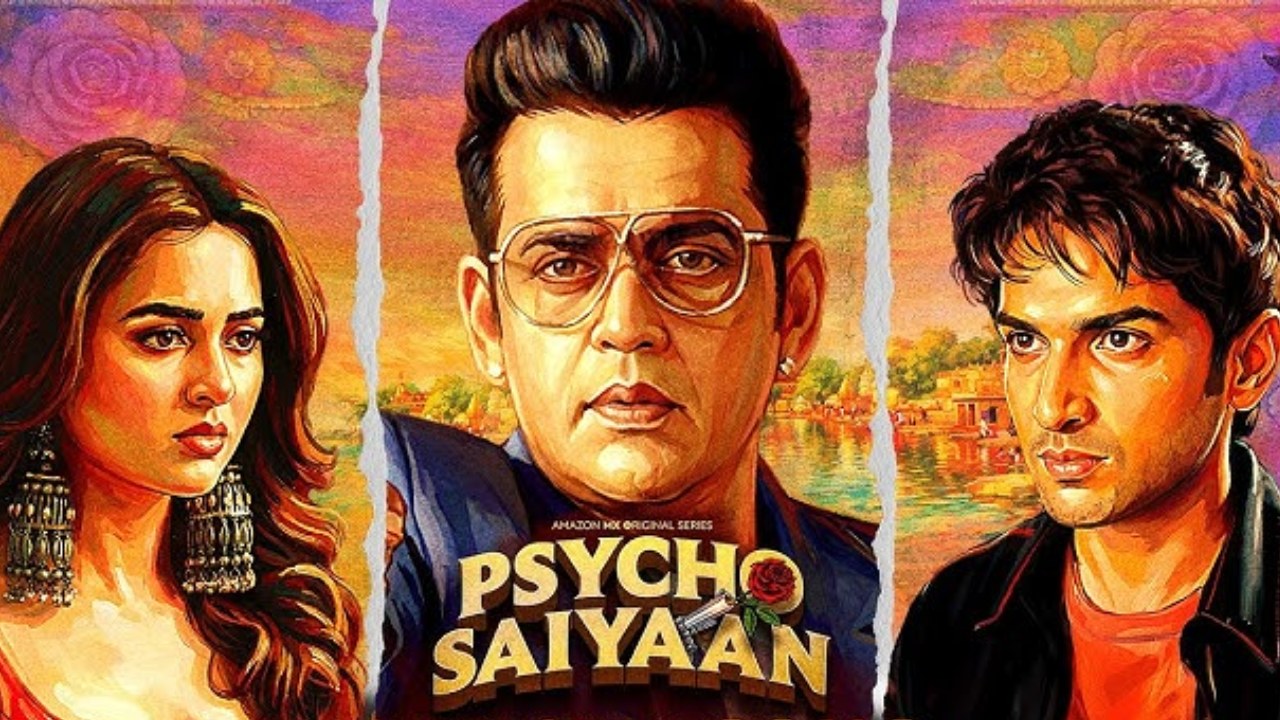
Psycho Saiyaan explores the thin line between love and obsession. Set in Ujjain and revolving around the poetic Kartik Pandey and his muse Charu Lata, the series begins with a familiar premise—the relentless pursuit of love—but soon plunges into the darkness of human psychology and the consequences of unchecked desire.
The initial assessment of Kartik’s dedication to Charu shows that his feelings for her become both beautiful and admirable. The audience who watches his performance is left with two possibilities. The story reveals hidden problems which exist beneath its main plotline. Kartik’s affection toward his partner becomes unbearable when he tries to control her existence. The series explores how excessive love between partners transforms into a dangerous force.
The story takes a real turn when Charu is kidnapped by Huntry Chauhan, the narrative’s main villain. The narrative, however, could have simply focused on Kartik’s heroic rescue, but instead it chooses to challenge viewers’ sympathies. Kartik’s actions at Huntry’s base show his growing desire to rescue Charu, which combines his genuine affection with his efforts to control her. The viewer must determine whether Kartik fights to free Charu or fights to protect his view of her as his possession.
The series maintains its strength because it does not offer viewers simple answers to their questions. The attempts Kartik makes to rescue Charu raise suspicion about his motives because his love for her leads him to behave in ways that suggest he wants to protect her. The introduction of Ritu, who is Kartik’s childhood friend and harbours her own hidden motives, adds another layer of intrigue, as love triangles often create complex situations that bring together multiple needs of the involved parties.
The film Psycho Saiyaan achieves its unique identity through its exploration of the unsettling truth that love becomes a dangerous threat when it turns obsessive. The current age receives a warning from this story, which demonstrates that authentic love depends on mutual respect and personal freedom rather than ownership and dominance.
