


There are very few shows across the Indian streaming landscape that have genuinely redefined what the medium is capable of. Paatal Lok was one of them. When it arrived on Prime Video in 2020, it set a new grammar for crime storytelling in India—one that trusted its audience, refused easy resolutions, and found humanity in the most morally complex corners of its narrative. Six years later, Raakh is doing something remarkably similar, and the critical response since its premiere makes the comparison impossible to ignore. This is not simply a crime drama that grips you while it’s on screen; it is one that lingers, unsettling and emotionally resonant long after the final episode ends.
Loosely inspired by the infamous 1978 Ranga-Billa kidnapping and double murder case, Raakh approaches real-life tragedy with remarkable restraint. Rather than turning the case into a spectacle, it uses it as a lens to examine grief, helplessness, institutional failure, and the lasting scars left by violence. Two teenagers from a reputed Delhi family disappear. A young police officer is tasked with finding them. What follows is not merely an investigation but an exploration of how tragedy reshapes everyone caught in its orbit.
That emotional focus is what makes Raakh stand apart from much of the crime genre. While most investigations are structured around evidence, suspects, and revelations, Raakh is more interested in the aftermath. The questions it asks are not just who committed the crime, but what happens to the people forced to live with it. The parents waiting for answers. The community paralysed by fear. The police officer carrying the weight of a case that refuses to leave him. The series understands that some wounds do not heal when a case is solved, and it builds its emotional power from that understanding.
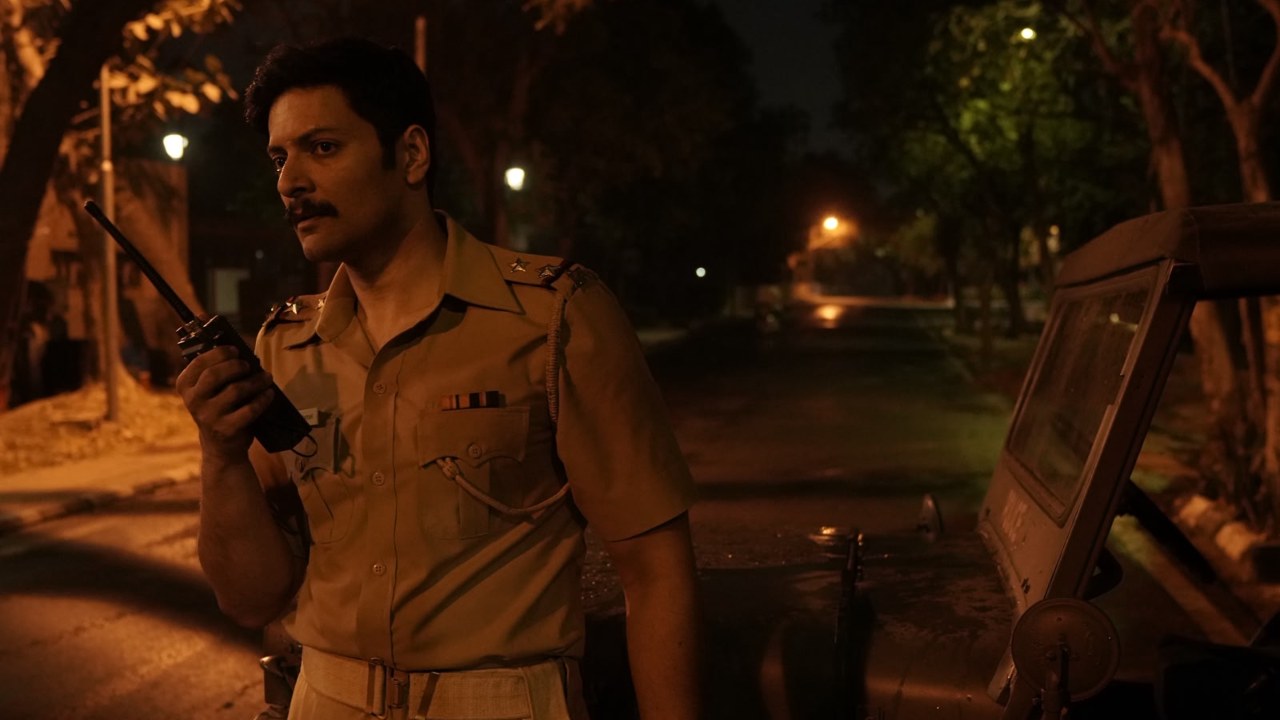
At the centre of this is Ali Fazal’s extraordinary performance as SI Jayprakash. In lesser hands, the character could have easily become another familiar screen cop. Instead, Fazal strips away every convention associated with the archetype. Jayprakash is not loud, swaggering, or invincible. He is observant, introverted, and quietly burdened by what he witnesses. Fazal communicates more through silence than dialogue, allowing viewers to see the gradual erosion of a man confronted with horrors he cannot rationalise. It is a performance built on restraint, and precisely because it never reaches for easy dramatics, it becomes deeply affecting.
The emotional heart of the series, however, lies with Sonali Bendre and Aamir Bashir. Their portrayal of parents navigating unimaginable loss gives Raakh much of its devastating power. The series wisely avoids reducing them to symbols of grief. Instead, it presents them as individuals struggling to hold on to fragments of normalcy while their world steadily collapses. Bashir captures the helplessness of a father desperately searching for control in a situation that offers none. Bendre delivers one of the finest performances of her career, conveying devastation through stillness rather than breakdowns. There are moments where she barely speaks, yet the pain is palpable in every gesture and expression. Her performance becomes a reminder that grief is often quiet, internal, and impossible to articulate.
The supporting cast contributes significantly to the series’ immersive quality. Every character feels lived-in, whether they appear for a few scenes or across multiple episodes. The world of Raakh is populated by people rather than plot devices, which makes the emotional stakes feel real. The series never loses sight of the fact that crime affects entire communities, not just those directly involved.
Much of the show’s impact comes from its extraordinary craftsmanship. Saumyananda Sahi’s cinematography does far more than recreate 1970s Delhi—it transforms the city into an emotional landscape. Streets feel emptier, homes feel colder, and every frame seems weighed down by an invisible sense of dread. The muted colour palette and carefully composed imagery create the feeling of watching a memory slowly decay. There is beauty in the visuals, but it is a haunted beauty, one that constantly reminds viewers of the tragedy lurking beneath the surface.
Equally crucial is Anish John’s sound design, which may be one of the series’ most underrated achievements. Raakh understands the power of silence. Doors creak. Footsteps linger. Conversations trail off into uneasy quiet. The soundscape creates a constant sense of anticipation, making viewers feel as unsettled as the characters themselves. Often, the series generates more tension through atmosphere than through plot, a rare accomplishment in a genre that frequently relies on twists and shocks.
The writing by Anusha Nandakumar and Sandeep Saket deserves special mention for refusing easy emotional manipulation. The series trusts its audience to sit with discomfort. Rather than racing from one revelation to the next, it allows moments to breathe. Grief is given time. Fear is given space. Characters are permitted to exist in uncertainty. This confidence in the storytelling gives Raakh a maturity that sets it apart from many contemporary crime dramas.
What Raakh ultimately shares with Paatal Lok is not just its creative lineage through director Prosit Roy or its home on Prime Video. It shares a belief that crime stories are at their most powerful when they are about people first and investigations second. Both series use crime as a framework to examine larger truths about society, institutions, and human behaviour. The mystery may draw audiences in, but it is the emotional and social commentary that stays with them.
Prosit Roy once again demonstrates an exceptional understanding of mood and atmosphere. Like Paatal Lok, Raakh is a show that derives its power not from spectacle but from observation. Roy understands that dread often lies in what remains unsaid, and he allows scenes to linger just long enough for the audience to feel their full emotional weight.
Prime Video has consistently delivered some of the most ambitious crime dramas in India, and Raakh reinforces that legacy. Much like Paatal Lok six years ago, this is a series that expands the possibilities of the genre. It is emotionally devastating, technically accomplished, and anchored by performances that rank among the year’s best. More importantly, it reminds us that the most memorable crime stories are never really about the crime itself—they are about the people left behind to live with its consequences.
The series stars Ali Fazal, Sonali Bendre and Aamir Bashir in key roles along with Akash Makhija, Ramandeep Yadav, Divya Sharma, Vivaan Sharma, Anshul Chauhan, Rakesh Bedi, and Dibyendu Bhattacharya in pivotal roles. Raakh is directed and executive produced by Prosit Roy, and created, written and co-directed by Anusha Nandakumar and Sandeep Saket. Produced by Endemol Shine India in association with BhaDiPa, the series is now streaming in India and across more than 240 countries and territories worldwide.
