


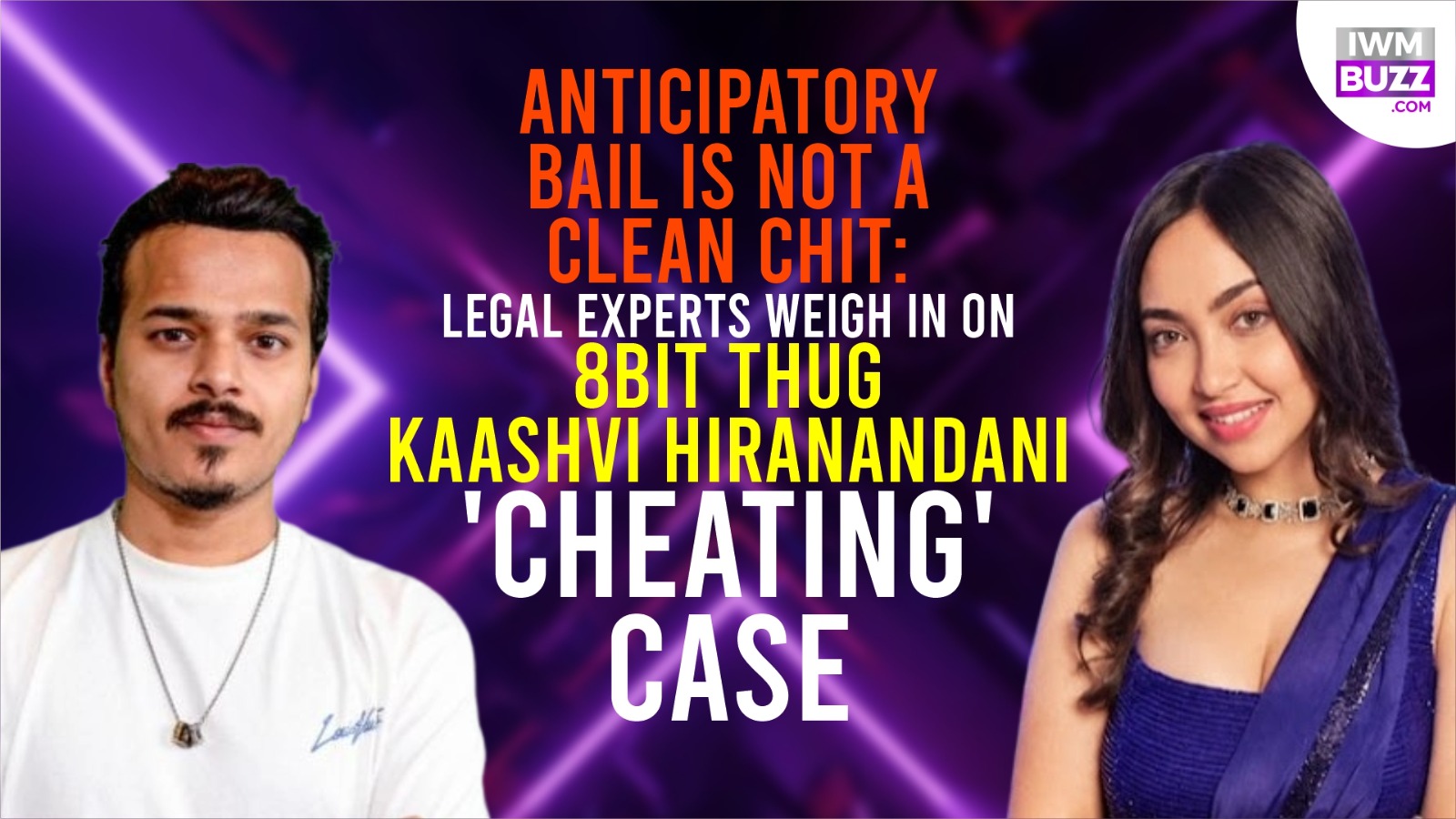
The grant of anticipatory bail to Animesh Agarwal, popularly known as 8Bit Thug, in connection with the alleged financial fraud and criminal breach of trust case filed by gaming content creator Kaashvi Hiranandani has drawn reactions from legal experts. While Agarwal has been granted protection from arrest, legal experts point out that anticipatory bail does not amount to a clean chit or an exoneration from the allegations.
Legal expert Rizwan Siddiquee, commenting on the case, said, “This is a classic case of cheating, wherein deceit can be seen since inception. Even though the Court has given bail to the Accused, the trial in the matter of cheating will continue before the Magistrate Court. Also, as per the merits of the complaint, there is a good chance of getting a sentence of conviction from the Magistrate Court against the Accused.”
Siddiquee’s observations reflect his assessment of the allegations made in the complaint. However, the question of criminal liability will ultimately depend on the evidence presented before the court.
Senior advocate and former Rajya Sabha MP Majeed Memon also emphasised that the grant of anticipatory bail should not be interpreted as an indication of innocence or an assessment of the strength of the prosecution’s case.
“Getting anticipatory bail is no guarantee of succeeding against the accusation,” Memon said.
Explaining the distinction between bail proceedings and the determination of guilt, he observed, “Bail is not always decisive or indication of lack of evidence or sufficiency of evidence.”
Memon further stated, “If we have secured anticipatory bail, his personal liberty is appreciated, but whether he has committed the alleged crime or not, it’s a matter of trial.”
Highlighting how bail and the eventual outcome of a criminal trial are separate matters, Memon said, “There are a number of cases where an accused is on bail throughout and yet he’s found guilty at the end of the trial.”
He also pointed to the reverse situation, observing, “While conversely, the case where the accused is denied bail till the end and finally is found not guilty and acquitted.”
Memon’s remarks underline the distinction between judicial protection of personal liberty and a court’s final determination of criminal responsibility. The grant or refusal of bail does not, by itself, establish whether an accused person is guilty or innocent.
Advocate Rohini Vakil, meanwhile, emphasised that the grant of anticipatory bail should not be mistaken for an acquittal.
“Grant of anticipatory bail to Animesh Agarwal, popularly known as 8Bit Thug, should not be misconstrued as a clean chit or an exoneration from the allegations. It is essentially a judicial protection against pre-trial arrest, subject to the conditions imposed by the court,” she said.
Explaining the legal provisions invoked in the matter, Vakil stated, “The FIR reportedly invokes Sections 316(5), 318(4) and 3(5) of the Bharatiya Nyaya Sanhita, which deal with criminal breach of trust in specified circumstances, cheating and common intention. These are substantive allegations that will have to be tested against the evidence collected during investigation.”
She further highlighted the significance of the conditions imposed by the court while granting anticipatory bail.
“What is significant in this matter is that the court has imposed conditions requiring the accused to attend the police station regularly, cooperate with the investigation and seek permission before leaving Mumbai. These conditions are not merely procedural formalities; they are intended to ensure that the accused remains available to the investigating agency,” Vakil explained.
She also clarified that anticipatory bail does not prevent the police from continuing their investigation.
“It is also important to understand that anticipatory bail does not prevent the police from carrying forward a fair and effective investigation. If the accused misuses the liberty granted, attempts to influence witnesses, tampers with evidence or violates the conditions of bail, the prosecution can seek appropriate legal remedies, including cancellation of bail,” she said.
Vakil added, “Ultimately, the grant of anticipatory bail is not the end of the legal battle. The real test will be the evidence that emerges during investigation and whether the prosecution is able to establish the ingredients of the offences alleged. The law must protect individual liberty while ensuring that allegations of criminal wrongdoing are properly investigated.”
In July 2026, Kaashvi Hiranandani took to social media to share a major personal and professional development with her followers, revealing that she had registered an FIR against her former management over alleged financial fraud and criminal breach of trust.
Taking to Instagram, Kaashvi stated that she had trusted the people managing her career for a considerable period. However, after reviewing records available to her and seeking legal advice, she claimed to have discovered serious financial irregularities that she believed amounted to fraud and breach of trust.
According to her statement, the allegations involved her former management, including Animesh Agarwal, popularly known as 8Bit Thug, associated with S8UL and 8Bit Creatives.
Kaashvi confirmed that she had approached the police and formally registered an FIR. She also stated that the matter was under investigation and that she was fully cooperating with the authorities.
Expressing confidence in the legal process, she said she would allow the investigation to take its course.
With anticipatory bail now granted, the case remains subject to further investigation and legal proceedings. As the legal experts have pointed out, the grant of bail does not determine the merits of the allegations, which will have to be examined in accordance with the law.
