


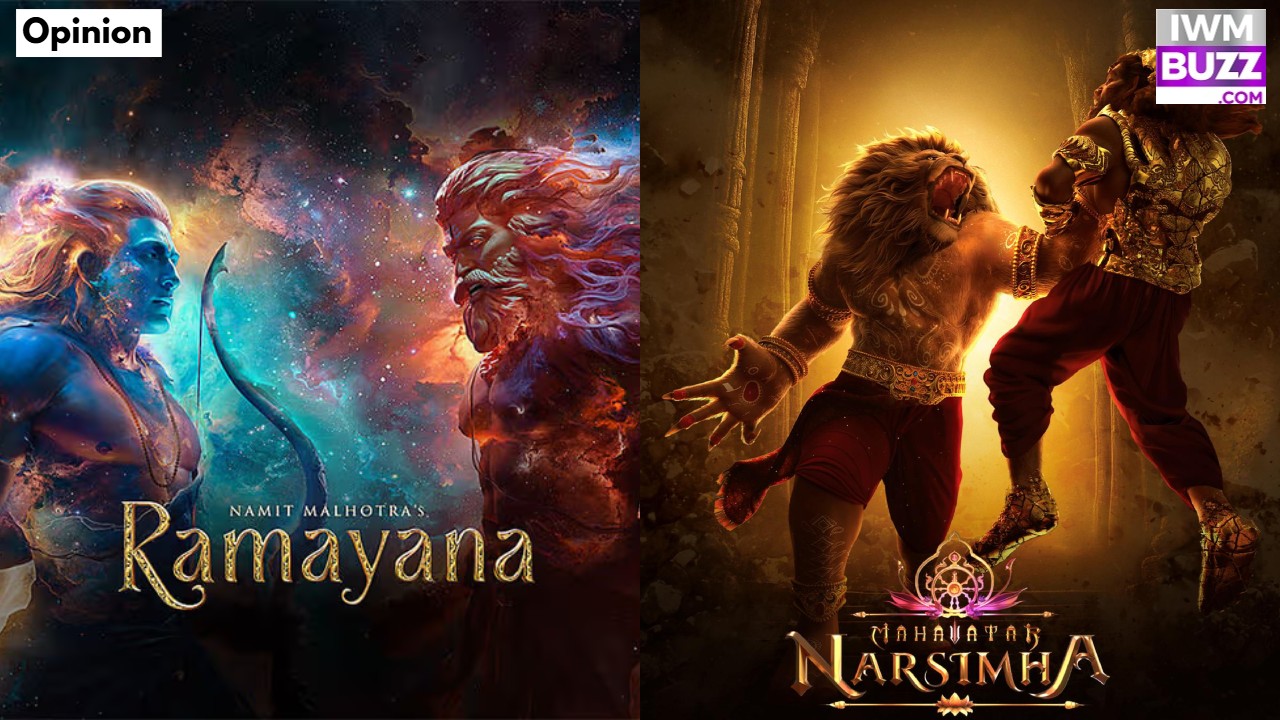
The growing box office appetite for mythological and epic-themed films reflects a combination of audience sentiment, cultural resonance and evolving visual storytelling, says trade analyst and producer Girish Johar.
Johar believes the broader mood of the country, particularly during festive periods, has created a favourable environment for stories rooted in mythology, cultural heritage and religious sentiment. The genre also has the potential to cut across demographics, drawing families and audiences across age groups to theatres.
For an industry constantly looking for stories that can justify the theatrical experience, mythology and epics offer an interesting proposition. They come with characters and narratives that are already deeply familiar to large sections of the audience, while also offering filmmakers the canvas to create expansive worlds, elaborate action sequences and immersive visual experiences.
The industry’s growing interest is reflected in a robust pipeline of mythological and epic projects, including Mahakavya: Ramkatha, Valmiki Ramayana, Mahaveer Karna, Ramayana, Mahavatar, Mahavatar Parshuram and Shrimad Bhagwatam: Part 1. The number and scale of projects in development suggest that the genre is no longer being viewed as an occasional experiment but as an increasingly important part of the industry’s theatrical slate.
Johar, however, points out that the trend isn’t simply about retelling familiar stories. Filmmakers are increasingly bringing fresh perspectives to mythology and epics, while advances in VFX and production technology are enabling them to mount these stories on a scale that meets contemporary audience expectations.
That evolution is significant at a time when audiences have access to large-scale fantasy, superhero and franchise entertainment from across the world. Indian filmmakers working with mythological material are therefore faced with a dual challenge: remaining connected to stories audiences know well while presenting them with the visual ambition and narrative freshness expected of a modern theatrical release.
But spectacle alone cannot guarantee theatrical success. For Johar, the crucial factor remains the audience’s emotional connection with the story. Familiarity with the source material may generate curiosity, but the eventual theatrical response depends on whether the film succeeds in translating that familiarity into an engaging cinematic experience.
Irrespective of whether a film is powered by mythology, visual spectacle or star power, a strong emotional connect ultimately determines how audiences respond at the box office. The current momentum behind mythological and epic cinema, therefore, is as much about storytelling and sentiment as it is about scale and visual ambition.
With several ambitious projects lined up, the coming slate could also provide a clearer indication of whether the current interest in mythology develops into a sustained theatrical genre or remains dependent on individual films and their execution.
