


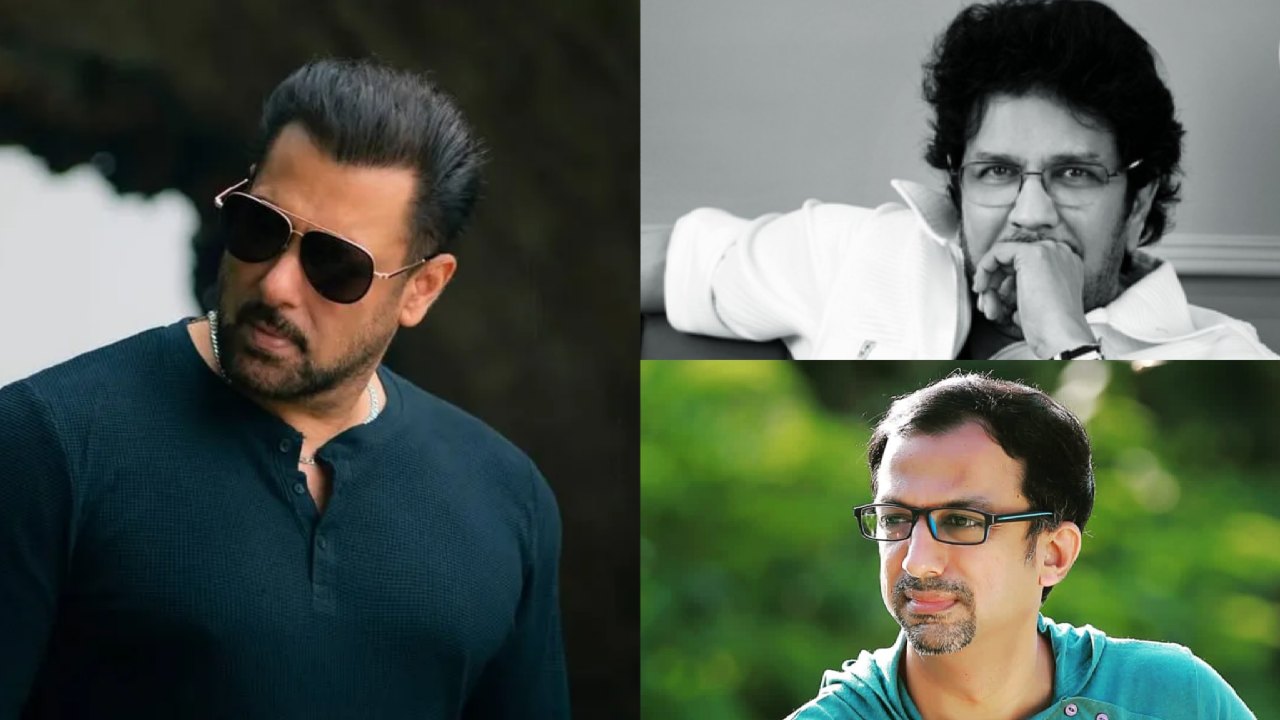
Salman Khan’s criticism of paparazzi filming actresses from behind has brought the spotlight back on the ethics of celebrity photography. The actor’s remarks have found support from leading celebrity photographers Yogen Shah and Manav Manglani, who agree that professional boundaries must be maintained and that the pursuit of social media views should not come at the cost of an actress’s comfort or dignity.
The controversy has also raised questions about the changing business of paparazzi photography, where the growing number of YouTubers, independent content creators and people armed with mobile phones has made it increasingly difficult to distinguish genuine professional photographers from those chasing viral content.
Manav Manglani Agrees With Salman Khan
Celebrity photographer Manav Manglani, who had previously addressed similar concerns following Neha Dhupia’s confrontation with photographers over inappropriate videos, agrees with Salman’s stand.
“I agree with Salman Khan and his views on ethical boundaries when it comes to shooting good content which families can watch without any discomfort,” says Manglani.
He has maintained that his platforms do not encourage objectionable content and has raised concerns about photographers who prioritise online views over responsible coverage.
The rise of social media has transformed celebrity photography. From airport sightings and gym outings to promotional appearances, celebrity content has become an important part of digital entertainment. However, the pressure to generate engagement has also intensified competition among photographers.
While celebrities and paparazzi share a professional relationship in which both benefit from public exposure, Manglani’s concerns underline the importance of maintaining standards amid the increasing demand for celebrity content.
Yogen Shah Questions the Intent Behind Such Videos
Veteran celebrity photographer Yogen Shah has also backed Salman’s remarks, questioning the practice of filming actresses from behind when their faces are not even visible.
Shah reveals that he had already unfollowed three or four social media accounts because he was uncomfortable with the kind of videos they were publishing, even before Salman raised the issue.
He questions the purpose of recording actresses from behind and believes certain photographers deliberately focus on the movement of an actress’s body rather than capturing her overall appearance or public outing.
Shah also points to the practice of splitting a single celebrity appearance into multiple posts. Some photographers publish a conventional video of an actress arriving at a location and then separately upload footage of her walking away, drawing attention to her body rather than her identity. He believes such content is created to attract viewers interested in objectifying women.
However, Shah emphasises that it would be unfair to place every celebrity photographer in the same category. He recalls that Salman himself has repeatedly acknowledged that not all paparazzi engage in objectionable photography.
Speaking about his own professional approach, Shah maintains that he is selective about the photographs and videos published on his social media platforms. Rather than chasing controversy or uploading content merely to increase the number of daily posts, he prefers visuals that present celebrities appropriately.
Recalling his early career, Shah says he would occasionally ask actors to recreate Sharon Stone’s iconic pose from the poster of Basic Instinct (1992). Shah says, “The poster pose of Basic Instinct became extremely famous and so did the film. So, I used to tell the artists that I wanted a pose like Sharon Stone on the poster of Basic Instinct. And they used to do it.”
Shah recalls after publications carried those photographs, many journalists would call him and tell him that it was something new and looked really good.
“When you ask for something that is decent, sophisticated, or acclaimed — that poster was acclaimed all over the world — people don’t say no to you,” Shah added.
He further explained that these photographs were planned and taken with the actresses’ knowledge and consent, an important distinction from secretly capturing women at inappropriate angles.
The Changing Business of Paparazzi
The controversy also comes at a time when the paparazzi business is changing rapidly. What was once primarily about supplying photographs to newspapers, magazines and entertainment publications has become a competitive digital business driven by social media content.
Airport sightings, gym appearances, restaurant outings and promotional events now provide a steady stream of celebrity videos. With social media platforms rewarding engagement, the pressure to publish more content and attract views has intensified.
The growing number of YouTubers and independent content creators has added another dimension to the business. Almost anyone with a mobile phone can now record a celebrity, upload a video and claim to be part of the paparazzi community.
This has created a situation in which established photographers, who have spent years building professional relationships with celebrities, can find themselves facing criticism for the actions of others.
The question is no longer just about how many photographs or videos a photographer can capture, but also about the kind of content being produced and the boundaries being observed.
The Journalist’s Take
Salman Khan has had his share of clashes with the paparazzi in the past, be it at a club or a hospital. But he has always patched things up, sometimes with photographers taking the first step and sometimes the other way around.
As a journalist, I have often seen that there are some YouTubers and virtually anyone holding a mobile phone who claim to be paparazzi. It is often the genuine paps who get spanked by celebrities for the actions of such individuals.
And if Salman has raised a red flag about photographers filming actresses from behind, he is genuinely concerned about it. He will continue to call out such practices, be it from the Bigg Boss platform or otherwise.
His remarks have once again highlighted the distinction between covering a celebrity’s public appearance and capturing visuals that may compromise their comfort or dignity. The support from established photographers such as Manav Manglani and Yogen Shah also makes it clear that the concern exists within the paparazzi community itself.
Keep reading IWMBuzz.com.
