


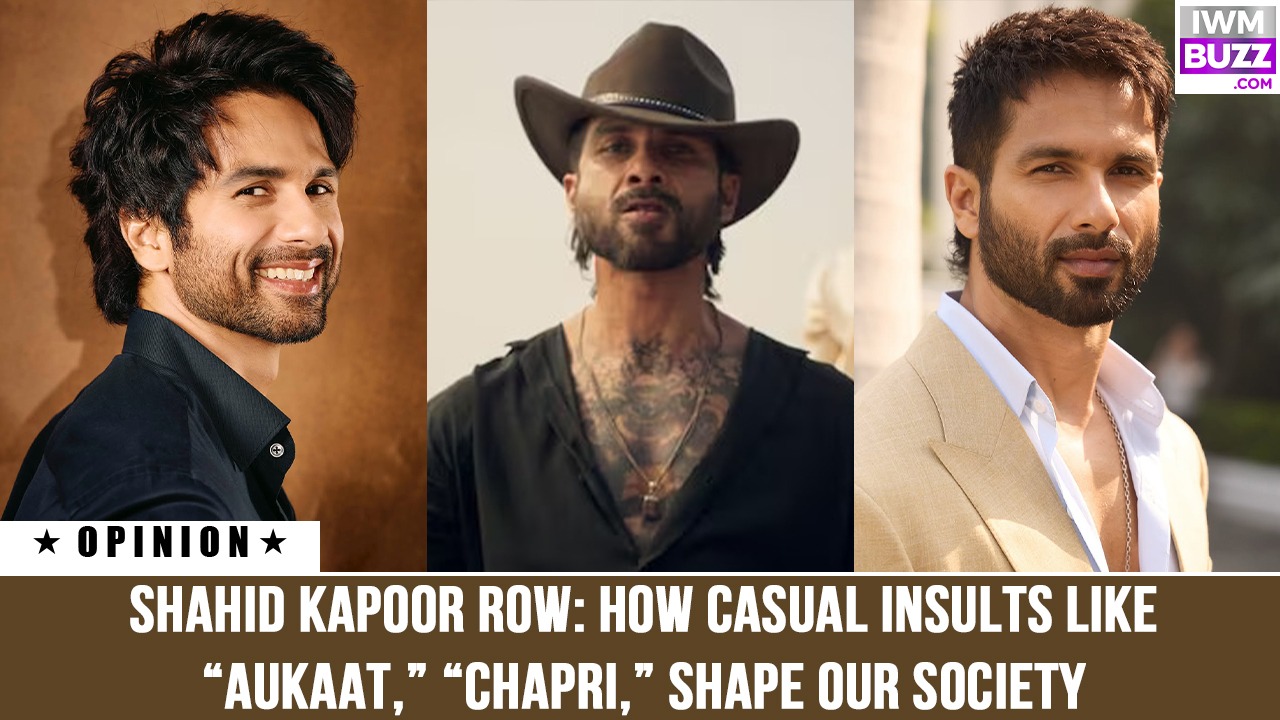
We live in India. The backlash that Shahid Kapoor received, therefore, was all foreseen. We do not, apparently, blame Shahid Kapoor in particular for it, as it gives all of us a quick realisation of how we use certain words loosely, which eventually turn disrespectful towards the downtrodden of the country. Words like “Aukaat,” “Chhapri,” “gutter-chaap,” and many others shape how we see society.
Words like these reinforce classism. The word ‘aukaat’ is one of the most overused terms in the country. “Teri kya aukaat hai,” “let’s show them their aukaat,” all these come from our deep-rooted traditional blind eyes to the ‘classifications.’ While we superficially talk about nullifying these classifications, we also play with these terminologies to sabotage voices when they go against the wind. We use these terminologies mostly to remind someone of their financial status or societal status. It works as a tool for humiliation and degradation, especially within the context of caste- or class-based confrontations where the intent is to assert dominance. ‘Chapri’ stands as a casteist epithet, time and again wielded by the privileged. Its roots trace back to the Chhaparband community—historically marginalised and oppressed. Today, it is deployed as a derogatory label targeting individuals from less privileged socioeconomic backgrounds who are perceived as “flashy” or “cringe.” This term is weaponised by privileged circles to regulate the ambitions and social mobility of marginalised groups, branding them as uncultured or undeserving.
This comes after we watch a film like O’Romeo. Based on gangsters. Now, if I watch a movie joyously about gangsters and, in real life, simultaneously call someone a ‘Chapri,’ I become a walking contradiction. It’s a self-conflicting moment in disguise.
Here’s what Shahid Kapoor said about dealing with online trolls. He said, “I say it all the time, no matter what, people can call me old-fashioned, but Aapki bolne ki aukaat honi chahiye, tabhi mooh kholna chaiye, ye mujhe bachpan se sikhaya gya hai, Pehle aap dekho ki aap kitne paani mein ho, phir baat karo.” He added, “So you have to keep yourself calm amidst all this, of course, be open to constructive criticism, but at the same time fill yourself with positivity and back yourself up.”
In the end, language is not just a mere reflection of our age-old prejudices but also a crucial tool that can push a harmonious society, for language can be the biggest barrier yet the biggest merger of worlds. The words we choose carry the weight to uplift or to wound, to include or to isolate.
If we really dream of building a society rooted in dignity and mutual respect, we must learn to cultivate language with care and empathy—choosing expressions that call for understanding, bridge class and religious divides, and honour the “humanity” of every individual on this planet.
