


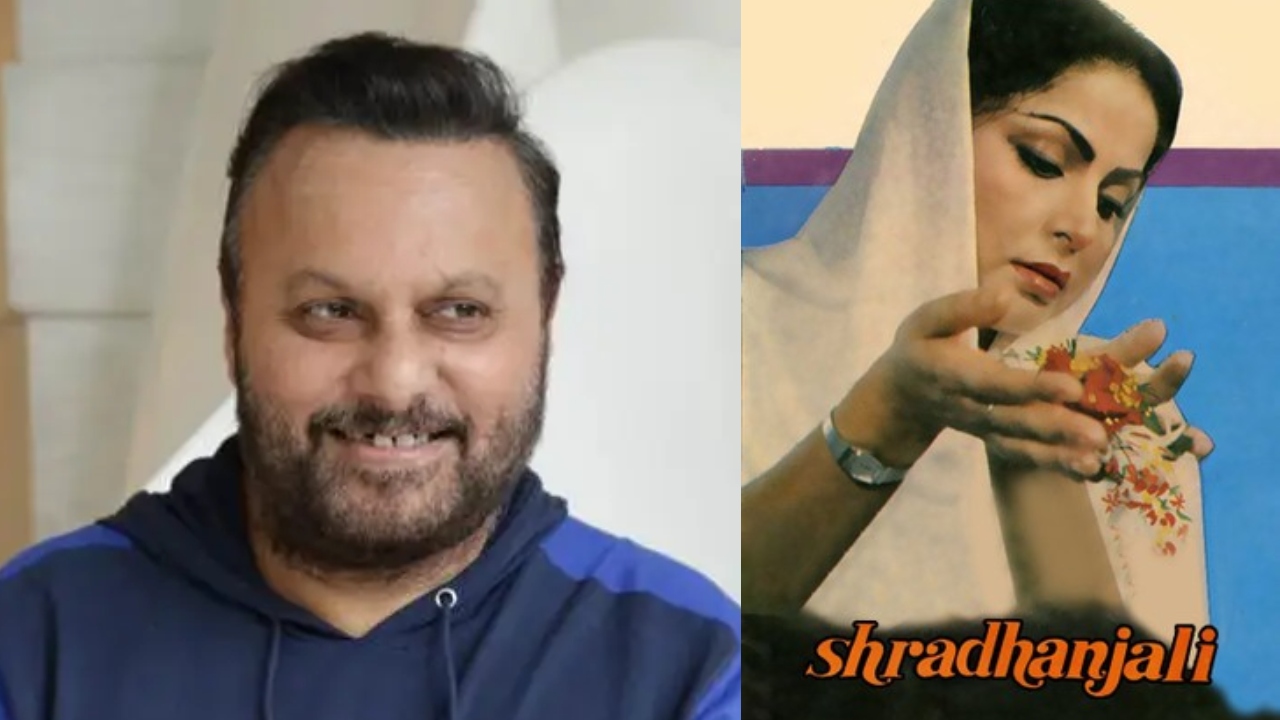
Director Anil Sharma revisits the journey of his first film, Shradhanjali, sharing how the idea took shape, why Rakhee agreed to back a young debutant filmmaker, and the memorable experiences that defined the shoot.
How did Shradhanjali happen?
“I was an assistant director at B. R. Films. I was in my early twenties and wanted to become a director. I knew I wouldn’t get a big hero for my first film, so I decided to make a female-centric film.
“As a young man in my twenties, I thought I understood women. The truth is, you can’t fully understand women even after living a long life. Believing I did, I developed this story and narrated it to my mother.
“The inspiration came from the story of Satyavan and Savitri. Since it wouldn’t have been practical to make a film about a woman literally bringing her husband back from death, I thought it would be possible to tell the story of a woman fulfilling her husband’s dreams. That’s how Shradhanjali came into being.
“My mother became emotional and cried after hearing the story. I felt then that the film would be a hit.
“I took the story to Rakhee ji through her brother. She initially thought I was bluffing because I was only 21 or 22 years old. In those days, there were hardly any young directors. Most became directors only after years of struggle, usually in their forties.
“Rakhee ji gave me just ten minutes to narrate the story. But I began at 6.30 pm and finished only at 10.30 pm. She kept asking questions throughout the narration, and I answered every one of them. She agreed to do the film after that very first narration. She was incredibly kind, and my directing career began because of her.”
On making a female-led film Asked whether a woman-centric film was a difficult proposition in those days, Sharma disagrees.
“It was actually easier than it is today. People say female-led films are a modern trend, but that’s not true.
“Rakhee, Hema Malini, Rekha, Zeenat Aman, Meena Kumari and Nargis all headlined films. From Mother India to Seeta Aur Geeta, actresses carried the narrative, while Dharmendra and Sanjeev Kumar played supporting roles. At that time, heroine-led films were easy to sell. Today, it’s much more difficult.”
Why has that changed?
Sharma believes the audience’s relationship with heroines has evolved over the years.
“Back then, films were made primarily for family audiences. Heroines were easily accepted because the way they dressed and conducted themselves felt relatable to the common audience.
“It’s not that today’s actresses aren’t talented. They are excellent performers. But the overall presentation of female characters today is often less relatable to mainstream family audiences.”
Memories from the shoot Looking back at the making of Shradhanjali, Sharma recalls several incidents that have stayed with him over the years.
“I started the film on July 14, 1980. Everyone wondered how someone in his early twenties could become a director.
“The film featured an ensemble cast, including Rakhee, Deepak Parashar, Suresh Oberoi, Arun Govil and Madhu Kapoor. We planned to complete it in a month. We didn’t have much money, but the work moved ahead with determination.
“On the first day of the shoot, when Rakhee ji arrived at the bungalow, I rushed to receive her. As I escorted her inside, a wooden railing suddenly broke. A protruding nail could have seriously injured her. I instinctively pushed it away. Rakhee ji was unharmed, but the nail dug into my back and I started bleeding.
“I first made sure she was safe, and only then did I go and get a tetanus shot.
“For another schedule, we were shooting at Vaitarna Dam. I found a small island that I thought would be perfect for the climax. There was no boat available, so we arranged a plastic boat from Nashik. There wasn’t even a boatman—we navigated it ourselves.
“When we finally reached the island, we discovered it was full of snakes. There were thousands of them. But I was determined to shoot there, so we had the entire island cleared before filming the climax. That was the kind of passion we had. Fortunately, that passion is still alive in me.
“Rakhee ji would often bring home-cooked food for the unit. She cooked fish for everyone else, but since I’m a vegetarian, she would prepare kheer especially for me.
“I haven’t been in touch with her for many years, but I’ve been thinking about meeting her again soon.”
