


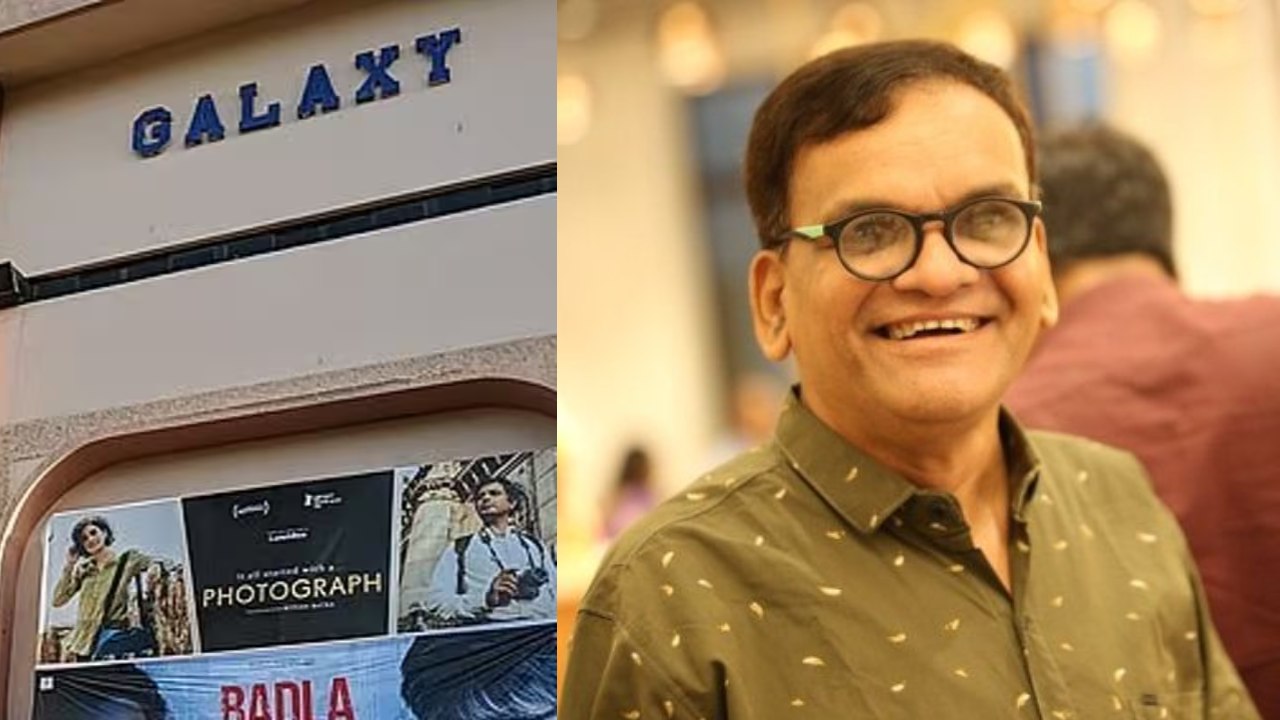
The sudden and unexpected shutdown of Bandra’s legendary Gaiety Galaxy complex has sent shockwaves through the Hindi film industry. For decades, the theatre was not just a screening venue, but the ultimate crucible for a Bollywood film’s success. Following the heartbreaking news, senior journalist and film historian Dilip Thakur opened his archives to share the forgotten milestones that cemented the complex’s iconic status.
The Grandeur of Khuda Gawah
In a rare cinematic event, the muhurat (launch ceremony) for Khuda Gawah (1992) took place directly inside Gaiety Galaxy. This logistical marvel was orchestrated by the theatre’s owner and the film’s producer, Manoj Desai, alongside director Mukul Anand. The press was seated to watch a pre-shot, adrenaline-pumping Buzkashi horse-riding sequence on the big screen. As the lights came on, superstars Amitabh Bachchan and Sridevi appeared live before the media, dressed entirely in their Afghan character costumes.
Premieres and Underdog Triumphs
While South Mumbai’s Ganga was the primary release venue for Batwara (1989), its star-studded premiere was intentionally diverted to Gaiety. Heavyweights like Dimple Kapadia and Reena Roy attended the event, which notably included a trophy distribution for the film’s record-breaking music sales—a defiant celebration even though the movie itself underperformed at the box office.
Before expanding to seven screens, the complex operated solely with Gaiety, Galaxy, and Gemini. Gemini quickly became a lifeline for smaller-budget films rejected by mainstream exhibitors. Thakur recalls the massive success of Honey, a modest film by Shyamlee that ran for weeks at Gemini, eventually drawing high praise from Raj Kapoor and dominating the era’s gossip magazines.
A Haven for Power Brokers
As the complex added four mini-theatres, it evolved into Mumbai’s premier hub for press shows and exclusive trials. Blockbusters like Gadar: Ek Prem Katha (2001) and Aśoka (2001) were first unveiled to journalists in these lower-tier screens. They also served as a secure viewing space for political heavyweights; private trial shows were routinely arranged for the late Shiv Sena supremo Balasaheb Thackeray. Years later, director Ashutosh Gowariker hosted an exclusive screening of Swades (2004) in the ‘Grace’ theatre specifically for Raj Thackeray.
The Ultimate Litmus Test
By the 1990s, the Bandra complex had officially dethroned South Mumbai’s single-screen giants like Minerva, Novelty, and Imperial. Its convenient suburban location and raw, unfiltered audience made it the industry’s most trusted metric for success. Stars routinely sneaked into night shows in disguise to gauge genuine crowd reactions. Juhi Chawla famously donned a burqa to secretly watch the audience respond to Yes Boss (1997) and Phir Bhi Dil Hai Hindustani (2000).
Its abrupt closure isn’t just the loss of a famous address, but a worrying reminder of how quickly Mumbai’s accessible, single-screen heritage is fading away.
