


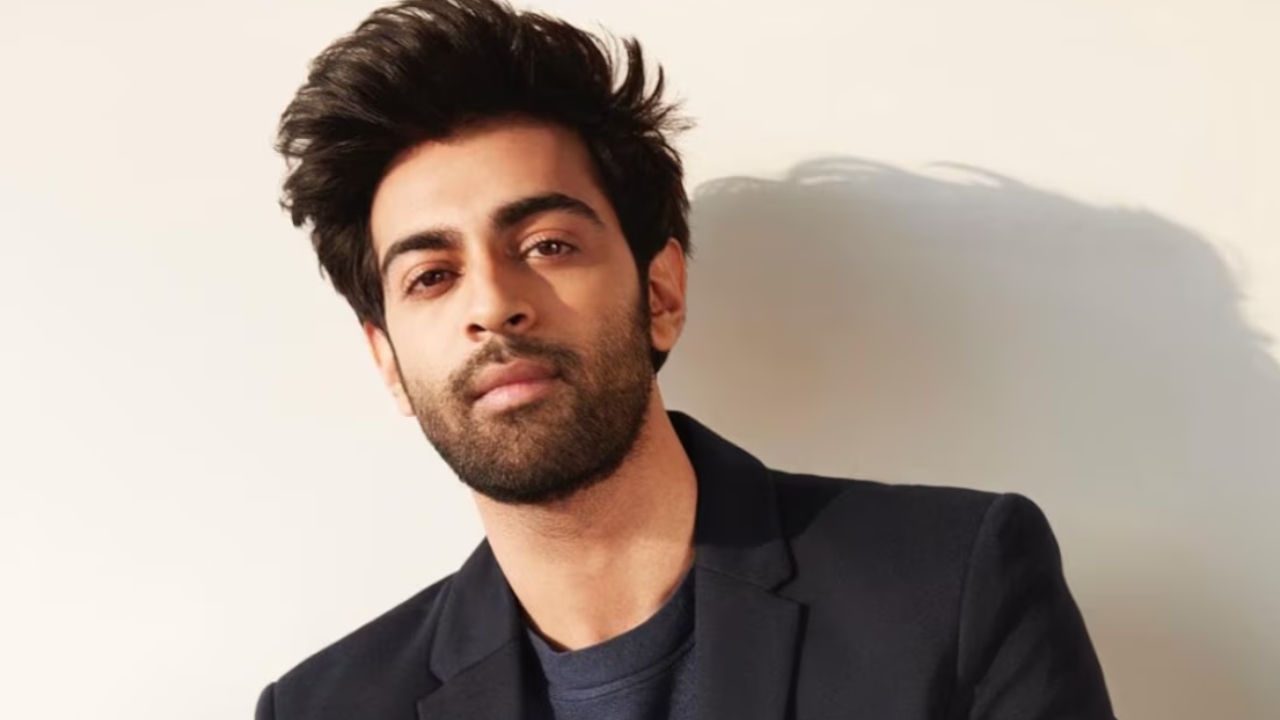
Following Real Kashmir Football Club’s historic 2026 International Emmy nomination in the Drama Series category, actor Anmol Dhillon Thakeria sits down to unpack the making of the acclaimed series. From shedding his natural demeanour to embody the prideful footballer Azlan Shah, to executing a one-take winning goal on set, Anmol reflects on the authenticity, camaraderie, and 7:00 a.m. training sessions that brought this deeply rooted Srinagar story to a global stage.
Real Kashmir Football Club was nominated in the Drama Series category at the 2026 International Emmy Awards. Why do you think a hyper-local, grounded story about football in Srinagar connected so deeply with international voters and audiences worldwide?
I’m not entirely sure, to be honest with you! It was a very pleasant surprise when it came out of the blue. When we made this show, the makers, directors, writers, and producers were all completely aligned. Everyone had an authentic motive, which was purely to tell the story. Simaab Hashmi, one of the writers, had this very personal story with him, and he went above and beyond to get the material right and make it happen.
I remember the environment on set was so different from anything I’d experienced before—it was extremely professional, almost like working in the West. Everyone had their heart and head in the right place, and that came across because we were all passionate and true to the story. No one was doing anything for gimmicks, PR, or publicity; everything was pure.
Obviously, Srinagar and Kashmir have global recognition for their beauty, and unfortunately sometimes for not-so-nice things as well. But it’s such a gorgeous place and tourist destination. I think the absolute purity of this true story is what ultimately connected with audiences worldwide.
You play Azlan Shah, a local star footballer returning to Srinagar after playing in Kolkata who carries a lot of pride and friction. What drew you to his vulnerability beneath that tough exterior?
Honestly, this was the role I tested for and got selected for, but I ended up loving the character. In real life, I consider myself a pretty vulnerable and empathetic person, so playing Azlan was actually the opposite of my natural personality.
I remember my director had to constantly tell me, “Do not smile, you’re too much of a gentleman, you’re too sweet.” He even sent me references of notorious, arrogant global footballers so I could study their body language and how they spoke. A persistent note through the initial days of the shoot was that I naturally tend to smile or act how I am in person, and the director would strictly remind me that this character doesn’t smile. Adjusting to that was honestly the hardest part for me.
Azlan shares a volatile history and ego clashes with Coach Mustafa. How did you approach building that tension so it felt earned rather than melodramatic?
The dynamic between Azlan and Coach Mustafa is one of the most interesting chapters in the show. For me personally, the scenes I enjoyed doing the most as an actor were the ones with Mustafa. They weirdly came across quite naturally, and that tension just built itself.
We got along great off-screen—we didn’t have to isolate ourselves or act rude to each other. We were sweet with one another, but we weren’t close buddies either, so maybe that little distance helped. Muazzam Bhat, who plays Coach Mustafa, is such a fantastic actor; the moment we’d start a scene, he would just switch right into character. Even if I wanted to be sweet and nice to him, it wouldn’t happen because he gave off that intense coach energy, and I just played right off it.
My favourite scene in the entire show is an important one between Coach Mustafa and Azlan, where they’re sitting in Azlan’s house across the table having a really heartfelt discussion. That scene really landed, and a lot of viewers have told me it’s my best work in the series. All the credit goes to Muazzam.
What did your football training look like before cameras rolled, and did you already have a background in the sport?
We had a couple of months of football training every morning at 7:00 a.m. at the Andheri Sports Complex, which was pretty taxing and tiring because I’d hit the gym right after to try and build leg muscle.
That said, the football training itself was quite straightforward for me. I’ve played a lot of football in my life, and I want to humbly say I’ve always been pretty good at it. When you’re shooting, you’re not actually playing a full match; you’re breaking it down like choreography. So, for someone who has played a lot of football, it was honestly a cake walk.
Was there a particular match sequence or emotional confrontation that pushed you the hardest as an actor?
There was one moment during a football sequence where I was supposed to score the winning goal in a major match. We had rehearsed it extensively as choreography, broken down into different parts so we all knew the drill.
The plan was to let the take play out, cut at the designated mark, and reset. But when the cameras rolled, I somehow managed to execute the entire sequence and action in one clean go, and the ball went right into the net. It was a magical moment, and luckily the camera kept rolling, so they captured it right then and there.
Afterward, our football coach and choreographer came up to me and said, “We don’t need to take even one more take. It’s never going to get better than this, and today is your lucky day—go buy a lottery ticket!” That was a truly special moment.
