


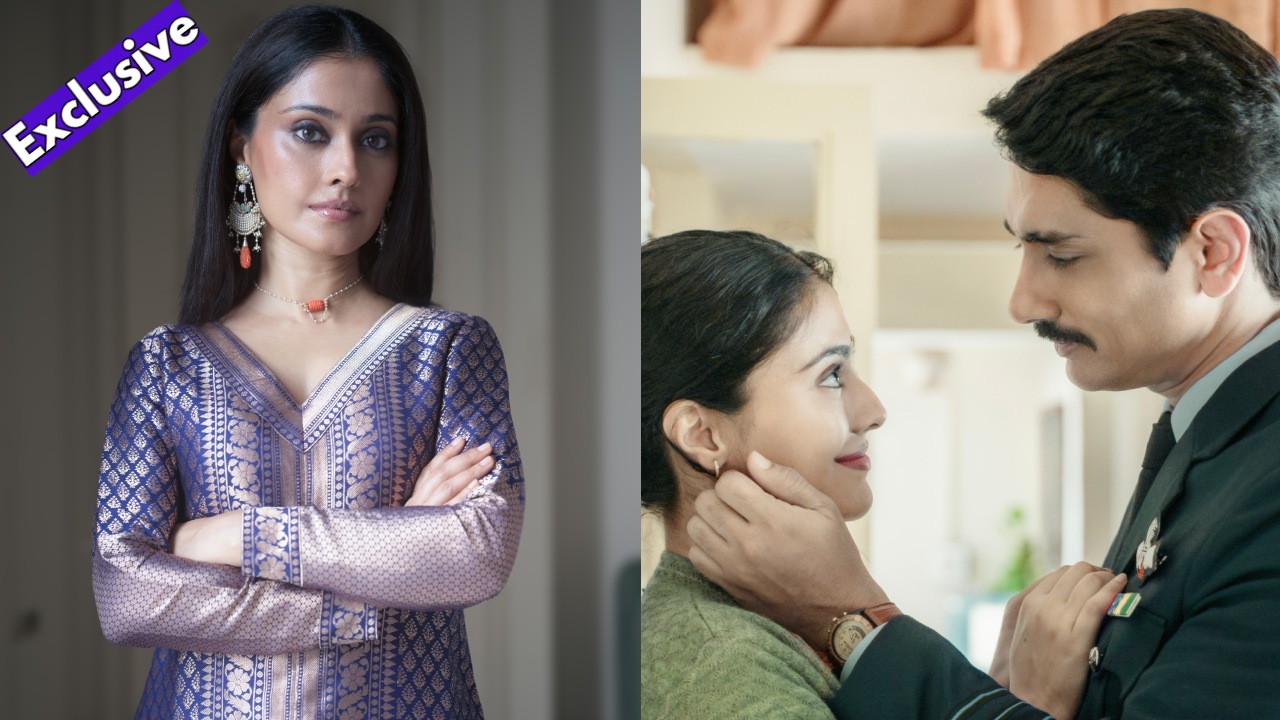
Actor, director, and writer Amrita Bagchi doesn’t view performance as mere imitation, especially when carrying the weight of real history. In her role as Alka Ahuja in the Netflix series Operation Safed Sagar, Bagchi moves past standard military-spouse tropes to capture the quiet, enduring grace of a real-life figure. In this conversation, Bagchi unpacks the emotional responsibility of portraying grief, her collaborative chemistry with co-star Siddharth, practical financial wisdom for navigating a non-linear career in the arts, and why indie film is less of a genre and more of a playground for creative conviction.
You’ve mentioned that playing Alka Ahuja felt more like a tribute than a standard performance. How did you approach playing a real-life figure whose sacrifice often remains in the shadows?
It began with meeting Alkaji, who astonished me with her lightness. Despite carrying such emotional weight, she has refused to bend to it. She has not become a bitter, cynical person and I think that kind of optimism requires a lot of courage. Her resilience and grace really inspired me. I realised I just needed to embody that feeling. Grief cannot be mimicked; you cannot just imitate someone’s tears. You have to dig deep into your own emotional pool to find a thread that connects and bridge that distance between the character and yourself. Alkaji bridged that distance for me, when she told me that Ajay ji always wanted her to be independent and full of joy. His absence had cemented that effervescent quality in her. The best thing about Oni and Abhijeet were that they never expected me to physically resemble her – they just wanted the personality to match. Small everyday things carry their own beauty and they needed me to simply co-exist with that feeling. Their extensive research and clarity made it very easy for me to surrender to them as an actor.
Military wife roles can sometimes fall into static, tearful tropes. What conversations did you have with director Oni Sen to ensure Alka’s emotional arc moved forward with every scene?
Directorially, the chain of thought was very clear: first joy and anchoring, then a rudderless feeling, then a decision to choose joy, then the determined re-building. Her leaving the base was not an exit, it was a transition.
There is a sort of timeless quality that Alkaji has. I think Oni and Abhijeet had that on the page from the very start. The writing was super intuitive; the directorial gaze was super intuitive. When I first read the script, I realised they were not here to glorify war. The core philosophy of this show is to depict the human cost. And human cost is not temporary.
Tears are a release – but after that, over years grief cements into a stone inside the hearts of those who mourn. So, tears you see are temporary, tears you feel are permanent. The director and creators wanted that feeling to land – so a cliched trope would not work here. I personally always connect with characters who want to cry but stop themselves, than the ones who breakdown.
The best thing about Oni, Abhijeet and Kushal are that they don’t believe in instructing the audience how to feel. They construct a world the viewer voluntarily empathises with. Emotions will automatically follow.
Working alongside Siddharth (who plays Sqn Ldr Ajay Ahuja), how did the two of you build the quiet, grounded tenderness of the relationship?
Siddharth has a very rich inner world. That’s what makes him so engaging to watch, because his mind is never blank. It’s also what makes him such a fun collaborator. His priority is always the story – he is not standing in a corner obsessing about himself. He is a very socially aware person, fundamentally a very equal person. So, scene building with him is exciting – since he is always looking for nuances and where there is none, he actively builds it. The tenderness came from this empathy. I just had to respond to his energy.
You’ve studied Fine Arts and Graphic Design. How does your visual background shape how you write a scene?
I’m still learning how to bridge the two. Sometimes it’s viewing the edit in my mind while writing, sometimes it’s imagining a few core visuals that I am unable to get out of my head and then threading them together with a story. Sometimes I hear a tune and a visual pops in my mind – and I build from that.
Your short film Succulent received acclaim on the festival circuit. How did wearing the director and writer hats alter the way you look at a script when you step back into an actor’s shoes?
I think it has helped me get an aerial view of scripts. The bigger arc, the core purpose and so on. So, I am not just looking at my scenes, but more the role of the character in the larger plot. The focus has shifted from being one thread of the story to the intention of the storyteller. If that aligns, I am happy.
How do you handle the internal critic when writing or directing?
I don’t know, I’m still figuring this one out. The inner critic can be quite paralysing – all advice is welcome!
From designing theatre sets to unexpectedly singing in Manav Kaul’s plays and moving into mainstream film and OTT, what has this non-linear path taught you about trusting the journey?
Firstly, have an alternative financial plan. That can be a side hustle, a job, family support – whatever it is. Money is necessary and the arts are an unpredictable field. Fix your relationship with money: there is no shame in looking for a stable income elsewhere, just so you can nourish your artistic side better.
Secondly, patience. Waqt se pehle aur Bhagya se adhik kuch nahi milta. The restlessness, the desperation, chasing numbers only makes us weaker and leads to misdirected decisions. It feeds the ego and not the self.
Thirdly, conviction can move mountains. Stick to your guns and the right people will find you.
Most importantly: COMMUNITY. Surround yourself with the right people, be kind to them, help out when you can and don’t judge a fellow artist too brutally. If you have an honest relationship with them, then critique their work but provide a solution as well. We are all spiralling through this darkness together. We all need to pull each other out of a rabbit hole once in a while.
You’ve worked on independent projects like Shoebox as well as high-budget series like Operation Safed Sagar. What unique creative freedoms do you cherish in indie cinema, and what do you enjoy about the scale of large-budget productions?
It’s important to understand that indie cinema is not a genre, but an economic category. An indie film can be an action flick, a heist story, a goofball comedy. What makes a film indie is the lack of resources. The advantage to that is lower stakes allow you to experiment. There are many new forms one can explore in independent cinema which a larger, commissioned studio project may not be able to incorporate.
The advantage to high-budget, studio supported narratives is that there is more time to creatively explore. Especially with a research driven project such as Operation Safed Sagar, the time given is absolute gold. One cannot hurry through this process – so that is definitely a huge plus. Also, more resources mean there are more hands willing to execute the idea. There is no resource driven challenge to compromise on a vision – one has the luxury to build things exactly as the creators see it in their minds.
In an industry that often tries to categorize artists as just actors or just writers, how do you protect your creative flexibility without letting the market typecast you?
I have not worked long enough to face any typecasting yet. So will have to wait and see. In fact, I have been very fortunate so far in that all my collaborators – both with regard to acting or filmmaking – have been extremely encouraging and cooperative about my multiple commitments.
What stories or genres are you currently wanting to write or direct next, and what kind of acting roles excite you post-Operation Safed Sagar?
Acting wise, I would love to do a dark comedy or play a villain. Or a detective. Creating wise, the intersection between society and climate is really interesting to me at the moment.
