


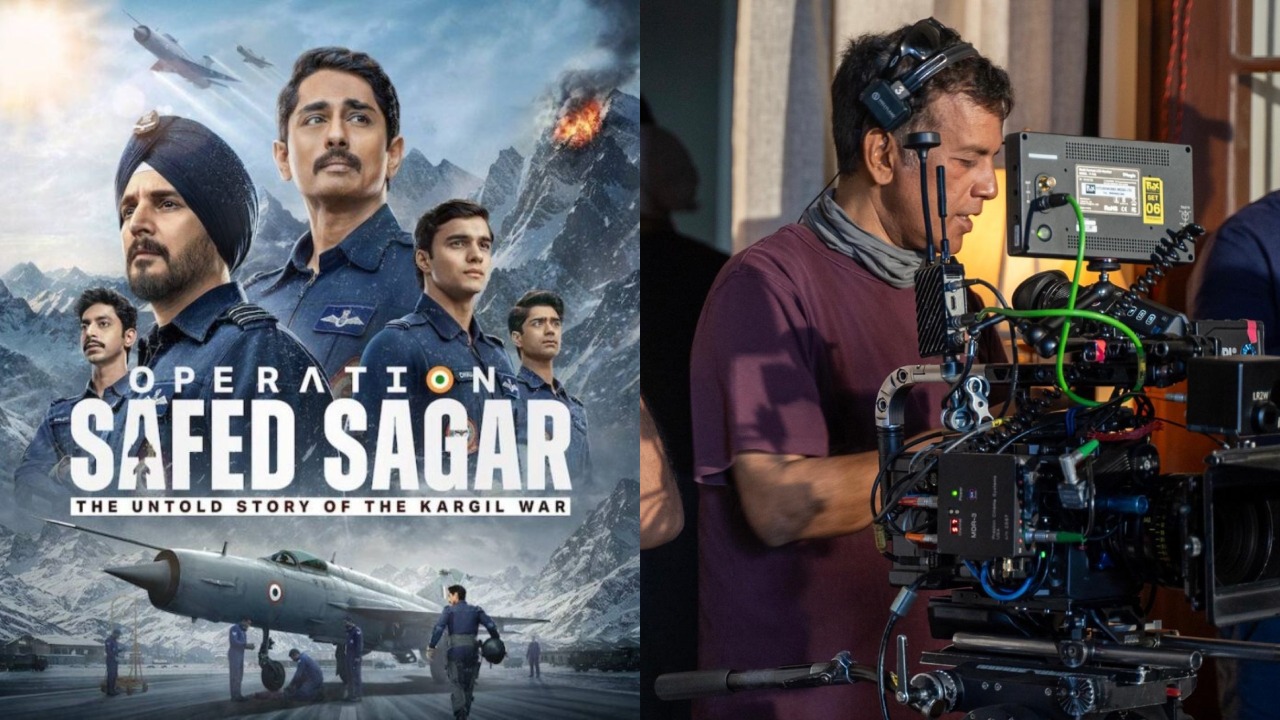
Bharti Dubey from IWMBuzz enters into an in-depth chat with Operation Safed Sagar cinematographer Setu.
What was the transition like from films like Kahaani and Dangal to aerial military spectacle like Operation Safed Sagar
Gratifying! All these projects have at their heart a quest, which leads to a journey. So, in that sense the transition is more about the spaces the characters inhabit and the setting in which the drama unfolds. But what I enjoyed also was the duration in which to tell the story. Six episodes, each almost an hour long meant there was more time to nuance each character and space. I really enjoy the slow peeling away of layers as the story progresses.
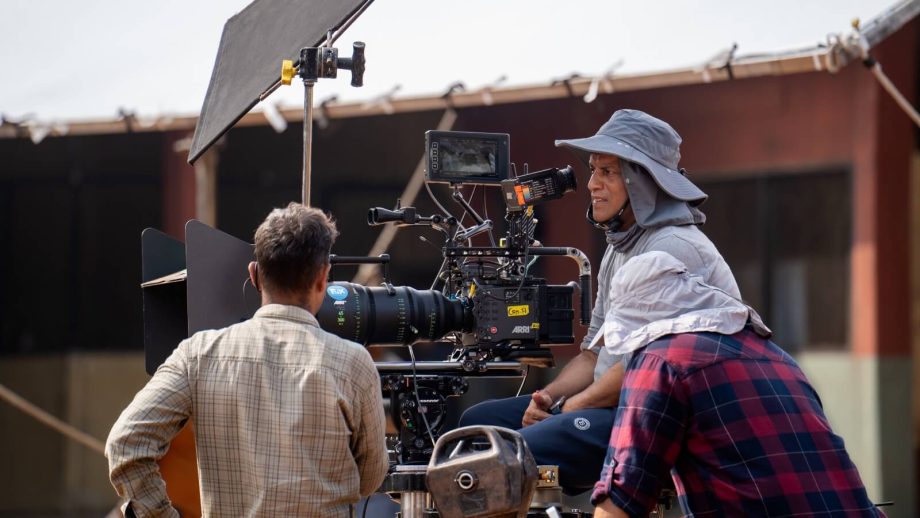
And of course, the opportunity to work in the various spaces the story took us to – Airforce residential quarters to runways, tarmacs, snow mountains at 17000ft, a cockpit in a studio surrounded by lights and matching that with live footage and many more. It was all a challenge I thoroughly enjoyed and am grateful for it!
What went into deciding the look of the show as the drama and action take place at air force bases, mountains, terrains, and residential quarters?
We wanted to create a different visual style between the terrestrial airforce bases, the mountains and the aircraft in the skies and at the same time keep it cohesive across the show. The idea was to juxtapose the smaller more cramped interiors with the vast open skies and the mountains at that height. This was done through lighting, lensing and a choice of formats to complement the reality of the spaces.
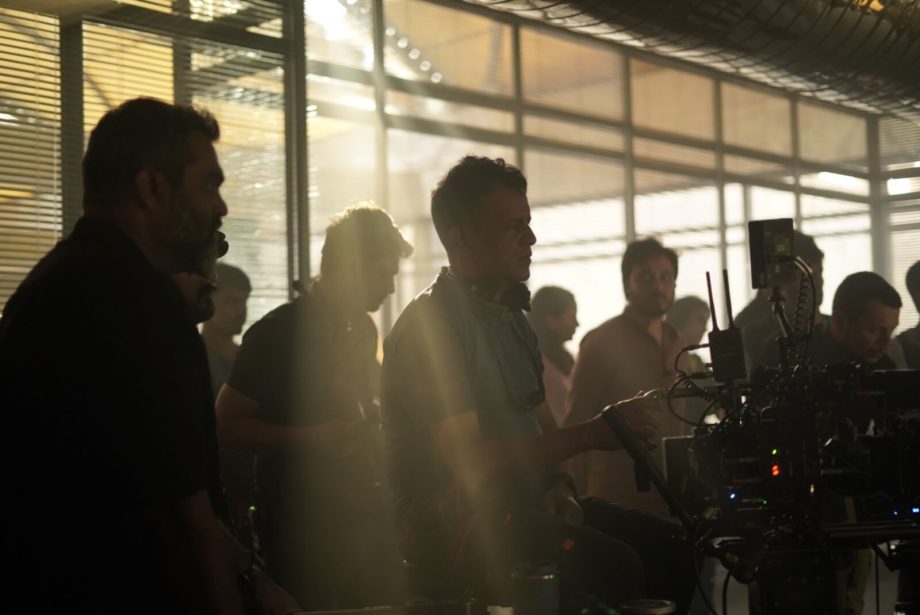
For example, the sequences in the airforce residential quarters were shot in actual officers’ residences with a super 35 format (Alexa 35) with Cooke s4i lenses to keep the form factor small and the image intimate. The mountain sequences were mostly shot close and with wider lenses. For the cockpit interior shots of the pilots, we wanted to see as much of the surroundings as possible. We chose the ARRI LF (Large Format) with LF 1.8x Cooke anamorphics.
How did you ensure seamless visual cohesion between live-action plate shooting and CGI jet sequences?
We recce’d the mountain locations a year before we were to shoot there. That was the only way for us to know the level of snow, the light, the challenges for production and for the art team who had to build sanghars (shelters) in tough conditions, when we came back to shoot the following year.
The camera vendors were gracious to send their cameras and lenses for this recce so the camera and VFX team could run technical tests for shooting plates and determining the kind of mountain textures that would need to be rendered. We ran tests for motion blur of plates for the fast panning with the jets. Locking the locations and the sun paths helped VFX create the 3D models for the world building.
Then once we were in the studios, Falk Buetner, our overall VFX supervisor and I sat down and marked the sun paths based on the live footage we had shot on the mountain peaks (the firing of the SAMs etc) and matched the sun position on the chroma shoot for lighting continuity. That sun position was followed in the CGI shots.
Merge XR, the company that installed and operated the motion base on which the cockpit was mounted, helped manage the 300 odd lights used to simulate the light condition in the mountains by programming them through Unreal Engine and making the light transitions easy and remarkable. For example, the dramatic lighting when Dhali and Goofy enter the thunder cloud in Ep1.
What was the most challenging sequence to shoot in terms of both visualization and execution?
In terms of visualisation, the world building of the night bombing sequences required a lot of back and forth between the VFX and camera department – the level of darkness, the degree of visibility and consistency between wide mountain scapes and the skin tones of the characters at night. The texture of the CG shots of the jets in the night sky had to be matched with the live take off and landing shots taken at the Nal airbase at night etc.
In terms of execution, the most challenging sequences were those shot on the mountain peaks – Shinku La Pass and Rohtang at altitudes of 17000 ft and more. The lack of oxygen and unpredictable weather made it quite tricky. It was difficult to walk 100m without stopping to gather your breath, especially with equipment. We had many action sequences where the actors had to run and be yanked off harnesses. It wasn’t easy.
In an era dominated by flashy drone shots, hyper-stylized color grades, and social media clips, how do you maintain visual restraint?
I trust the material. Everything emanates from there. One is aware of the pressures of losing the viewers’ attention given the amount of content out there but imposing a style that doesn’t belong can make it feel artificial and cliched.
I follow a method that has worked for me over the years – read the script multiple times, make notes, discuss with the director how he/she sees the film. Have discussions with art, costume, HMW so that we’re all on the same page and move on from there to the shot breakdown and shooting style. The same story can be told in multiple ways. You need to choose the method that works for you.
Has the rise of streaming platforms improved working conditions, technical standardization, and compensation structures for DOPs, or has compressional streaming delivery introduced new compromises to your lighting and grading intent?
I have shot only one series (Operation Safed Sagar) for streaming platforms, so based on that, I’d say a lot of attention is given to how an image from the grading suite is mapped out on the various consumer devices.
Before we started shooting, Johnny Francis (from NF) and I ran tests to see how footage seen on the set, would render on the platform in different colours spaces and dynamic ranges. I requested for multiple tests and the platform was extremely forthcoming.
Once that was locked, knowing that the primary grading would happen in High Dynamic Range (HDR), gave me a lot of bandwidth in the tonal range and the color rendition. This changed the way I approached the image on the shoot .
Overall, there is an effort being made to streamline the pre, on set and post production process to enhance quality control and create synergy between various departments.
Having trained at FTII on film stock and transitioned through every phase of digital evolution, what do you miss most about the discipline of pre-visualization required during the celluloid era?
There are 2 aspects to this. Firstly, when I was shooting on film, all the tools (apps / softwares) for pre-viz now available ,were not available then. These tools allow us to pre-visualise in great detail, noticeably reducing setup time and allowing us to anticipate problems, light placement issues, set restrictions etc, so we can plan accordingly or make the changes beforehand. The tools of prep were different then. There were shot lists, storyboards, still cameras and the director’s viewfinder. For someone like me, nothing beats being on the actual location in prep time.
However, shooting on film brings about a discipline not only because of cost but also because of the nature of the process. The magazine had to be loaded in darkness, the magazine had to be shut properly else the entire roll would be wasted, the chamber had to be locked securely, the eye had to be secured against the eyepiece else the film could get fogged etc. These rules kept everyone on their toes and more focused generally – not just around the camera.
How do you view the role of the modern cinematographer as digital worlds increasingly replace physical sets?
As visual storytellers, I feel cinematographers should be familiar with all the tools and stages used for creating the final visual. It could be DI, VFX or any other tech which aids / creates the image. I don’t think in depth knowledge is required for every facet, but definitely enough to know how and what the other depts are doing. I think the days of saying that “That is VFX and this is live action“ are over given how much VFX goes into creating the final picture. We need to think of the image as a product of various stages and take responsibility for it.
Which project stretched your creative problem-solving the furthest prior to Operation Safed Sagar?
Kahaani, because we had very little money. It was shot on film in extremely low light conditions. I used existing domestic tube lights to shoot most of the interiors. A lot of it was shot in sodium vapour street lights and puja lights which can be harsh and can produce unpredictable results. I think the crew worked as a team to turn the limitations into an advantage. Parts of the film stock had to be pushed in the lab and I wasn’t sure what it looked like till about a week later!
And then Lal Singh Chaddha. It had a complex war setup being shot at a very high altitude with complicated action/stunts and long tracking shots involving tracks being installed along a steep incline and monitored by pulleys and winches. Again, severe weather conditions made us constantly adapt and recalibrate. Also, we were shooting the Tur Kalleyan song literally from Kashmir to Kanyakumari while on the move constantly without any room for slip-ups.
What is your core piece of advice for young film school graduates entering an industry increasingly influenced by AI pre-visualization, budget crunches, and rapid turnarounds?
Observe light keenly – study it everywhere, all the time. See it from different angles, on different surfaces and colours. Draw the curtains and see how the mood changes. Turn different lights on and off and see the different mood they create. Use your camera or phone to compose frames. See how the story changes with different magnification and angles – but above all learn to feel, be aware of the emotion they create within you. If you can’t feel it inside, you can’t invoke it on camera. Technology is only a wave you ride, ultimately, it’s your heart and mind that gives it direction.
Keep reading IWMBuzz.com.
