


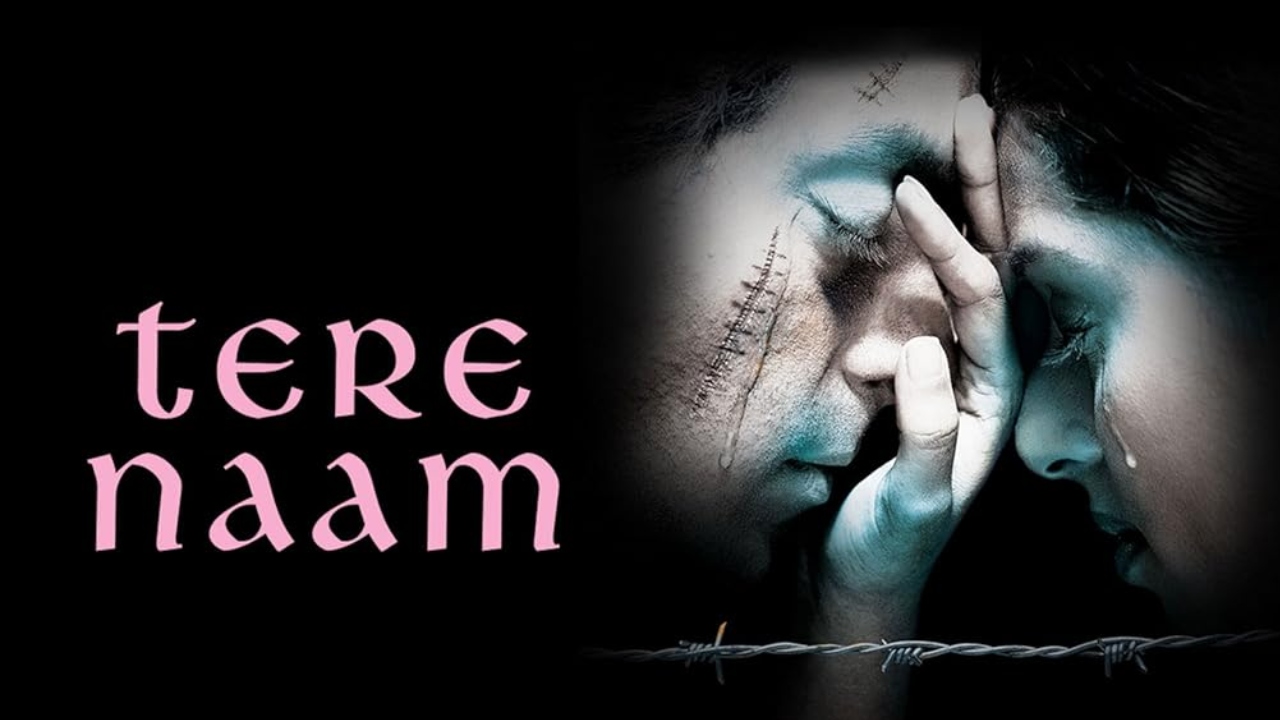
The distinctive early 2000s flavour resurfaces once again with Tere Naam. It is all as they say, keep it cult. Tere Naam has the fire of it, the OG cult of its time. It encapsulates the raw agony, consuming obsession, unwavering devotion, electrifying thrill, bitter rejection, fleeting union, and, ultimately, a tragedy that lingers long after the credits roll.
The saga of Radhe and Nirjara has evolved over the years, and by 2026, its meaning may be refracted through a prism of changing generational values—prompting us to question whether one should yearn for the kind of all-consuming love depicted by the protagonists. Yet, the film’s resonance endures, echoing through time at its own measured rhythm, a showdown to love’s complexity. Love is rarely an endless serenade of bliss; it morphs, sometimes into unsettling, even harrowing forms. Love, in its truest sense, is elemental and unvarnished—capable of rending hearts, leaving devastation in its wake, only to forge reunions if fate allows. Revisiting Tere Naam is, thus, a portal to a vanished era, inviting us not only to reminisce but also to reinterpret such intense unions in the context of contemporary relationships.
A young, rowdy man, an ex-college student who roams the premises to rag juniors, follows a pattern similar to the rag first-year student Nirjara; however, he ends up falling in love. Reciprocation is initially denied, and later it flows—but nemesis strips it away with cruelty.
Today’s audience must understand the forces that shape contemporary cinematic narratives—and the magnetic fervour surrounding a superstar like Salman Khan. He is someone whose sheer presence draws crowds, inspiring a frenzy of adulation, thunderous applause, roars and even tears from fans who fill theatres with unbridled emotion. The film’s iconic hairstyle sparked a nationwide trend, with men across the country emulating Radhe Mohan’s epitome of swagger and charisma.
When Bhumika Chawla appears as Nirjara, she stands in stark contrast to the heavily ornamented, hyper-stylised women who we see on today’s screens. Her understated presence feels just, you know, real—before the era of over-polished, meticulously perfected glamour took over. There’s an unvarnished realism to her portrayal that feels both genuine and deeply relatable, grounding the film in an emotional truth that resonates even now.
We also see early 2000s Ravi Kishan, who plays Rameshwar, who has shaped an entire regional industry and is worshipped throughout the nation. Along with getting a chance to revisit artists, we have almost forgotten, Savita Prabhune, Sachin Khedekar, Sarfraz Khan, Radhika Chaudhari, Indira Krishnan, Neeraj Sood, (late)Ghanashyam Nayak, Saurabh Dubey and others. Witnessing Gopal Dutt shall light you up.
Re-released on 27th February, the film is in your nearby theatres. Why watch it in the theatre when you have it on OTT? Theatres help you immerse better—the laughter, the gasps, the tension shared with fellow viewers—amplifying every emotion you let in. The grandeur of cinema comes alive, making the experience more thrilling, more memorable, and ultimately, more fun.
