


From the legendary filmmaker H. S. Rawail to Rahul Rawail and now Shiv Rawail, three generations of the same family have contributed to Hindi cinema in their own distinctive ways.
Shiv Rawail, director of Alpha, starring Alia Bhatt and Sharvari Wagh, represents the third generation of this filmmaking family. His father, Rahul Rawail, directed memorable films such as Biwi O Biwi, Arjun, Dacait and Bekhudi. His grandfather, H. S. Rawail, was particularly known for his romantic dramas and Muslim social films.
As film historian and journalist Dilip Thakur observes, “The Rawail family’s journey reflects the changing face of Hindi cinema across three generations. Each generation has brought its own storytelling style, but the passion for filmmaking remains a common thread.”
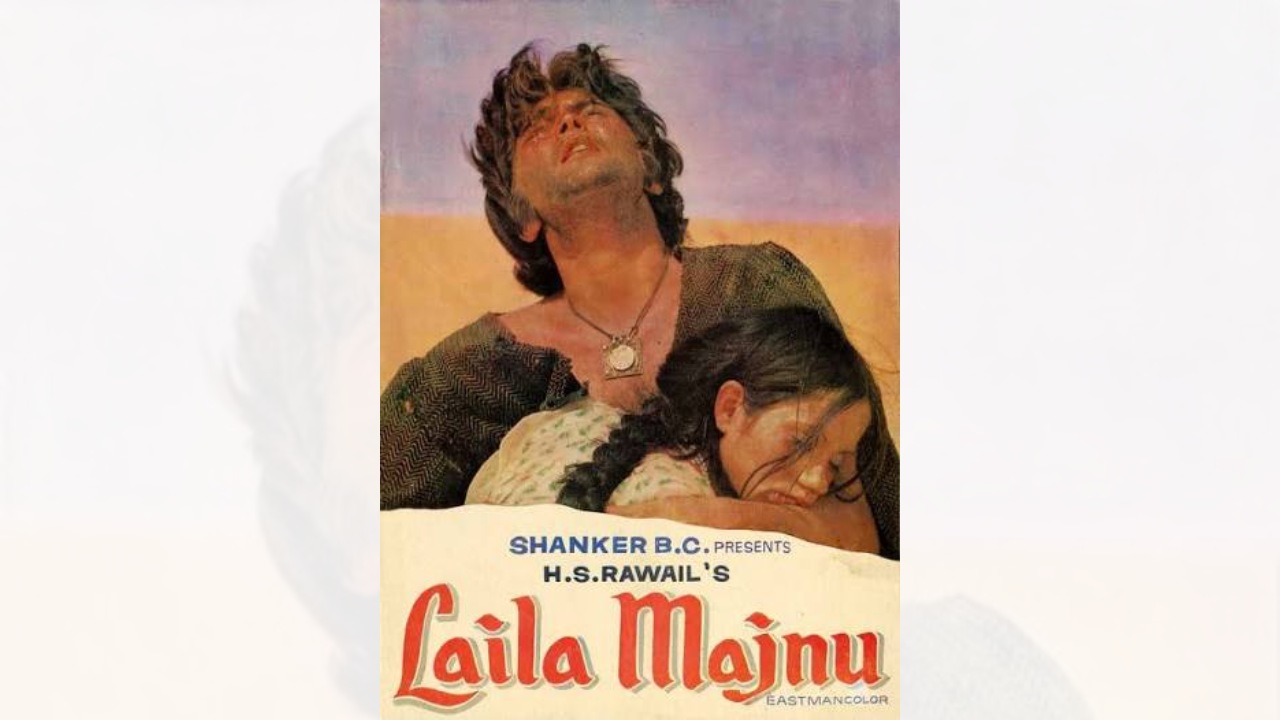
The completion of fifty years of H. S. Rawail’s Laila Majnu (1976) provides a wonderful opportunity to revisit one of Hindi cinema’s most memorable romantic musicals.
Rawail had earlier achieved considerable success with Mere Mehboob (1963). The film became immensely popular, particularly for its unforgettable songs, including Mere Mehboob Tujhe Meri Mohabbat Ki Kasam.
His Mehboob Ki Mehndi (1971), starring Rajesh Khanna and Leena Chandavarkar, presented an interesting contrast. Although its songs became extremely popular, the film failed to achieve the expected commercial success.
However, Laila Majnu had an altogether different journey.
Legendary romances such as Laila-Majnu, Heer-Ranjha, Romeo-Juliet and Shirin-Farhad have fascinated audiences for generations. These stories represent attraction, trust, longing, passion, separation and sacrifice.
“Love stories never grow old. Only the generations watching them change. The emotions of love, longing and sacrifice remain timeless,” says Dilip Thakur, reflecting on the enduring appeal of such romantic legends.
H. S. Rawail cast Rishi Kapoor as Majnu and introduced Ranjeeta as Laila. It was Ranjeeta’s first film, while Rishi Kapoor was steadily establishing himself as a popular young romantic hero.
During that phase of his career, Rishi Kapoor frequently appeared opposite new actresses, including Dimple Kapadia in Bobby, Shoma Anand in Barood and Kajal Kiran in Hum Kisise Kum Naheen.
One of the greatest strengths of Laila Majnu was undoubtedly its music.
The lyrics were written by Sahir Ludhianvi, while the compositions were created by the legendary Madan Mohan. Unfortunately, Madan Mohan passed away while the film was still under production. Jaidev subsequently contributed to the film’s background score.
The film’s gramophone records and audio cassettes were released before its theatrical arrival, and the songs quickly became popular among music lovers.
Mohammed Rafi’s voice for Rishi Kapoor and Lata Mangeshkar’s playback singing for Ranjeeta added remarkable emotional depth to the romance.
Songs such as Husn Hazir Hai Mohabbat Ki Saza Paane Ko, Koi Patthar Se Na Maare Mere Deewane Ko, Tere Dar Pe Aaya Hoon, Hoke Mayoos Tere Dar Se, Is Reshmi Paazeb Ki Jhankar Ke Sadke and Ab Agar Humse Khudai Bhi became immensely popular.
One of the songs even climbed to a prominent position on the celebrated Binaca Geetmala broadcast by Radio Ceylon.
According to Dilip Thakur, “There was a time when the music of a film became popular even before the film reached theatres. Audiences would first fall in love with the songs and then eagerly wait to experience those emotions on the silver screen. Laila Majnu was a perfect example of that tradition.”
During the golden era of Hindi cinema, filmmakers understood the importance of music, lyrics, dance and their emotional connection with the screenplay. Songs were carefully integrated into the narrative, and their picturisation added considerably to the film’s overall appeal.
Laila Majnu benefited enormously from this filmmaking tradition.
Interestingly, the film’s box-office journey was quite unusual.
It was initially released in several North Indian territories, including Delhi, Punjab and Uttar Pradesh. The audience response was extremely encouraging. Its romantic storyline, performances and memorable songs helped create tremendous excitement.
In those days, films were often released in different distribution territories in phases rather than simultaneously across the country. Success in one circuit frequently generated anticipation in another.
By the time Laila Majnu was scheduled for release in Mumbai, its popularity in North India had already created high expectations.
However, the Mumbai response surprised the film trade.
Despite its success in northern territories, the film received a comparatively lukewarm reception in Mumbai.
For producers Ram B. C. and Shiru Daryani, this unexpected contrast came as a considerable commercial disappointment.
Dilip Thakur points out, “The box-office journey of Laila Majnu demonstrates how audience preferences can differ from one territory to another. A film may create tremendous excitement in North India and yet receive a completely different response in Mumbai. Such contrasts were an important reality of the distribution system of that period.”
Nevertheless, the film achieved a noteworthy distinction in Mumbai.
At Super Cinema, Laila Majnu successfully completed a silver-jubilee run of 25 weeks.
This achievement made its commercial journey even more interesting.
“Cinema has always been unpredictable. The same film can receive different responses in different cities. Yet a silver-jubilee run at a Mumbai theatre was certainly an achievement worth remembering,” observes Dilip Thakur.
Fifty years later, Laila Majnu continues to hold a special place in the memories of Hindi film enthusiasts.
Rishi Kapoor’s youthful romantic image, Ranjeeta’s debut performance, Sahir Ludhianvi’s evocative poetry, Madan Mohan’s haunting compositions and Mohammed Rafi’s soulful singing have ensured that the film remains part of Hindi cinema’s musical heritage.
As Dilip Thakur aptly reflects, “Box-office collections belong to a particular period, but memorable songs and powerful emotions belong to generations. That is why a film like Laila Majnu continues to be remembered even after fifty years.”
Ultimately, the story of Laila Majnu is not merely about a legendary romance or its contrasting commercial fortunes. It is also about an era when music played a central role in filmmaking and when songs could create an emotional bond between a film and its audience long before the curtains rose in a cinema hall.
Fifty years have passed, but the melodies of ‘Laila Majnu’ continue to echo in the hearts of Hindi film music lovers.
