


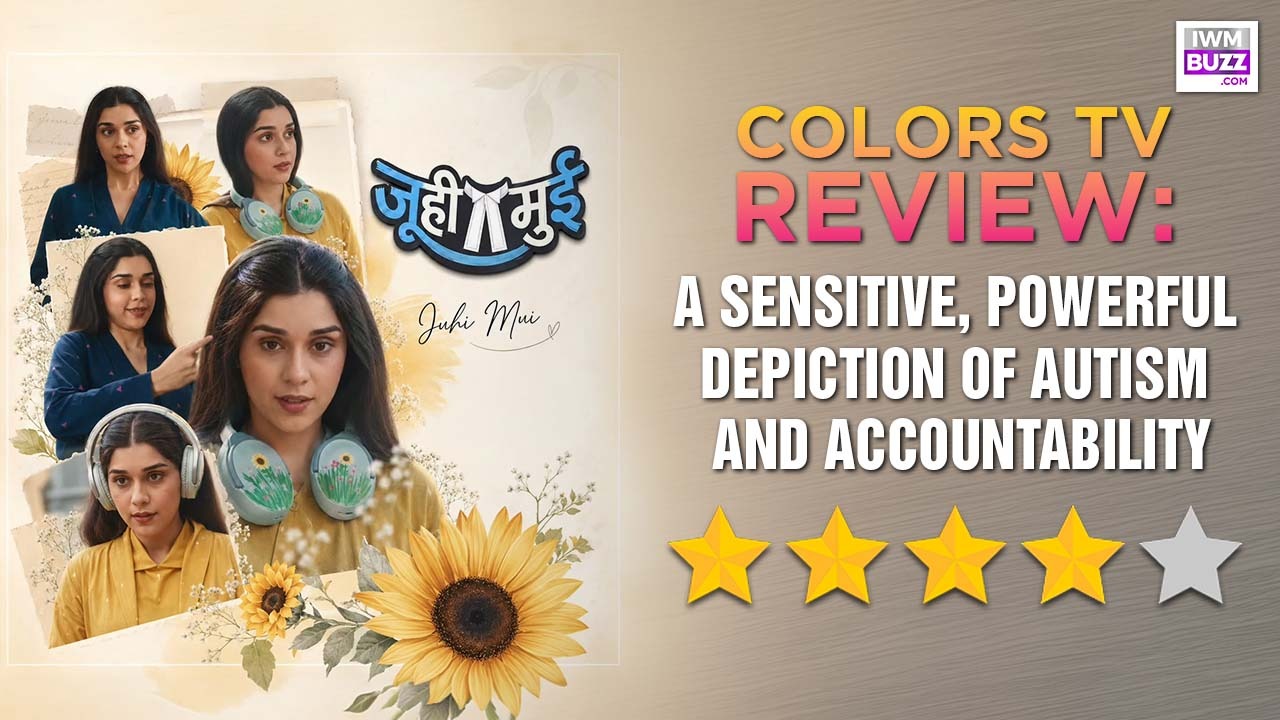
While Colors TV’s new fiction series Juhi Mui may draw inspiration from the globally acclaimed K-drama Extraordinary Attorney Woo, it carves out its own identity as an inspiring and deeply moving legal drama. Produced by Goldie Behl’s Rose Audio Visuals, the show stands out as a breath of fresh air in the Indian television landscape, successfully breaking away from conventional saas-bahu tropes to deliver a grounded, relatable narrative centred on neurodiversity.
The story follows Juhi Suri, an autistic prodigy blessed with a photographic memory and sharp legal acumen. At the heart of the early episodes is the beautiful, meticulously depicted bond between Juhi and her father, Rajendra Suri. Rajendra is Juhi’s ultimate anchor, understanding her nuances and guiding her through her lowest moments. Their signature “magical finger clasp” is an endearing directorial touch that instantly gives the viewer heartwarming, Jaadu ki Jhappi vibes.
Beyond the family dynamics, the show introduces intriguing legal complexities, scams, and cover-ups. The narrative establishes a solid foundation of professional teamwork between Rajendra and Inspector Sanyam Singh. This partnership cleverly foreshadows the strong, empathetic bond that will inevitably develop between Juhi and Sanyam as she enters the legal arena to carry forward her father’s legacy.
Sanyam Singh’s unapologetic, desi cop avatar provides solid support to the plot. Under his tough exterior lies a deeply emotional interior, and his patience and resolve truly shine during his interactions with Juhi.
The psychological depth of the concept, paired with strong execution, remains one of the show’s biggest highlights. The emotional beats hit close to home—particularly the heartbreaking moments featuring Juhi’s mother, who is left weeping and questioning how she will care for Juhi following her husband’s tragic demise. The interactions between Rajinder and Juhi, Karan and Juhi, as well as between Rajinder and Suchitra, have been nuanced yet powerful, effectively expressing the emotions required in each scenario.
Eisha Singh delivers what is arguably the most challenging performance of her career. Relying heavily on subtle physical nuances, shifting expressions, and the power of silence, she delivers a deeply sincere and respectful portrayal of an autistic individual.
Sanjay Suri is the absolute standout in the initial episodes. Despite his role being a cameo, his commanding and warm screen presence sets a benchmark that will undoubtedly guide Eisha’s portrayal moving forward.
Sai Deodhar, as the mother, initially plays second fiddle to Rajendra, but the versatile actress proves her mettle in a powerhouse emotional scene with Juhi after her husband’s death. Her time to shine has truly arrived.
Krushag Ghuge gives a highly confident and endearing performance as Juhi’s supportive brother, Karan.
Ayub Khan commands immense respect in his role, setting the stage for what promises to be gripping legal friction between his character and Juhi.
The supporting cast—including Anjali Gupta, Shivani Sopori, Sukesh Anand, Krrishna Soni, Manish Khanna and a brilliant Amit Dolawat as Mukul Ahlawat—are all well-placed within the story arc. Furthermore, the soulful title song sung by Sanchari Sengupta beautifully captures the emotional core of the series.
Inevitably, Juhi Mui will face scrutiny and constant comparisons for its lack of originality due to its striking similarities to its K-drama predecessor. However, the show’s initial execution and stellar performances give it a fighting chance to win hearts amidst the scepticism.
Overall, the true strength of Juhi Mui lies in its ability to command proactive empathy rather than mere sympathy. If the show can maintain this breezy, uplifting, and sensitive template throughout its run, it is bound to sustain a positive and lasting impact on its audience.
We at IWMBuzz.com give 4 stars out of 5 for Juhi Mui.
