


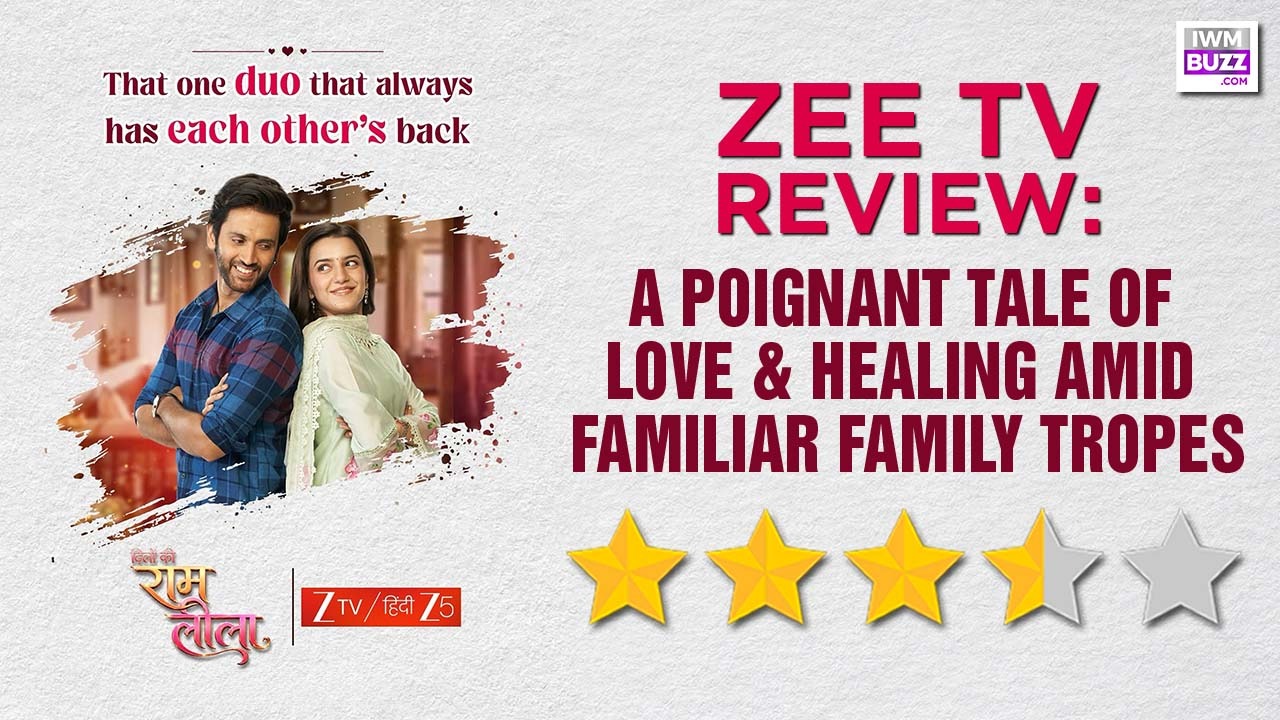
Zee TV continues its ambitious programming evolution with the launch of Dilo Ki Ram Leela, a brand-new prime-time drama produced by Cockrow and Shaika Entertainment. Slotted for the crucial 10 PM mark, this new offering builds on the channel’s recent strategy of adapting proven regional hits for a Hindi-speaking audience.
Visually rich and narrative-driven, the show strikes a vivid contrast between the opulence of Education Minister Virendra Sehgal’s New Delhi residence, and the bustling, grounded lifestyle of the male protagonist, Ram, in Old Delhi.
Anchored by the evocative tagline—“Pyaar jo naa samjhaute maange, naa wajah”— Dilo Ki Ram Leela explores how love built on social stature and compromise ultimately crumbles, while relationships rooted in pure, selfless devotion thrive.
Behind Virendra Sehgal’s polished facade of political influence and immense wealth lies his cold, resentful nature towards his daughter. In stark contrast stands Ram’s humble household—financially modest, yet rich in the love, trust, and mutual respect that money cannot buy.
At the heart of the story is Leela, whose affluent lifestyle only magnifies her deep-seated loneliness. Desperate for her father’s love and validation, her actions are frequently misunderstood. Though flawed, her behaviour is driven not by malevolence, but by the lingering emotional scars of a childhood devoid of emotional guidance.
Ram is the emotional backbone of his household—unfailingly responsible, empathetic, and gentle. Yet, in Leela’s life, he occupies a unique dual role: a fiercely protective shield who is simultaneously willing to yield to her. Guided by the grace of a loving mother, he perceives and carries the weight of Leela’s pain as if it were his own.
Entering this world is Vijaya Sehgal—calculating, authoritative, and fiercely career-driven. As Virendra Sehgal’s sister, she weaponises her tactical influence to win every power struggle within the family. Her goal from episode one is crystal clear: to unseat her brother from his throne, no matter the cost. She leaves no stone unturned to call out the shortcomings of Leela to hit at her brother’s weakness.
Dilo Ki Ram Leela makes a strong first impression, grounding its narrative in relatable characters and high-stakes emotional drama. The core theme—navigating intense academic pressure while yearning for parental validation—strikes an immediate, authentic chord. The show’s production design also stands out, crafting a sharp visual contrast between the oppressive luxury of the Sehgal mansion and the warm, vibrant middle-class home of Ram.
While the central premise of a rigid, wealthy family juxtaposed against a close-knit, lower-income household relies on a classic television trope, the execution keeps it engaging. Certain father-daughter moments lean slightly heavily into melodrama, but the dynamic between Ram and Leela balances it out. Their connection, built on mutual emotional healing, feels genuine. A stand-out opening sequence—where Leela turns to Ram for help with her exam-day prayers—delivers a refreshing splash of warmth and lighthearted charm against the heavy tension of the Sehgal household.
Paced thoughtfully, the first episode efficiently establishes Leela’s academic anxiety, her father’s icy distance, and the weight of responsibility on Ram’s shoulders. By dedicating ample screen time to the silent, suffocating dynamic of the Sehgal family, the show successfully builds a compelling, tension-filled foundation for the drama to unfold.
Aastha Sharma beautifully captures the raw, painful vulnerability of a daughter grappling with academic anxiety and parental neglect, while seamlessly switching to bring out her character’s innocent, playful side alongside Ram.
Mishkat Varma infuses Ram with a refreshing, infectious charm, effortlessly embodying his optimistic energy through lighthearted body language.
Eijaz Khan commands the screen with a formidable presence. His calculated pauses in dialogue and sharp, emotion-heavy glares elevate him into a truly compelling patriarch.
Manasi Salvi exudes a quiet sophistication and grace, paired with a deep-seated ambition that shines through in her role, showcasing yet another refined display of talent.
Meanwhile, Charul Bhavsar and Madhvendra Jha deliver a deeply endearing performance as Ram’s parents. The supporting cast—including Romanch Mehta, Neetu Bhatt, and Ankita Khare—is equally well-placed, anchoring the narrative seamlessly.
Overall, Dilo Ki Ram Leela operates on a high emotional register. While its contrast between a toxic, elite family and a warm, joy-filled underprivileged household leans into a heavily overused Indian television trope, the standout performances elevate the relational dynamics. It is a finely crafted emotional drama that will likely earn its audience over time.
We at IWMBuzz.com give 3.5 out of 5 stars for Zee TV’s Dilo Ki Ram Leela.
