


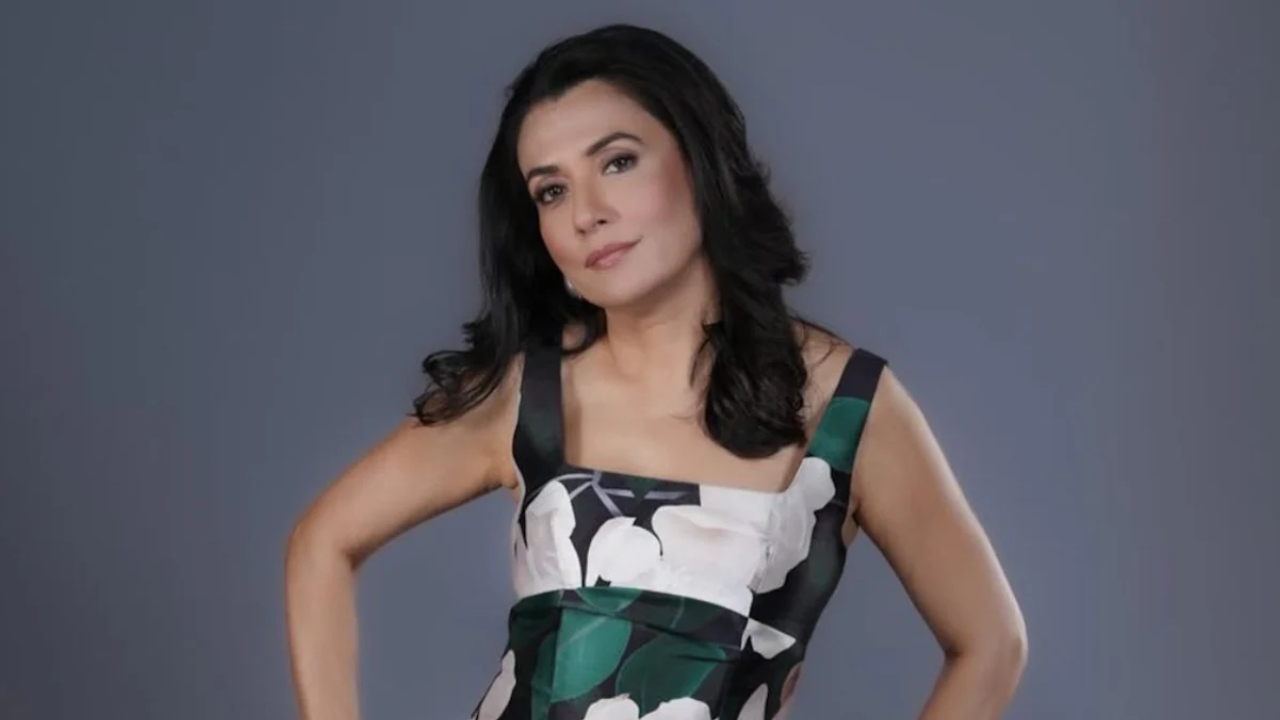
Mini Mathur created history by becoming the first-ever winner of Amazon Prime Video’s reality show Alliance. After creating buzz with her victory, showcasing her strong mental and physical game, the Video Jockey, in a recent conversation, discussed being rejected due to her pregnancy, pay parity, and her refusal to accept stereotypical roles.
Losing MTV And Indian Idol Gigs Over Pregnancy
When asked about the non-renewal of her contract on MTV and Indian Idol, Mini Mathur shared that, “when I got pregnant with Vivaan, at that time I had spent five years with MTV and her contract was now renewed because ‘VJs can never be pregnant’.” She further explained that she thinks it was because the Indian audience won’t take it, but the makers never told her that. However, when she saw the contracts were rejected, she felt a little bad after making her name, and making her exit due to pregnancy was infuriating for her.
Mini was pregnant with her first child, Vivaan, when she completed 5 years with MTV and her VJ contract was not renewed. Later, when she was pregnant with her second child, Sairah, after Indian Idol Season 4. The makers explicitly told her not to do Season 5 because “Indian audiences would not accept a pregnant woman” on screen. They later invited her back for Season 6, but she turned it down.
Fight for Pay Parity
Talking about pay parity, Mini shared that she asked for the male host opposite her for her first show, Tol Mol Ke Bol on Zee TV, to match her pay cheque. She revealed that she asked how much the makers were paying R. Madhavan, as it was their first show for both, and even kept the same condition for the script: she didn’t wish to be a supporting part of the show, refusing to be a foil to maLe hosts. Mini highlighted that she had always fought for it, even for Indian Idol.
Rejecting Stereotypical Roles
When asked if she chose a project thinking she won’t get work. The actress and VJ Mini revealed she had never thought there would be fallout or that she wouldn’t get work, because she had never feared that. She highlighted that having a 30-year-old career in television is very difficult. From her personal point of view, she thinks about three things: whether the role she has done before, whether the surroundings or the people she will be working with are good, and whether they are paying her enough—these have shaped her own filters.
