


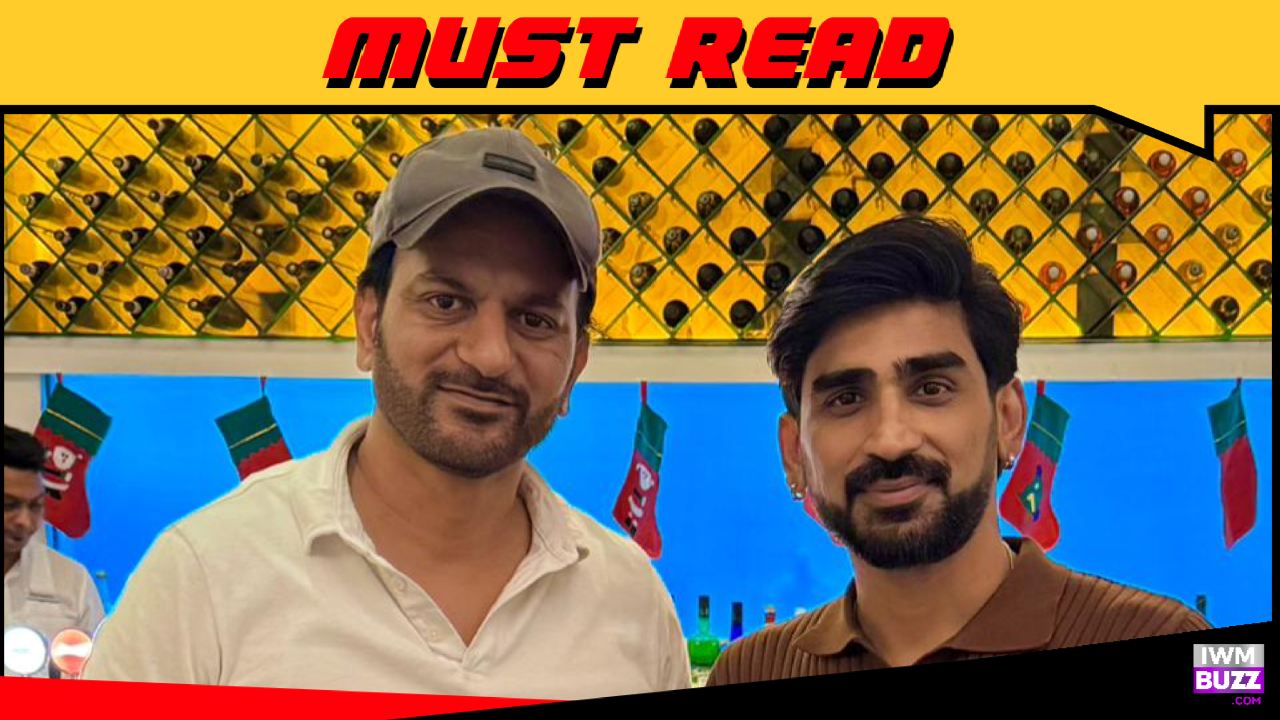
In an industry where collaborations often change, the partnership between Sharad Tripathi and Abhijit Sinha has developed naturally over time. Sharad began his writing career at Balaji Telefilms, creating a strong voice through some of Indian television’s most memorable shows. He also explored writing for films, web content, lyrics, and books. Abhijit found his niche with stories that focus on strong emotions and characters in popular shows.
The two became friends in 2010 and started working together a few years later, while still growing as individual writers. They have collaborated on shows like Suhani Si Ek Ladki, Swaragini, Internet Wala Love, and Sirf Tum, blending their instincts with structured storytelling. Now, in 2026, they have moved into a new role with the Colors TV and SOL Productions’ show, Do Duniya Ek Dil, not just as writers but as Creative Producers. They are taking a more comprehensive approach to shaping the show’s story and vision.
Read on.
What does it mean to step into the role of Creative Producers?
It means you don’t have the luxury of blaming anyone else anymore.
As writers, you can always feel that you wrote it right, but maybe it got lost somewhere. As Creative Producers, there is no “somewhere.” It begins with you and ends with you. Since my partner Abhijit Sinha is the show runner and is now directing the show as well, the responsibility lies on us now. And for me, it’s less about control and more about responsibility towards the story. You’re not just writing scenes, you’re making sure they survive everything that comes after writing.
You’ve been friends since 2010. How do you handle creative disagreements? Any tie-breaker rule you apply?
We disagree a lot. That’s actually the point. If two writers always agree, one of them is probably unnecessary. There’s no tie-breaker rule as such. We usually let the scene decide. If something feels imposed, it doesn’t stay, no matter who wrote it. Also, after a point, you develop a certain trust. You may not agree immediately, but you know the other person isn’t trying to be clever, just trying to make it better.
Television has its own grammar. People watch it differently. It’s more consistent, more emotional, more part of daily life.
How has your writing process evolved since Suhani Si Ek Ladki?
Earlier, I think we were trying to prove we can write. Now, the effort is that it should not look like we’ve written it at all. It should sound more organic, more natural, rather than crafty or cliché. We’ve moved from plot to behaviour. From explaining to suggesting.
As Creative Producers, how much say do you have beyond writing?
Quite a bit, and that’s important. Our producers, Fazila Allana and Kamna Menezes, have been absolute sweethearts and super supportive. They have given us a free pass; even channel executives and officials have been super supportive because, at the end of the day, we are aiming to make a better show. Because a scene on paper is one thing, and a scene on screen is another. Sometimes the problem isn’t writing; it lies in the interpretation. So being involved beyond writing helps us protect the intent, whether it’s casting, performance, or even how long a pause is held.
Does being a creative producer make you write differently?
It makes you more aware. You still write what the scene needs, but somewhere you’re also aware of what will translate in execution, and what might get lost. In a way, it makes you edit yourself better while writing.
One old-school TV trope you’ve avoided?
Over-explaining. We’ve consciously tried not to have characters spell out everything they feel. If the audience can sense it without it being said, that’s always more satisfying. In this show, you will see our lead character Shivay doing a lot of talking through his intense eyes.
With web content on the rise, how do you keep TV audiences engaged?
By not trying to become web content. Television has its own grammar. People watch it differently. It’s more consistent, more emotional, more part of daily life. So instead of chasing trends, I think the focus should be on making stories that feel real and relatable.
Advice for young writers looking for a long-term partner?
Don’t look for comfort. Look for someone who challenges you, but also understands your intent. You don’t need someone who agrees with you … you need someone who cares about the work as much as you do. And most importantly, learn to trust the other one and not get involved in petty issues of who is doing what in the show. If you’re counting lines, the partnership won’t last !!
