


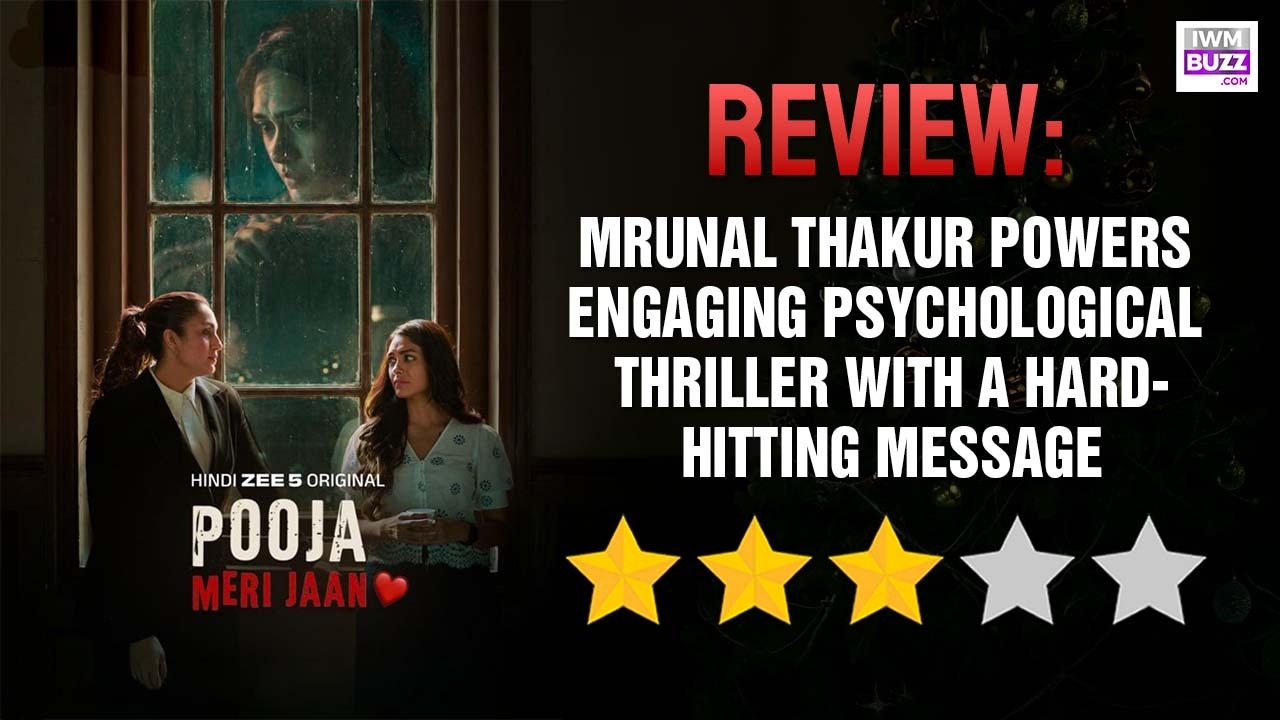
With a title like ‘Pooja Meri Jaan,’ one might instantly assume this is the story of a deeply devoted male lover—and with the crime-thriller genre, the fingers naturally fall on Pooja herself, the female character. But the film is far more than a conventional mystery.
For women specifically, this film strikes a deeply relatable chord, reflecting experiences many girls encounter in real life. Through its gripping narrative, Pooja Meri Jaan explores the harsh realities of patriarchal society, the weight of perception, and how love can blur into obsession, offering a disturbing yet thought-provoking look at the world around us.
An Obsessive Love Story
Set in Mumbai, the film follows Pooja Dogra (Mrunal Thakur), a young theatre artist who is shocked when her co-star and friend, Aniket, goes down on one knee to propose to her in front of the whole audience on stage. Unable to process the situation, Pooja accepts the proposal, but back in the green room she rejects him, leading to an intense confrontation, and eventually he takes his own life.
Aniket’s death puts Pooja in the center; before dying, he writes an emotional e-mail blaming her. Pooja then faces severe public backlash, social scrutiny, and criminal charges for the abetment of suicide, beginning her journey to justice with the help of her lawyer friend Sana (Huma Qureshi).
Direction
Navjot Gulati and Vipasha Arvind direct this psychological thriller with sensitivity. They smartly bring to light the harsh truth of how young men are often not taught how to accept rejection gracefully or process emotional setbacks without resorting to manipulation or self-harm, while showing what a girl goes through in the process, keeping it simple and relatable without overexaggeration.
Simultaneously, the film shows how perceptions are formed, women facing slurs despite being proven not guilty, and the dangerous world around us. Also, it raises vital questions about consent, the right to say “no,” and the unfair burden placed on women when they reject unwanted romantic advances.
Dialogues, Screenplay, Music And Presentation
The film’s pacing is fair, never letting the story drag. However, the screenplay could have been tighter; at times, the conclusion feels weak. Dialogues were decent but impactful.
Composed by Vishal Mishra, the music blends easily with the narrative and theme, enhancing the experience. The cinematography looks convincing, capturing the vibrancy of Mumbai theater and the cold isolation of legal containment.
Performances
Mrunal Thakur shines yet again. She carries the character brilliantly—capturing the grief over someone’s death alongside the indifference born of how that person had wronged her. Her acting resonates deeply with the experience of being branded guilty despite being innocent, the emotional trauma involved, and the journey of overcoming it.
Vikram Singh Chauhan’s character is such that it is difficult to decide whether to love him or hate him, but you surely can’t ignore him, and his acting is praiseworthy.
Huma Qureshi as Sana, a friend of both the victim and the guilty, captures that dilemma—the scenes where she stands up for what’s right command attention. Vijay Raaz is convincing, bringing his signature gravitas to the screen, sounding highly convincing as the opposing counsel, Jatin.
Produced by Dinesh Vijan and Amar Kaushik under the banner of Maddock Films, Pooja Meri Jaan has its flaws but delivers a hard-hitting message through a simple yet engaging story.
Our Editorial Rating: 3 out of 5 stars.
