



Even before our adolescence, that hits us like a pistol, changing the very dynamo of life… …even before we learn the vocabulary of ‘swatantro,’ there are names that get impelled into our minds. In Bengali homes, Aparna Sen is the first auteur we meet—through a borrowed DVD or, sometimes, our parents’ recollection.
Her presence becomes an inevitable incarnation, woven into our living room debates. Our Sunday intellectual ruminating rituals merge with hers, and we learn to discover cinema brick by brick, in tune with contemporary feminism.
Every time someone hails her name, murmurs splash at the back of the subconscious, “ami miss calcutta chaina dite tips ekhono to keu janena amar statistics ami miss calcutta 1976,” –Basanta Bilap (1973). The song has empowered souls, especially women. Basanta Bilap was my ‘hath ‘e’ khori’ in witnessing Aparna Sen, as an adolescent, from a middle-class Bengali household. Crossing it over, The Japanese Wife (2010)—a film, directed by her, that makes yearning holy. A love story that revolves around the feeling without meetings.
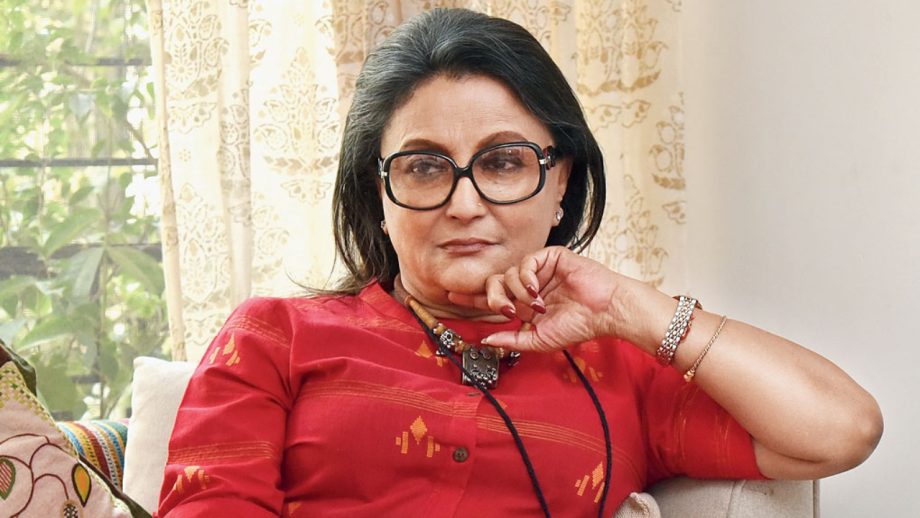
Tracing back from here to Aparna Sen’s directorial debut, 36 Chowringhee Lane (1981)—here we slide silently into Violet Stoneham’s solitary life. This woman is too gentle for the city’s harsh indifference. The film makes you learn that at times, the quietest lives hold the most profound aches. Paroma (1985)—you understand what ‘swatantro’ looks like, as you watch the Rakhee Gulzar starrer. Mr and Mrs Iyer (2002)—uses a confined setting and tense situation to analyse how social constructs shape human behaviour. The film delivers both societal relevance and emotional resonance.
Goynar Baksho (2013)—a story woven with warmth and wit. Centres around a jewellery box and the women who inherit its legacy. The narrative reflects on desire, loss, and transformation, highlighting the plight of women within the societal construct.
And there, as we make a complete circle, go back and forth—decade after decade, with half-bruised souls; we realise her films stay with us and we grow with them. The narratives sit in the hush of our rooms, yearning to be re-felt. In her frames, we locate our mothers, our walking contradictions, our rebellions and our secret longings—like half-forgotten memorabilia.
