


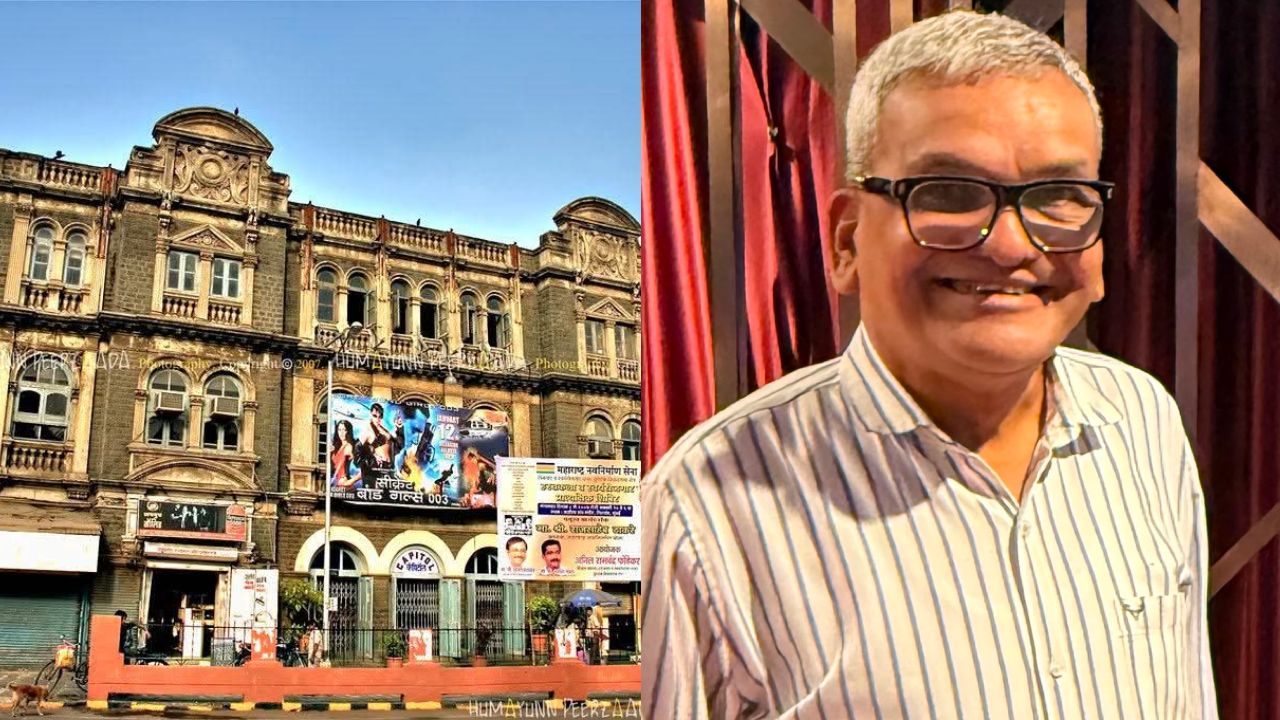
Film journalist and cinema historian Dilip Thakur recalls the unforgettable charm of Capitol Cinema, the excitement of watching Hindi films in the 1970s, and the simple pleasures of growing up in old Bombay. With the Mumbai Heritage Conservation Committee (MHCC) approving a revival plan for the historic theatre, these memories acquire renewed significance.
There was a time when Bombay was a paradise for cinema lovers. Single-screen theatres dominated the city’s entertainment landscape, films celebrated silver jubilees, and watching a movie was an occasion in itself.
Among the many theatres that shaped my love for cinema, Capitol Cinema, near Bori Bunder, holds a special place in my memories.
Interestingly, although the atmosphere was conducive to films enjoying long theatrical runs, Capitol had a rather different identity. Numerous new films would arrive for just a week or two. Occasionally, a major blockbuster running successfully elsewhere would make a brief appearance at Capitol.
Years later, when I entered film journalism and began exploring the history of Bombay’s cinema exhibition business, I discovered the reason.
Film distributors had always regarded Capitol as a short-term theatre. Along with Defence, Strand and Rex in the Colaba–Bori Bunder belt, it functioned as a supporting cinema for the main theatres around the famous Naaz cinema complex.
Films such as Mastana, Haathi Mere Saathi, Zindagi Zindagi, Warrant and Patthar Aur Payal were released at Capitol alongside their principal theatres. This distribution arrangement continued for years.
But for a young film enthusiast like me, growing up in Girgaon during the 1970s, Capitol meant something far more personal.
It was my dependable destination whenever tickets at the bigger theatres became impossible to obtain.
Getting tickets for popular films at Naaz, Dreamland, Novelty or Minerva was often a Herculean task. Even advance booking offered no guarantee. Long queues and House Full boards were part of the cinema-going experience.
Capitol, however, was different. If I reached early on a weekday, there was every possibility of securing a ticket.
Why travel all the way to Ganga Cinema to watch Mr. Natwarlal when Capitol offered a more convenient option?
And the journey itself was delightfully inexpensive!
From Girgaon, I could board BEST bus number 61, 65, 66, 69 or 126 and reach Capitol for just ten paise.
Imagine that! Ten paise for a bus ride to the movies!
Those were truly different times.
I remember watching Suhaag, Woh Main Nahin, Ghar, Dharam Karam and Sabse Bada Rupaiya, among several other films, at Capitol.
One particularly fond memory is of Yaadon Ki Baaraat. I had thoroughly enjoyed the film at Naaz. When it unexpectedly arrived at Capitol for a one-week engagement, I simply couldn’t resist watching it again.
And I enjoyed it just as much the second time!
That was the magic of cinema in those days. We didn’t need a special reason to revisit a favourite film. The songs, the stars, the emotions and the atmosphere were enough to draw us back.
After the show, I would often walk all the way home to Girgaon. The distance never seemed tiring. The excitement of the film, its memorable songs and the satisfaction of another enjoyable cinematic outing made the walk a pleasure.
Looking back, those simple journeys are as memorable as the films themselves.
There were no multiplexes, online bookings or digital tickets. A little pocket money, a BEST bus ride and the anticipation of watching a favourite star on the big screen were enough to make the day special.
Capitol may have been considered a supporting theatre by film distributors, but for movie enthusiasts like me, it was never secondary.
It was a theatre that came to our rescue when the more celebrated cinemas were packed. It gave us another opportunity to watch popular films and sometimes even revisit our favourites.
A New Chapter for a Historic Landmark
Today, there is heartening news for those who remember Capitol Cinema and cherish Bombay’s theatrical heritage.
The Mumbai Heritage Conservation Committee (MHCC) has approved a revival plan for the historic Capitol building, which dates back to 1879.
The proposed restoration includes reinstating two missing architectural elements of the heritage structure, an important step towards recovering its original character.
More significantly for cinema lovers, the revived building is planned to accommodate a single-screen theatre alongside a retail space.
At a time when so many of Bombay’s beloved single-screen cinemas have disappeared or undergone transformations, the prospect of Capitol once again welcoming audiences is particularly encouraging.
For someone like me, whose childhood and youth were closely associated with the theatre, this development carries an emotional significance beyond architectural conservation.
It is not merely about restoring an old building. It is about preserving a part of Bombay’s cinematic identity.
Of course, the city around Capitol has changed beyond recognition. The ten-paise BEST bus journeys are now a distant memory, and the cinema-going habits of today’s generation are vastly different.
Yet the thought that this historic landmark could once again become a place where audiences gather to experience films on the big screen is enough to stir countless memories.
I sincerely hope the restoration respects the building’s heritage while allowing a new generation to discover the special charm of watching a film in a single-screen theatre.
The Show Goes On in My Memories
Today, when I think of the Bombay of the 1970s, memories of Capitol Cinema return with remarkable clarity.
The ten-paise bus journeys. The ticket windows. The film posters. The excitement of entering the auditorium. The pleasure of watching a blockbuster once again. And those leisurely walks back to Girgaon after the show.
All these memories belong to an era when cinema was not merely entertainment but an inseparable part of everyday life.
For me, Capitol Cinema was never just another theatre near Bori Bunder. It was a cherished chapter of my youth, written in the language of films, music, memories and the magic of old Bombay.
Now, with plans for its revival receiving heritage approval, there is renewed hope that Capitol’s story is far from over.
The films I watched there may have completed their runs long ago, but in the theatre of my memories, the show at Capitol continues.
And perhaps, before long, the lights will dim, the curtain will rise, and Capitol Cinema will create new memories for another generation of film lovers.
— Dilip Thakur
Film Journalist and Cinema Historian
(As told to Bharati Dubey)
