


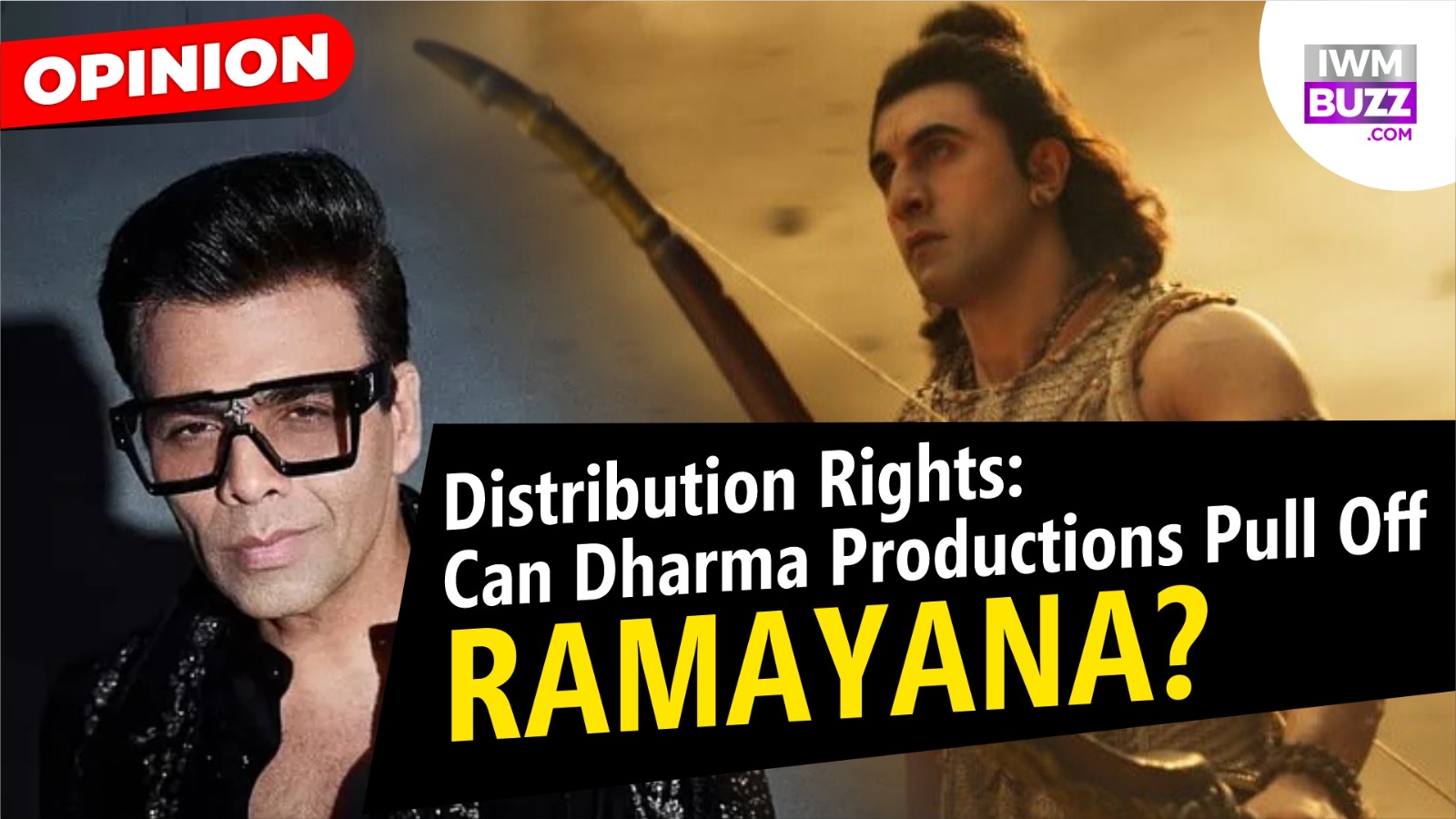
Dharma Productions’ reported acquisition of the India distribution rights for Namit Malhotra’s Ramayana has become one of the biggest talking points in the trade. While the move is being seen as ambitious, many within the exhibition and distribution business are questioning whether Dharma is the right studio to handle a film of this scale.
The reported deal is pegged at around ₹250 crore. Several trade insiders argue that the valuation appears modest for a project as significant as Ramayana, especially with the two-part epic reportedly carrying a production cost of nearly ₹4,000 crore. According to industry estimates, the India distribution rights alone could command a much higher value, with some suggesting that a business of at least ₹650 crore would be needed to comfortably justify such an investment.
Dharma’s credentials as a distributor are also under scrutiny. While the studio was associated with the Hindi releases of Baahubali and Baahubali 2, trade veterans maintain that veteran distributor Anil Thadani’s exhibition network and execution were instrumental in the films’ phenomenal success across North India. Dharma, however, deserves credit for backing the franchise early and helping establish Prabhas as a pan-India star among Hindi-speaking audiences.
The comparison with RRR has inevitably surfaced. Industry sources point out that the film’s North India distribution rights were reportedly acquired by Jayantilal Gada for around ₹300 crore, highlighting the premium attached to major event films.
Dharma’s recent distribution record has been inconsistent. The studio handled the Hindi release of Devara: Part 1, while The Ghazi Attack was also released with support from Anil Thadani’s distribution network. More recently, Kesari Chapter 2 was released through Dharma’s in-house distribution arm, which is now expected to take on Ramayana if the reported deal goes through.
The bigger question is whether Dharma will execute the release entirely on its own or once again lean on an established distribution partner. A film of Ramayana’s scale demands an unparalleled exhibition strategy, making this the company’s biggest distribution challenge to date.
There is also speculation in trade circles that Karan Johar’s close association with Alia Bhatt and Ranbir Kapoor may have helped bring Dharma into the project. Others dismiss that theory, arguing that every major studio would have wanted to be associated with what is arguably the most anticipated Indian film in production.
For now, opinions remain divided. If Dharma successfully delivers Ramayana independently, it will silence many of its critics. If not, the debate over whether the studio was ready for a project of this magnitude will only grow louder.
Keep reading IWMBuzz.com.
