


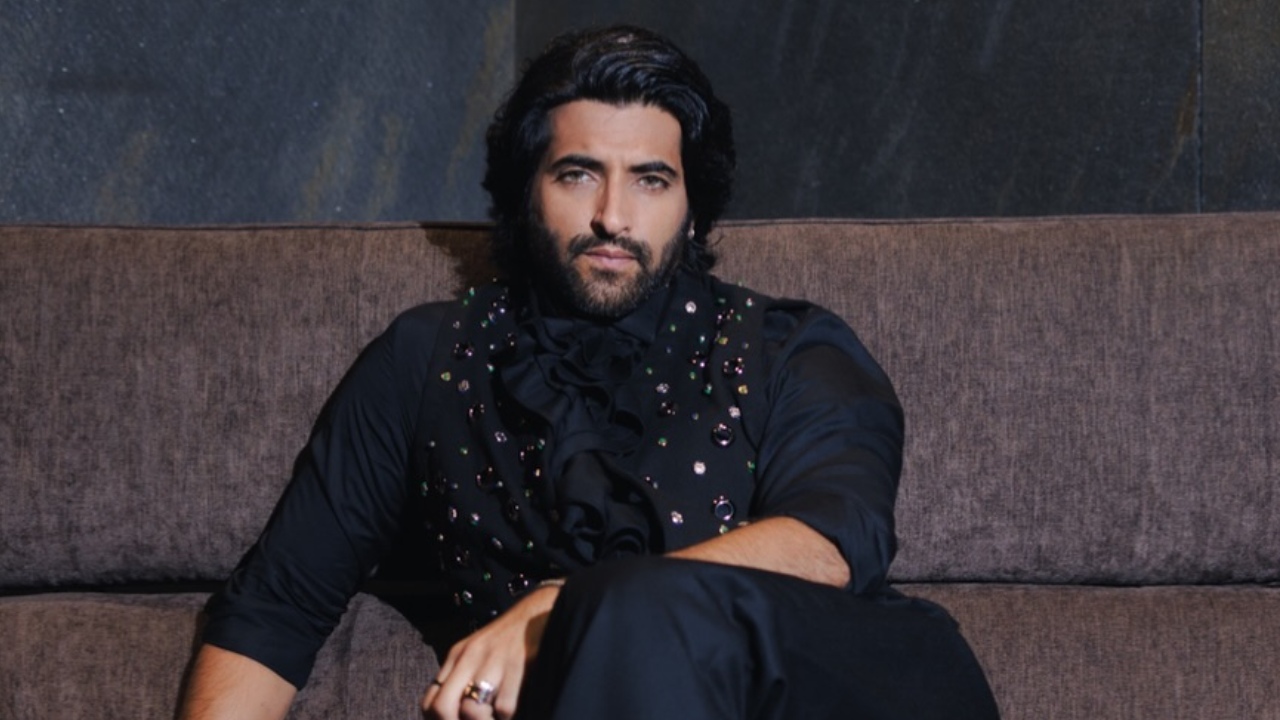
Akshay Oberoi opens up about crafting Tony’s retro look and fox-like energy in Toxic, building a sibling bond with Huma Qureshi, reuniting with Siddharth Anand for King and working with Shah Rukh Khan. The actor also reflects on his OTT journey, staying versatile in an industry that often typecasts performers, his upcoming film Love Lottery, and why persistence—not just talent—is the key to surviving in showbiz.
What went into crafting Tony’s retro look in Toxic, his fox-like energy, body language, and psyche alongside director Geetu Mohandas?
It’s so funny that you say fox-like energy. It took me right back to set because that’s exactly the reference Geetu had given me for Tony. Very often right before a certain scene or conversation, she would always say like, “Okay, now you got to bring your fox-like energy.” It’s so great to give an actor an animal because, in fact, it’s part of acting study.
You know, when you study acting in a school, you do animal study as well, because animals immediately give you a certain notion of who this person is, the way they walk, how they look. So, it gives you like a really easy way to wrap your head around who this character is. It’s just so funny that you said fox-like energy, so I’m like, “Oh, great. What we were trying to do, it worked.”
Speaking of the look, I think Neha Bajaj, who did costumes, did a wonderful job. Geetu had a certain idea of what this character should look like. I think all kinds of references must have been there, from like Amitabh Bachchan to Al Pacino in Scarface. And then, of course, we added our own unique twist to it. I loved the look. It is absolutely my favourite look of any film I’ve ever done. I would love to play with that look even more.
How did you and Huma Qureshi build camaraderie and trust to play sibling anti-heroes?
Huma and I had a great time. Some actors/people you meet in life, you immediately connect with them. She was one of those. It just fell into place from day one. I had done a film with Saqib Saleem, her lovely brother—the Manoj Bajpayee and Neeraj Pandey film—and he was wonderful. Huma and Saqib are very close siblings.
I was playing her sibling in this film. The whole thing was wonderful, and it helps because in whatever screen time Huma and I had together to build up that brother-sister love and equation, it just helped that off-screen the chemistry was already there. So, I think it was very easy to come onto screen.
As actors, there has to be a lot of trust. Huma’s a wonderful actor, so there’s not only trust with the acting portion of it, there’s also trust off-screen. Like, I shared a lot of stuff with her, and because you trust each other, that really helps when you’re building characters on screen.
What draws you to complex, flawed characters, and how do you ensure they remain grounded rather than slipping into tropes?
I never thought about it that way, that I’m attracted to complex or flawed characters. I’m just attracted to human beings, and I think human beings are by nature complex and flawed. So, when I see something that is a full character, that is the film I naturally will gravitate towards. Sometimes it’s not there on the page, and sometimes you have to build it, but I try and do that with everything I do because that’s the fun I have.
I do this job because I love this job, and part of loving this job is also being very curious about humans and what makes them tick and what they think about, just to add something fresh in every character you do. I hope I don’t slip into tropes. I’m sure I’m guilty of it sometimes, but it’s a craft, and you have to keep getting better at it, which is why you have to keep doing it. Like a cobbler keeps making shoes all day long, and that’s how he keeps perfecting his craft, acting is no different.
What was it like reuniting with Siddharth Anand on King, and working with Shah Rukh Khan?
Siddharth Anand is like my elder brother, my mentor, my guide, everything. He introduced me to a mainstream audience with Fighter. We had done Flesh together where I played a flesh trade owner. And from that, he gave me such a sweet, innocent character in Fighter, Bash. So, it is my good fortune that he repeated me in King, and I’m so blessed to be a part of that project.
Shah Rukh Sir won’t remember this, but years ago when I was an absolute nobody, a struggling actor, Imran Khan, who’s a very dear friend of mine who was hosting an award show with Ranbir Kapoor, and I had tagged along because it was a big night for him. And then I was introduced to Shah Sir that night.
And the way he met me as an absolute nobody that day, cut to I don’t know, 16 years later I met him on a set where I’m working in his film, he met me with the same level of love and the same level of attention. So, it just shows you what kind of human being he must be.
Siddharth Anand and Mamta Anand are two of the loveliest people I’ve ever met in this business. So, actually I feel like what I’m looking at is good people attract good people. Because Sid and Mamta are a certain way, Shah Rukh Sir is also a certain way. That’s why they work together and hopefully will do multiple films together.
Sid and Mamta are like my favorite people in the business. They’re family to me. Anywhere throughout life if I get any chance to thank them or just do anything for them lifelong, I will do exactly that.
You were an early adopter of the OTT. What prompted that move?
It was literally I had to work, you know. I couldn’t wait around. A, I wanted to work, and I needed the money. B, I wanted to build a career. I wasn’t getting other stuff. Gurgaon, Kaalakaandi, Pizza, Laal Rang weren’t successful films at the box office. It’s an art made for commerce. That’s the truth.
But it was amazing because what I got to do on OTT was play so many different types of characters, and because there was a boom at that time, I just jumped right in. And there were lots of people who told me, “Don’t do it. You’re doing films. Why are you switching to web series?”
But I’m glad I didn’t listen, in retrospect. It’s one of those gambles I took that paid off because then I got these films again. Now I feel like I’m entering a very interesting phase, finally, after all this struggle. So, it’s nice, and I owe that to OTT quite a bit.
How challenging is it to maintain versatility in an industry that often prefers to label actors, and how do you achieve that?
I think I was able to show some type of versatility because the limelight wasn’t on me, so no one was casting me for an image. They were just seeing, “Here’s an actor. Let me give him this part.” I think if a certain character or film of mine did really well, I might have been typecasted as well because then the business starts to feel, “This is the way the audience likes to see this actor,” and they don’t want to take too many risks, so now you have to be slotted.
I never got slotted because I didn’t have an image. No one saw me a certain way. The audience is slowly discovering my work. I think post-Fighter and now post-Toxic, people will go back—people have gone back—and been like, “Oh yeah, there’s this guy. That’s the guy from Pizza,” and they’re connecting the dots now. So yeah, this is something I was just able to do by sheer call it fate, luck, destiny, whatever.
What can you tell us about your upcoming film Love Lottery?
Love Lottery is a film about male rights. I’m the first person who’d stand up for women empowerment, absolutely and fiercely, but I do know that somewhere there is a lack of male representation or even men don’t have the ability to express pain, because “ladke rote nahi hain” or “mard ko dard nahi hota”—all these catchphrases are there.
This film is just highlighting that men are humans too, we have feelings too. I know that men have done a lot of damage to the world, which is why we must all be in favor of being a feminist, period. But this film is just shining light on a topic that hasn’t really been explored, and I think it’s also important to talk about.
So, I loved the script. I absolutely loved making the movie. I generally love just being on sets, even if it’s the most difficult, meanest, hardest film I’m making. I still love being on sets. Just being on a set is fantastic. This one was a little bit more special because the team just got along like a family, and we really tried to make the best film possible on the tightest budget I’ve worked on in a long time. But thanks to our producer, Tushar Bhargava, we pulled through. It was incredible to see that man. Every film should have a producer with a heart like his.
How has your perspective on success changed from your debut in Isi Life Mein to your current standing after major theatrical releases and web shows?
I think maybe I thought being the biggest possible star was success when I first began. And then I realized that success is just doing the work you love to do and being employed and being around your family and having good relationships—all of these things.
Success is not just about the work. In order for the work to be good, your personal life also has to enrich you, especially when you’re an actor, because it’s you that you’re selling and you’re the product. So, you have to keep enriching yourself. It’s an art. So, I think that’s what I’ve learned. I think success to me was earlier just all valued by career and achievement.
What is one crucial reality about navigating the business that many aspiring actors must educate themselves about?
It’s not always the most talented person that survives; it’s the person that has the ability to keep surviving and staying with it, and staying the course and not giving up. That is the guy that is most likely to survive. And I think that’s a reality that, if you can’t hack it and you can’t stay the course and you feel like failure hits you hard and you can’t take it, I think you’d have to do something else.
