



The cutthroat world of entertainment and business has made paid public relations campaigns a double-edged sword—they can create and, at the same time, destroy reputations. In the meantime, stars and companies are navigating a perception jungle that is often more about perception than reality, and the ethics of the tales they spin and the orchestrated attacks they launch have been questioned. The debate is over the existence of paid PR, but about the industry’s ability to self-regulate before the negativity reaches a point of no return.
And now actress Sonal Chauhan publicly declared her support in fighting the industry’s dark side. In an Instagram story that quickly went viral, Chauhan spoke very frankly about what was happening behind the shiny surface.“These paid PR attacks on actors need to stop. It’s getting out of hand now,” she indicated with a strong feeling of upset. This post was in the context of more and more stars being badly affected by massive negative publicity—gossip circles being entirely ruined, reputations ruined, and all of this done by rival parties with huge financial resources. Chauhan’s plea was simple yet powerful: “You can’t look good by making someone look bad. Why can’t we just be happy for each other?” Her words struck a chord with industry insiders who have long suffered in silence, afraid that speaking out might make them the next target.
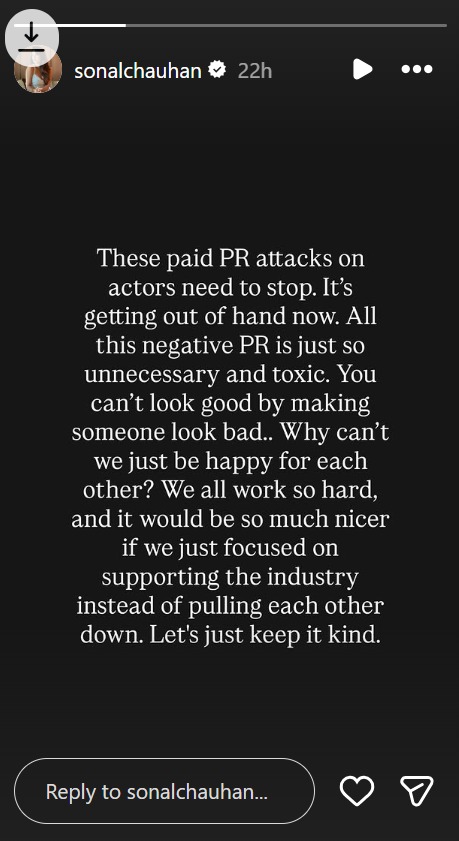
Apart from Sonal, lately, many actors have denounced the rise of “paid PR” and have taken the criticism in stride, alongside coordinated smear campaigns and false endorsements. In late 2025 and early 2026, stars like Yami Gautam and Sonal Chauhan pointed the finger at “PR extortion,” in which agencies create negative narratives to force actors to pay for good impressions. The same was done by Pooja Hegde and Tara Sutaria, who brought to light the cases of memes and influencers being paid to either troll them or circulate wrong information about them. Not only did the celebrities digitally sabotage, but others like Jameela Jamil and Lili Reinhart have also consistently pointed out the faults of their colleagues for accepting high-paid promotions for “toxics” or unrealistic body standards, and have called for more authenticity and accountability in the industry.
