


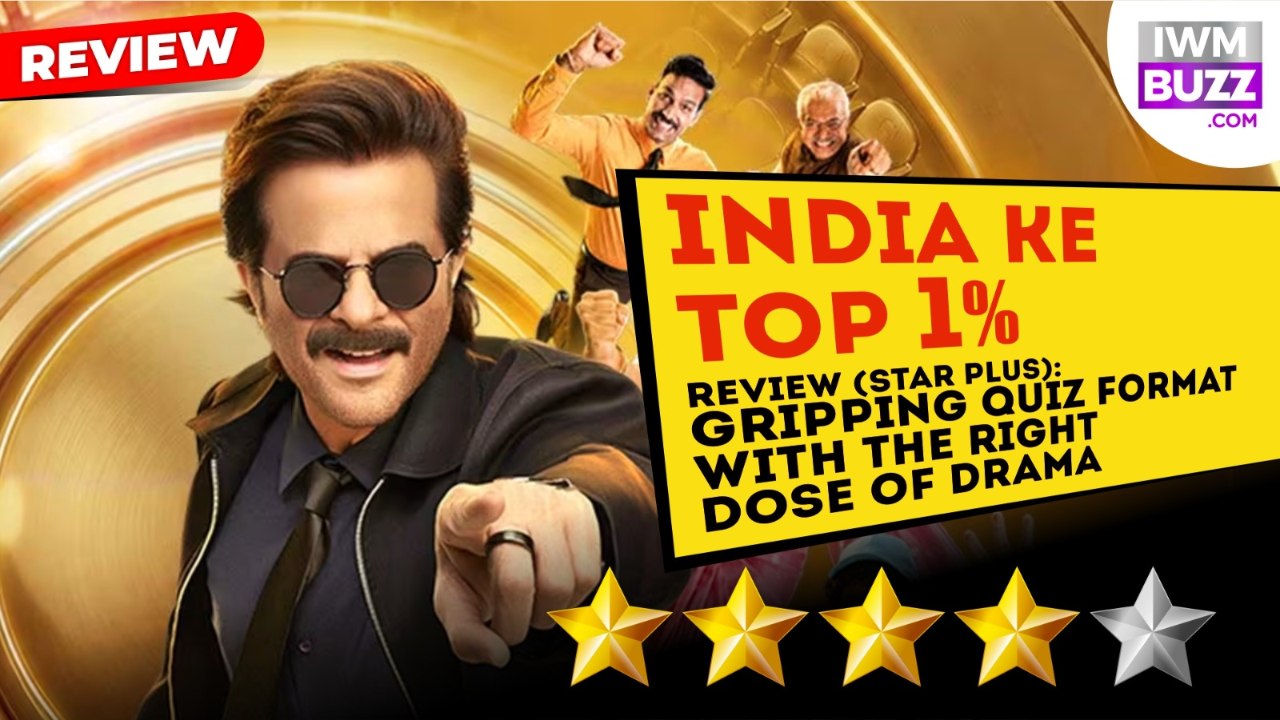
We must thank Star Plus for making our weekends more entertaining. It is what you call an absolute ‘dhina dhin dha’ moment. Yes, we are talking about TV’s latest content bloom: India Ke Top 1%. Hosted by ‘jhakaas’ Anil Kapoor, the show moves away from conventional general-knowledge questions and instead centers on common sense, observation, logic, and quick thinking. The Indian adaptation of the international format The 1% Club premiered on September 19, 2026, and is also streaming on JioHotstar. The show airs on Saturday and Sunday at 8 PM.
The biggest strength of India Ke Top 1% is its basic game structure. Instead of one contestant answering questions at a time, 100 contestants play simultaneously. Each participant starts with Rs. 1 lakh in their kitty, while the game consists of 13 increasingly difficult questions. Contestants can use lifelines to help them navigate the pressure. Money from incorrect answers goes into the collective prize pot, which can eventually reach Rs. 1 crore. This creates an interesting layer of pressure because every mistake has consequences beyond the individual player.
The first episode sets the tone for the format, with Bijal Shah emerging as the winner and taking home Rs. 96 lakh. Her win also shows how unpredictable the game can become as contestants move through increasingly difficult questions and make crucial decisions under pressure.
The questions are designed around everyday reasoning rather than memorized information. The difficulty gradually moves from questions most people can solve to challenges designed to test the thinking of the smallest percentage of participants. The questions are also tested through surveys before being used, adding an interesting statistical element to the format.
Host Anil Kapoor is another major part of the show’s appeal. He brings his familiar energy and conversational style to the stage without letting his presence overshadow the contestants. His interactions give the otherwise logic-heavy format a warmer entertainment value, while the moments of tension between questions provide the required drama. Watching Mr Kapoor ace the show is both entertaining and inspiring, especially because he keeps the energy flowing without making the show feel overly staged.
The banter and anecdotes between Anil Kapoor and the contestants are another highlight. Their conversations bring spontaneous humor and personality into the game, giving viewers moments to enjoy even between the more intense questions. These interactions add the human element that keeps the show from becoming only about numbers, percentages, and eliminations.
Visually, India Ke Top 1% gets an equally ambitious treatment. The amphitheater-style arena places all 100 contestants around the central action, giving the program the feel of a large-scale live competition. Each participant gets an individual tablet, and contestants can play in Hindi or English. Large screens keep everyone connected to the game, while individual status lights change as contestants progress. A circular LED floor displaying gameplay graphics and percentage levels becomes one of the stage’s biggest visual features.
Banijay Asia produces the show in association with BBC Studios, and the set up’s scale reflects the show’s ambition. According to the set team, they explored multiple designs for about two to three months before selecting the final arena, followed by another month of construction involving hundreds of people.
Another smart addition is the JioHotstar Play Along experience. Viewers at home can answer the same questions in real time while watching the television broadcast, turning the program from something audiences watch into something they can actively participate in. This makes India Ke Top 1% particularly suited for families coming together, as well as friends and cousins meeting over the weekend for a game night. The format naturally encourages everyone watching to discuss answers, debate options, and test their own logic alongside the contestants.
The gameplay itself is addictive. With every question changing the percentage of contestants still standing and the prize money at stake, it becomes easy for viewers to get hooked and play along mentally. The show can turn a regular weekend television slot into an interactive group experience, where everyone in the room has a different answer and a reason to defend it.
Where India Ke Top 1% occasionally feels slightly stretched is in the space between questions where host interactions and contestant reactions slow the pace. However, the escalating difficulty, money stakes, large contestant pool, and unpredictable eliminations keep the central game engaging.
Overall, India Ke Top 1% brings a refreshing change to the Indian quiz-show landscape. The format is easy to understand, the stage looks impressive, Anil Kapoor fits naturally into the host’s chair, and the Play Along feature adds another layer of engagement. It combines brain-teasing questions with television drama without making the format unnecessarily complicated. More importantly, it works as a show that families can watch together and friends can turn into a fun weekend game night. At the same time, the contestant banter and increasingly addictive gameplay give it enough entertainment value beyond the quiz itself.
IWMBuzz Rating: 4/5
