



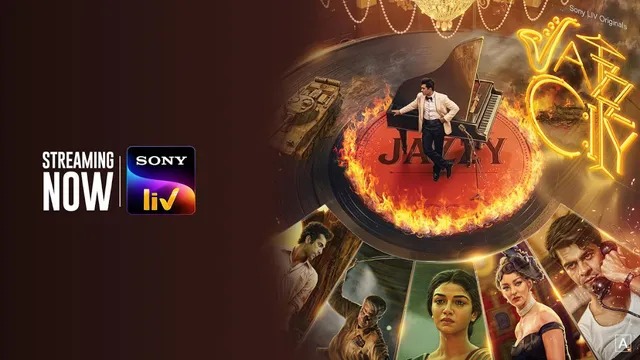
Set against the tumultuous backdrop of 1971 Kolkata, Jazz City is a gripping historical drama that explores the intersection of love, espionage, and revolution. As the creative producer behind the ambitious SonyLIV series, Arpita Chatterjee has spearheaded Studio9’s significant entry into premium OTT content. Following her success as a performer, Arpita has positioned Jazz City as a testament to bold Bengali storytelling, ensuring the series delivers on both its emotional and creative potential.
In an exclusive conversation with IWMBuzz.com, Arpita Chatterjee talked through the making of Jazz City, her vision, the point of view of Writer and Director Soumik Sen, and the goals of Studio 9.
Read on.
Talk us through the experience of producing Jazz City.
First of all, I want to tell you that apart from being the Producer of Jazz City, I am also the Creative Director. I have taken over the dual responsibilities, and am glad that I could manage the juggling work and execute the project well.
As the Creative Director, I needed to delve into every detail of the set and overall aesthetic. What I found most enjoyable was the process of designing those looks.
It has been a fascinating journey, and it has taken a very long time. The most unique thing is that, these days, the way the industry works, when a writer writes a script, there are a lot of parameters which have already been given to the writers. The writer thinks and writes, keeping those parameters in mind. For example, the parameters can be casting, location, etc.
For Jazz City, that was not the case. The Writer, Soumik Sen, wrote the script completely without having anything in mind. After Jubilee, he wanted to write a script, not thinking about who he was writing for, and not thinking about the platform. He just wanted to tell the story. That is something, which to me, is very commendable. In today’s time, this scenario is very rare. If you watch the series, you will notice the authenticity of the concept.
What made you want to tell a story about 1970s Calcutta, specifically through the lens of a Jazz club?
As you know, Soumik is a Bengali with ties to Bangladesh. He is a well-read and knowledgeable individual, which might explain his passion for sharing the story of Bangladesh’s reforms and the strength of the Bengali language. For us Bengalis, our language is a source of pride ingrained in our very DNA. However, it’s possible that Gen Z and today’s youth don’t feel that same level of pride. This might be yet another reason why Soumik feels compelled to tell this story.
Back in those days, Jazz was an integral part of Kolkata’s vibrant culture. Although the city is predominantly Bengali, its history of prolonged colonial rule—especially as the capital during the East India Company’s reign—has left a lasting influence that lingers even today. This jazz scene has enriched the city’s cultural fabric and has been a dynamic aspect of life here. When telling a story set in that era, particularly when showcasing Park Street, it’s impossible to overlook the significance of jazz within the city’s culture. That’s the perspective the writer aimed to capture and convey.
The story of Jazz City has been based on thorough research conducted by Soumik. It has an engaging storytelling format, which people of India need to know.
What was your favourite part of recreating 1970’s fashion?
As the Creative Director, I needed to delve into every detail of the set and overall aesthetic. What I found most enjoyable was the process of designing those looks. Our costume designer and the entire team dedicated a lot of time to research, aiming to achieve authenticity with precision in reflecting that era. I truly relished being hands-on in crafting the appearances of all the characters.
A major trope of the series Jazz City is how language acts as a weapon. How did you ensure the series, though primarily Bengali, would resonate with global audiences through its Hindi and English versions?
Language doesn’t limit the content we consume. Often, we encounter stories in diverse languages, with subtitles to accompany them. In essence, language has never posed a barrier. In Jazz City, characters converse in their native tongues, and viewers engage with the story through the subtitles, regardless of their own language. Thankfully, with the rise of OTT platforms, we have this unique advantage now.
While entertainment is certainly a key element, our goal at Studio9 is also to educate and inform through authentic storytelling.
What is the one big message you want the audience to take away after watching the series?
It’s very simple. This story has never happened. If you search the Indian content, this story was never told. There are a lot of stories based on the 1970s, but there has been nothing incorporating everything – The Basha Andolan, Mukti Jodho, and the recreation of Bangladesh, and the geopolitical scenario. Our story has been based on thorough research conducted by Soumik. It has an engaging storytelling format, which people of India need to know.
What are your takeaways from this concept?
There was certainly a lot to learn! From the type of material we had to executing everything within a set budget, every phase—from pre-production to delivering everything to the platform—was a valuable learning experience for me.
What are the goals and future projects of Studio9?
We have some exciting projects lined up at Studio 9, and I’m keeping my fingers crossed that I’ll soon be able to share news about our next big venture. At Studio 9, we adhere to a principle that recognises the incredible power of content to shift perspectives and change minds. We refer to this concept as “soft power.” While entertainment is certainly a key element, our goal is also to educate and inform through authentic storytelling. We aim to accomplish this with every narrative we create. Instead of focusing solely on fictional stories that prioritize entertainment, we seek to highlight topics grounded in research and realism—stories that not only captivate but also enrich our audience’s understanding.
Talking about the performer in you, is there a specific type of role or genre you look forward to doing?
First and foremost, Studio 9 is my main focus right now. However, I want to clarify that I have not officially announced my retirement from acting. Many people may not realise that I’ve been performing in a solo musical play where I act, dance, and sing on stage. We’ve done nearly 25 shows so far. The play tells the story of Gauhar Jaan, often referred to as the “gramophone girl,” and captures her remarkable journey. During the performance, I’m on stage for one hour and forty-five minutes, singing 12 to 13 songs in various languages, all performed live. This play is truly energising for me as an actor.
Aside from that, I don’t have any specific preferences when it comes to films or web series. For me, the story is what truly matters, regardless of the genre. The character I take on should be challenging and engaging. While I’m not actively looking to take on more roles at the moment, I would consider any offers if the part is substantial enough to catch my interest.
What is the acting advice you want to give to the youngsters?
I may not be in a position to offer advice, but I truly believe today’s youth are remarkably savvy—far more than we ever were. They have access to an abundance of experiences across various fields. However, speaking from my own experience as a performer, I can say that it’s essential to sharpen your skills consistently. You need to be prepared for the right opportunity when it arises. In this line of work, you never really know what challenges or surprises tomorrow may bring, so staying ready for whatever comes your way is crucial.
