


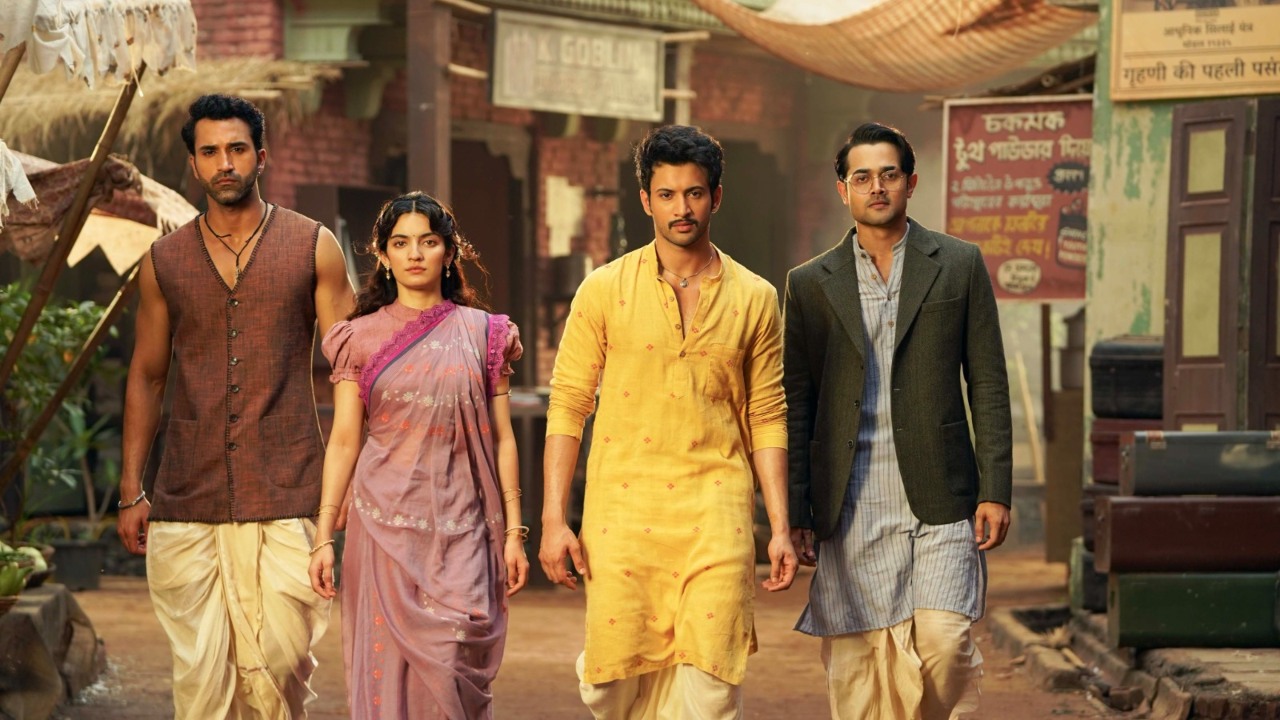
Prime Video’s latest period drama, The Revolutionaries, premiered on September 11, offering a glimpse into an important chapter of India’s freedom struggle. Created and directed by Nikkhil Advani and produced by Emmay Entertainment, the series is based on Sanjeev Sanyal’s book Revolutionaries: The Other Story Of How India Won Its Freedom. Led by a young ensemble, including Bhuvan Bam, Rohit Saraf, Pratibha Ranta, and Gurfateh Pirzada, the eight-episode show depicts the lives of unsung historical figures like Rash Behari Bose and Sachindra Nath Sanyal who chose the path of armed resistance.
Since its release, the show has sparked conversation across digital spaces and viewer communities. While critics and audiences have debated its pace and cinematic liberties, there is a clear consensus on its intent: it brings a fiery, humanized edge to historical figures who are often reduced to photographs in school textbooks.
Yet, viewing The Revolutionaries only as a period spectacle misses the larger point. Take away the vintage sets and the historical costumes, and what remains is a study of idealism, friendship, and unyielding conviction. At its heart, the series isn’t just about what happened over a century ago. It’s a mirror held up to the timeless human drive to stand up for one’s beliefs against all odds.
What makes the show resonate so strongly in 2026 is its portrayal of youth. The historical figures featured in the series weren’t figures with all the answers. They were twenty-somethings dealing with self-doubt, fear, loyalty, and passion. By casting actors known for their relatable screen presence, Nikkhil Advani grounds these historical personalities in raw vulnerability. We see young people debating ideas, making personal sacrifices, and trying to build a better future, a dynamic that feels remarkably close to home for today’s generation, which is equally outspoken about identity, purpose, and social change.
In an era where content is consumed in quick scrolls and short clips, The Revolutionaries asks its audience to slow down and reflect on what it truly costs to take a stand. It reminds us that progress has never been smooth or unanimous. It is shaped by individuals willing to challenge the status quo. Ultimately, The Revolutionaries succeeds not because it re-enacts history, but because it captures a universal spirit. It serves as a gentle reminder that while eras change, the desire to question, to care deeply, and to fight for something bigger than oneself remains timeless. That is precisely why this story belongs as much to 2026 as it does to the past.
