


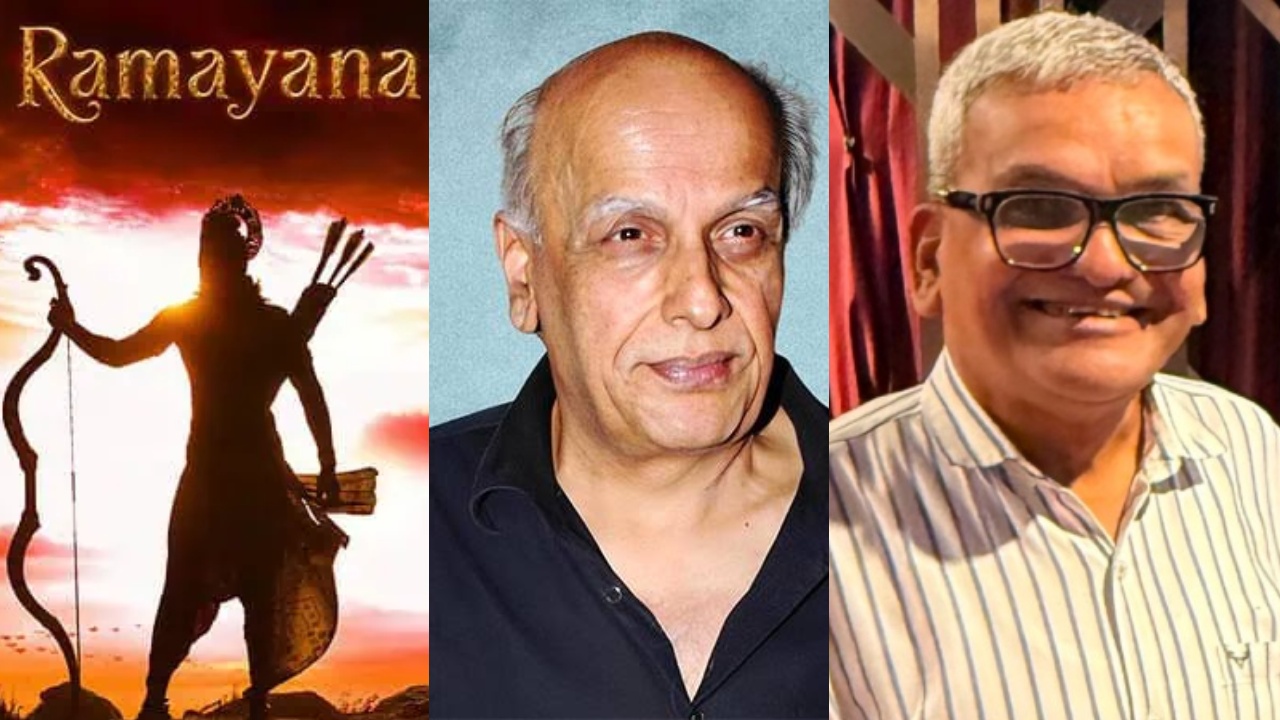
As Ranbir Kapoor’s much-anticipated Ramayana becomes a major talking point, the conversation around how the Hindi film industry responds to the work and achievements of its own has once again come into focus. Why is Bollywood often reluctant to openly appreciate fellow actors and filmmakers, while the South Indian film industry appears more willing to celebrate one another’s successes?
Filmmaker Mahesh Bhatt, recalling an era when appreciation came naturally and generously from senior members of the film fraternity, says the industry once had an entirely different culture.
“I remember when my films released, my seniors would call me. Not message. Call. On a landline. Hrishikesh Mukherjee. The great Rajkumar. Manmohan Desai. Majrooh Sahab. Salim Sahab. Javed Akhtar. So many others. They went out of their way to single me out, to praise me, to search me out and praise me. I made Arth. I made Saaransh. I made Naam. Those were intoxicating days,” Bhatt recalls.
What made those gestures particularly meaningful, he says, was that the encouragement did not disappear when success gave way to failure.
“And then I fell — the catastrophe of success, as they say. But they did not lose faith in me. They said, it’s a bad time you’re going through, but don’t let circumstances be confused with your talent. Circumstances are different, and you are different.”
For Bhatt, those telephone calls represented far more than professional courtesy. They were an acknowledgement that an artist belonged to a larger creative community.
“That phone call was never just courtesy. It was a senior saying, I see you, you belong to this lineage, I’m not threatened by your rise. That call carried the whole weight of a guild — an unspoken pact that the art outlives any one of us.”
He adds that those words of encouragement sustained him through some of his darkest professional moments.
“Those words saw me through many a dark night. When I failed, when I lost faith in myself, I reached for those memories — the sound of those voices on the line. Not the days of WhatsApp. Not video calls. Just a voice, warm and human, crossing the wire. How can I forget that?”
Bhatt believes the change reflects a deeper transformation in the industry’s relationships and its understanding of success.
“Bollywood has lost the culture of wishing colleagues well because the industry stopped feeling like a shared world and started feeling like a fight over scraps. When there were fewer films and longer careers, one person’s success didn’t cancel out yours. Now streaming, endless content, and shrinking audiences mean every release is zero-sum. Your hit proves the market moved without them.”
He also points to the corrosive influence of social media, where professional setbacks have become public spectacles.
“Social media made failure public and cruelty profitable. Outrage spreads faster than goodwill, so punching down became content. The old feudal structure — star kids, patronage, insecurity — always had rivalry in it. What’s gone is the shame around it. Wishing someone to fail used to feel wrong. Now it feels normal.”
For Bhatt, the disappearance of that culture of encouragement signals something more troubling than professional rivalry.
“When that call stops coming, it means the lineage itself stopped mattering. The real question isn’t why they want you to fail. It’s why wanting it stopped feeling shameful. Those were different times. And these are now.”
Veteran film journalist Dilip Thakur echoes the sentiment, although he traces the transformation to specific changes in the functioning of the Hindi film industry.
“There was a time when people in our industry openly appreciated each other’s work. If someone made a good film, others would spontaneously say, ‘What a wonderful film you have made!’ People would attend each other’s film mahurats, even if they had to turn up early in the morning. There was a genuine culture of appreciation and encouragement,” he says.
According to Thakur, one of the biggest changes came around 2005, when public relations professionals began exercising greater control over the public image and communication of film personalities.
“The biggest problem after 2005 is that everything gradually went into the hands of PR teams. Once PR professionals began managing what actors say, how they behave, how they appear and how they communicate, artists stopped reacting spontaneously. Their natural responses disappeared,” he explains.
Another major factor, he believes, is the fear of social media trolling.
“Today, actors are afraid of being trolled. Whatever they say can become controversial. Whether they appreciate someone or remain silent, they can still be criticised. As a result, most people prefer not to get involved at all.”
Thakur contrasts this with the South Indian film industry, where he believes professional solidarity and mutual appreciation have remained an important part of the working culture.
“The South Indian film industry has maintained this approach right from the beginning. Even during the 1960s, production houses such as Gemini, Vasan, Prasad Productions and AVM were making Hindi films with actors like Rajendra Kumar, Jeetendra and Sunil Dutt. Their focus was always on filmmaking and professionalism,” he says.
He recalls how actors such as Jeetendra worked extensively in Hyderabad and appeared in numerous remakes of South Indian films, reflecting the longstanding professional relationship between the industries.
“South Indian filmmakers approached their work with complete professionalism. They never openly displayed hostility or rivalry. Their focus remained on cinema, and that approach continued over the decades,” Thakur says.
The emergence of pan-India cinema, particularly after the success of Baahubali, further strengthened this collective approach, he believes.
“With Baahubali, the pan-India phenomenon became much bigger. Films began releasing in multiple South Indian languages as well as Hindi. The South Indian industry aggressively promoted its cinema and understood the benefits of appreciating and supporting one another,” he explains.
Citing stars such as Kamal Haasan, Rajinikanth and Chiranjeevi, as well as the success of films like Pushpa, Thakur says South Indian cinema has developed a culture in which individual success is often viewed as a victory for the larger industry.
“They think as an industry. That unity is reflected in their behaviour, their communication and the way they support one another. When a film succeeds, the entire industry celebrates it,” he says.
Thakur also points to the way major releases are planned and the continued importance of single-screen theatres in the South.
“Look at how they plan their major releases. They understand the importance of avoiding unnecessary clashes between big films. Single-screen theatres are still thriving there, alongside multiplexes. They have understood the psychology of the mass audience.”
He believes that this collective spirit has helped South Indian cinema build a stronger connection with audiences.
“By appreciating one another and creating that atmosphere, the South Indian film industry has successfully connected with the psychology of the masses. They understand that celebrating each other’s success ultimately benefits the entire industry,” he concludes.
As Ramayana, headlined by Ranbir Kapoor and bringing together talent from different film industries, prepares for its place in the pan-India cinematic landscape, the observations of Bhatt and Thakur raise a larger question: can Bollywood rediscover the generosity that once allowed artists to celebrate one another without seeing every success as a threat?
For Bhatt, the answer perhaps lies in remembering what a simple telephone call once meant — not publicity, not professional obligation, but one artist telling another that their work mattered.
