


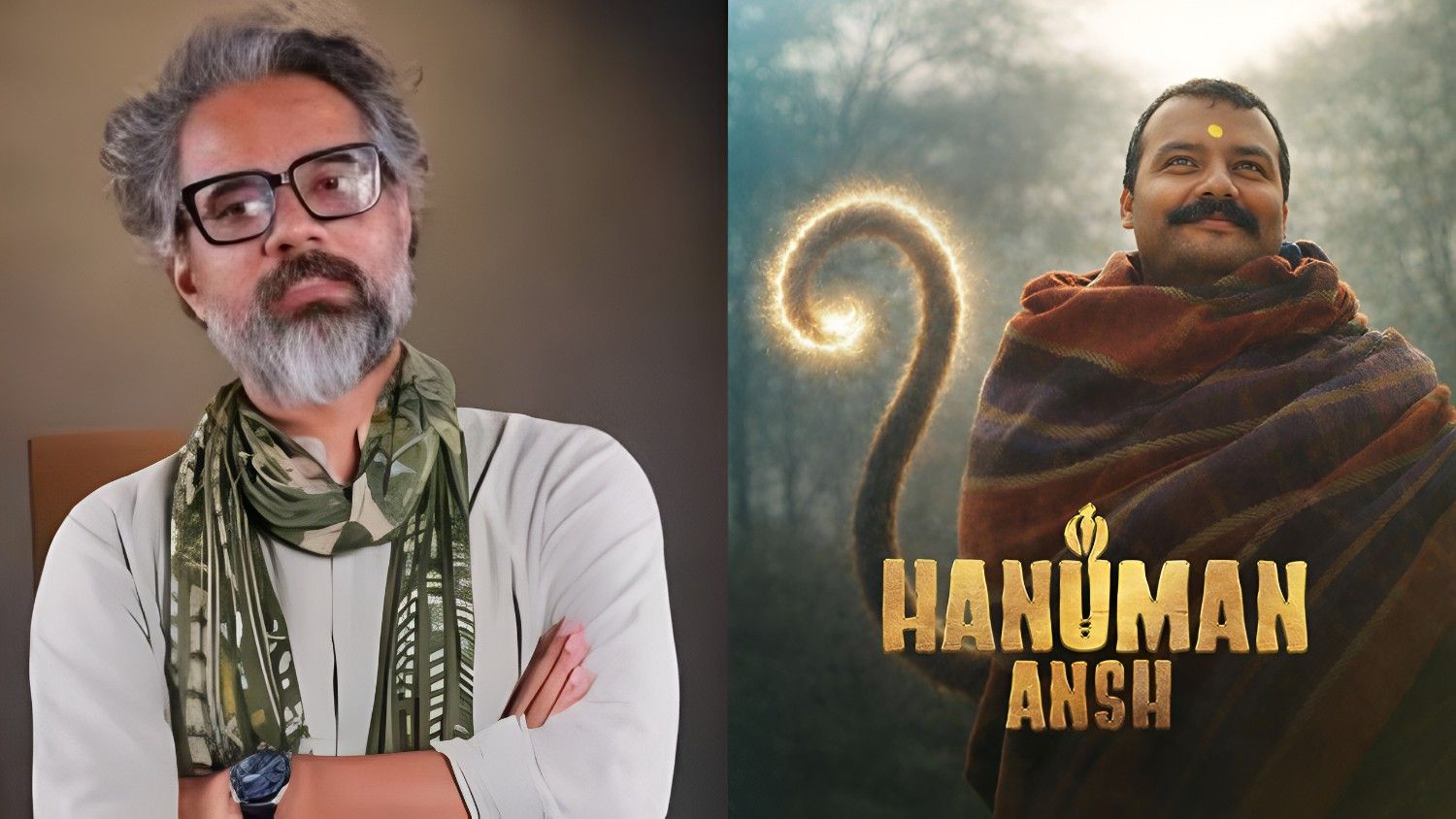
Hanuman Ansh writer-director Vishal Chaturvedi opens up about the inspiration behind the film, the challenges of making it on a shoestring budget, the unexpected casting of his assistant director, and why he believes divine intervention guided the project.
Hanuman Ansh has generated a lot of interest. How did the idea for the film come about?
There’s a lot of interest around the film, its teaser and trailer, and the response has been overwhelming. I think much of that comes from the love and faith people have for Neem Karoli Baba, along with the content our team has created. We’re grateful for the encouragement.
How challenging was the journey of bringing Hanuman Ansh to life?
“I’ve been carrying this idea for nearly 20 years. My first visit to Kainchi Dham was a life-changing experience. During a storm, our car stopped unexpectedly right at the entrance of the ashram. Within seconds, the rain stopped and sunlight appeared. That moment stayed with me.”
“When I first pitched the story to an OTT platform, I was told that stories about Indian saints wouldn’t work because ‘stories about Babas are always negative.’ That only strengthened my resolve.”
“We eventually had to make the film with almost half the intended budget. I requested my producers, Ragini Sona and Namrata Singh, to trust the vision. I gave up my fees, offered my office space, and everyone worked together to make it happen without compromising the film’s quality.”
Your second assistant director eventually became the film’s lead. How did that happen?
“Our original lead actor fell ill during the shoot in Chitrakoot, and we had to find a solution immediately. My assistant director, Shobhinaw, bore a striking resemblance to Maharaj-ji, so I decided to test him.”
“I told him, ‘If I choose you, all the praise and criticism are mine, not yours. Just focus on your performance.’ Once he let go of the pressure, everything changed. After watching him perform a comedy scene, I knew he was the right choice.”
Why did you choose Chitrakoot as the primary shooting location?
“We explored multiple locations, but Chitrakoot offered everything we needed within close proximity, which was crucial because we were working on a very limited budget. Except for two or three days in Mumbai, we shot the entire film there.”
Did you experience any moments during the shoot that felt miraculous?
“The entire journey has been miraculous. Every challenge somehow found its own solution.”
“One day, a langur appeared at our location while we were filming the installation of the Hanuman idol. The villagers told us they hadn’t seen a langur there for almost 15 years. It took our prasad, sat above the Hanuman idol, and seemed to follow our camera wherever we filmed. Even after being taken away, it returned the next day. The entire team felt there was something truly divine about those moments.”
“Later, we also discovered that one of the locations where we had filmed was an ashram where Neem Karoli Baba himself had stayed. Learning that months later left us speechless.”
You postponed the film’s release to August. What prompted that decision?
“Our original plan was different, but we wanted more time to fine-tune the film, incorporate distributor feedback, complete quality checks, and strengthen promotions. That’s why we decided to release it on August 7.”
You also worked on Fauji 2. What was that experience like?
“I created 13 new characters for Fauji 2. While Shah Rukh Khan’s Fauji is iconic, I wanted this version to have its own identity. We retained only the character name Abhimanyu as a tribute while creating an entirely fresh world.”
Looking back, how has your journey as a filmmaker evolved?
“I consciously moved away from making content driven by violence, abuse and sensationalism. I wanted to create films that families could watch together.”
“We were expecting a UA certificate, but Hanuman Ansh received a clean U certificate without a single cut from the CBFC. That was deeply satisfying because it validated the kind of cinema I want to make.”
You transitioned from medicine to filmmaking. What has that journey taught you?
“I left medicine and later even gave up music to focus entirely on filmmaking. It has taken nearly 14 years of persistence to reach this point.”
“The biggest lesson I’ve learned is never to give up. Keep working, surrender to a higher purpose, and trust the process. I believe Hanuman Ansh is the result of years of patience, hard work and the collective passion of everyone who worked on it.”
