


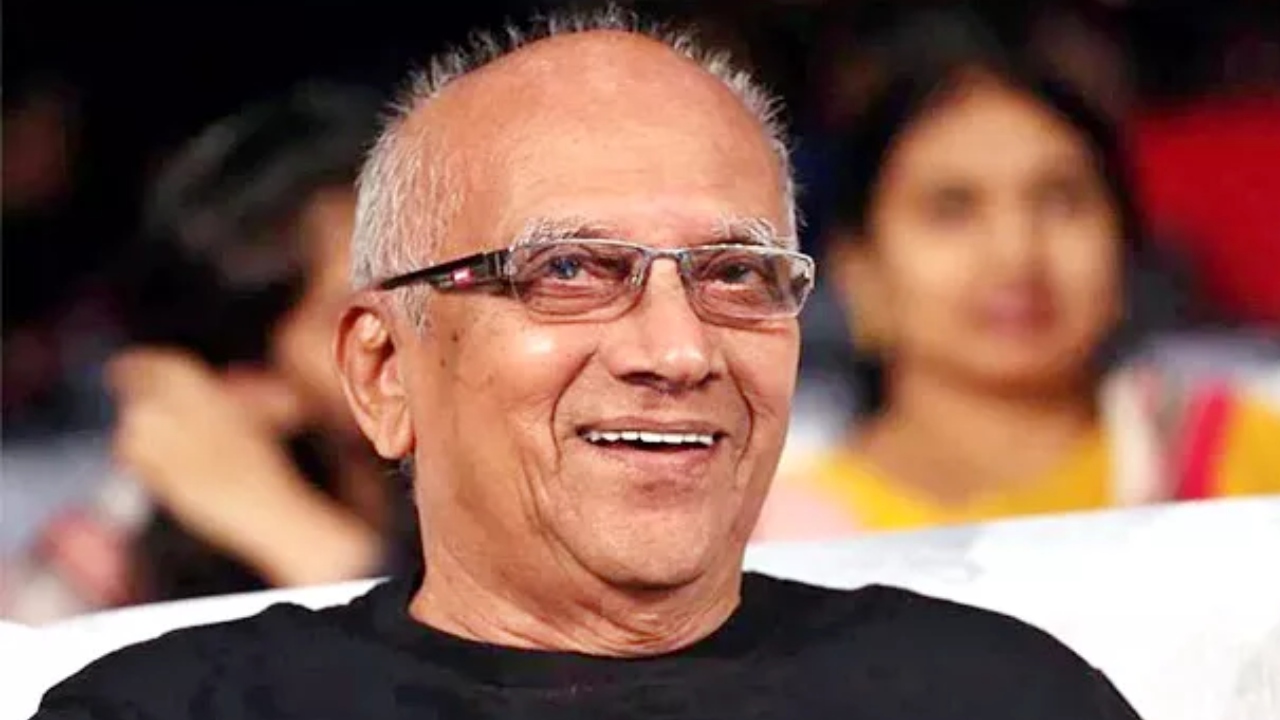
Following the passing of legendary filmmaker Sangeetam Srinivasa Rao on October 3, 2026, film historians and cinema lovers are reflecting on the extraordinary career of a director who redefined Indian cinema. While Rao built a towering legacy primarily across Telugu, Tamil, Malayalam, and Kannada films, his foray into Hindi cinema remains a fascinating chapter—anchored by his sole Hindi directorial venture, Phool (1993), and the silent masterpiece that made it possible.
According to film historian and journalist Dilip Thakur, Rao’s connection to Hindi cinema began years before Phool was made. During a visit to Madras in the mid-1980s, veteran actor-producer Rajendra Kumar and his son, actor Kumar Gaurav, happened to catch a screening of Rao’s black-comedy Pushpaka Vimana, starring Kamal Haasan.
Impressed by the silent film’s visual genius, Rajendra Kumar extended their stay in Madras to secure the Hindi release rights under his banner, Aryan Films—the production house behind hits like Love Story and Lovers.
Distributing a silent film was a major gamble. Without dialogue or song sequences, Aryan Films positioned Kamal Haasan’s star power alongside a stellar supporting cast featuring Tinnu Anand, Farida Jalal, and Amala. Rajendra Kumar strategically launched the film at Mumbai’s Metro Cinema in Colaba and selected theaters. The gamble paid off: Pushpaka Vimana became a solo blockbuster, introducing North Indian audiences to Rao’s masterful storytelling.
The success of Pushpaka Vimana planted a seed for Rajendra Kumar, who resolved to produce a project directed by Rao for his son, Kumar Gaurav. Around six years later, that plan materialized with Phool (1993), pairing Gaurav with top star Madhuri Dixit.
Thakur recalls a media interaction arranged by veteran PR Bunny Reuben on the sets of Phool at Mehboob Studio. During the visit, Madhuri Dixit openly shared that she agreed to the project out of deep respect for Rajendra Kumar and the rare opportunity to work under a director of Rao’s caliber.
Despite knowing very little Hindi, Rao managed the direction through his strong visual instincts and clear cinematic vision.
Following a wrap party at Mumbai’s Dimple Theatre—attended briefly by Dixit and her parents—Phool made its way to theaters. Released at the iconic Novelty Cinema, the movie became a housefull hit, proving that Rao’s directorial prowess translated seamlessly to Hindi mainstream cinema.
While Sangeetam Srinivasa Rao’s vast body of work remains centered in the South, his brief Hindi journey stands as a testament to his universal approach to cinema—where visual storytelling effortlessly bridged regional and linguistic divides.
