


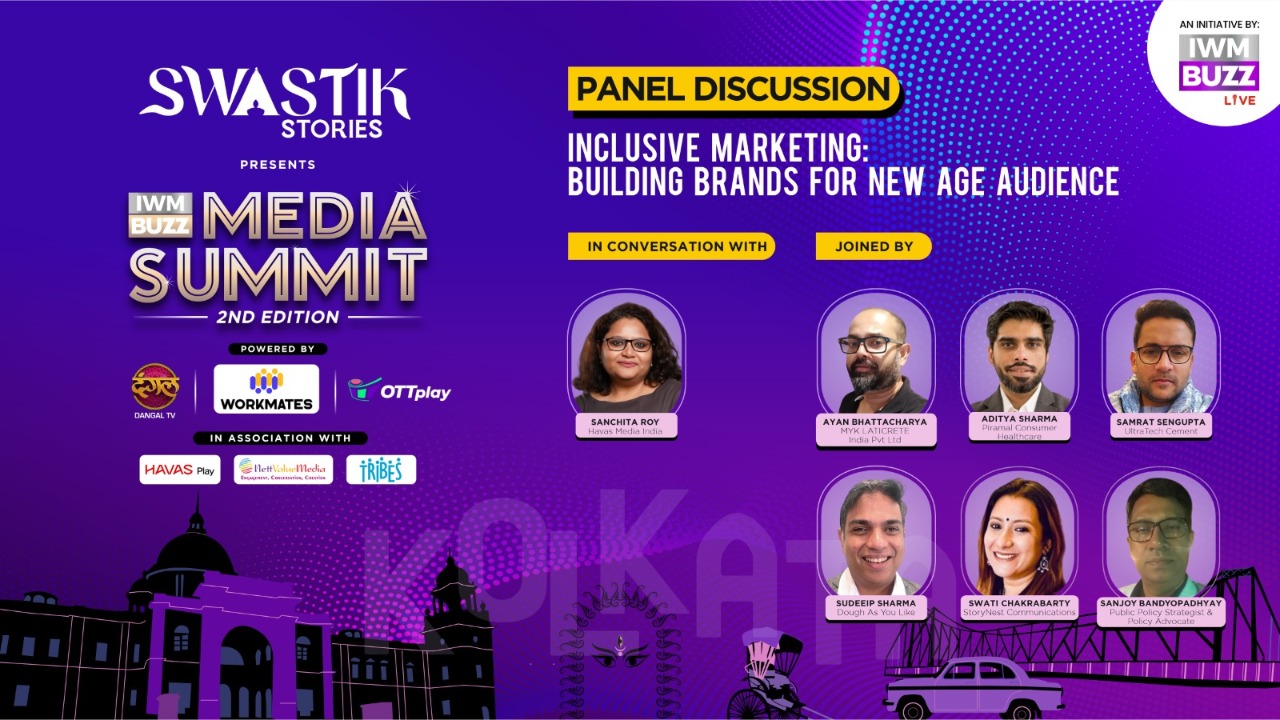
Brands are trying harder than ever to connect with a wide mix of consumers, now. A recent panel discussion at the IWMBuzz Media Summit Kolkata, sculpted on inclusive marketing brought out how important it is for companies to understand not just who their audience is, but also how they think, behave, and make decisions.
The panel discussion was led by Sanchita Roy, Chief Strategy Officer at Havas Media India, and joining her were Ayan Bhattacharya, Senior Marketing Manager at MYK LATICRETE India Pvt Ltd; Aditya Sharma, Head of Media & Digital at Piramal Consumer Healthcare; Samrat Sengupta, VP–Brand Building (Marketing) at UltraTech Cement; Sudeeip Sharma, Founder & Director of Dough As You Like; Swati Chakrabarty, Founder of StoryNest Communications; and Sanjoy Bandyopadhyay, Entrepreneur, Public Policy Strategist & Policy Advocate.
The discussion was shaped with the thought that audience itself is changing. Today’s consumers include Millennials, Gen Z, and the very young Gen Alpha, all of whom use technology differently. They watch shorter content, switch platforms quickly, and expect fresh, relevant information. Because of this, the panel mentioned that attention has become the new currency. To stay relevant, brands need to constantly adapt—whether it’s through quicker videos, interactive tools, or targeted messages.
Further taking turn to trust and transparency, the discussion took turn on how consumers now quest for clarity and reassurance. In some industries—especially those where people make big, important decisions—consumers look for clarity and reassurance. For example, when building a home, people want simple explanations, expert opinions, and a sense that the brand they choose is reliable. In contrast, for everyday products, brands have more freedom to be creative, playful, and experimental in their communication.
The conversation also included a discussion about the influence of influencers. Although influencers play a significant role in marketing by generating buzz and bringing in audience, the panel was unanimous in the opinion that oral communication remains the strongest marketing method. When a true buyer endorses a product through recommendation it creates more reliance than any advertisement can. Thus, the necessity of quality and the brand’s true customer satisfaction to be the focal points in the marketing strategy is highlighted.
The session shed light on storytelling’s power. Emotional stories are the primary means by which brands connect to people of varying nationalities, cultures, and ages. No matter if it is an advertisement triggering the feeling of nostalgia or a message of hope, storytelling creates a bond of empathy and acceptance. It is a method that exceeds just selling a product.
Regulated industries, like healthcare, were also mentioned by the panel as the hardest places to do marketing. But still, there are brands communicating their messages in very responsible manners—through very basic storytelling, using examples that are relatable, and ad-casting different messages for different audience segments, even in such strictly regulated spaces.
The panel was of the opinion that inclusive marketing is a matter of comprehending people—their feelings, their needs, and their world. The brands that pay close attention, speak with openness and creativity, are the ones that will establish and maintain strong and lasting bonds with the newer generations of audiences.
Note: The transcription and summarisation above have been partially generated with the help of AI.
Watch the session here to experience a full-fledged, insightful session:
The second edition of IWMBuzz Media Summit in Kolkata was presented by Swastik Stories, powered by Dangal TV, Workmates and OTT Play. Associate partners Havas Play, Nett Value Media and Tribes. Partners—White Apple, Just Lateral Think Ink, Decalogue and The Heritage Academy. An initiative by IWMBuzz Live.
